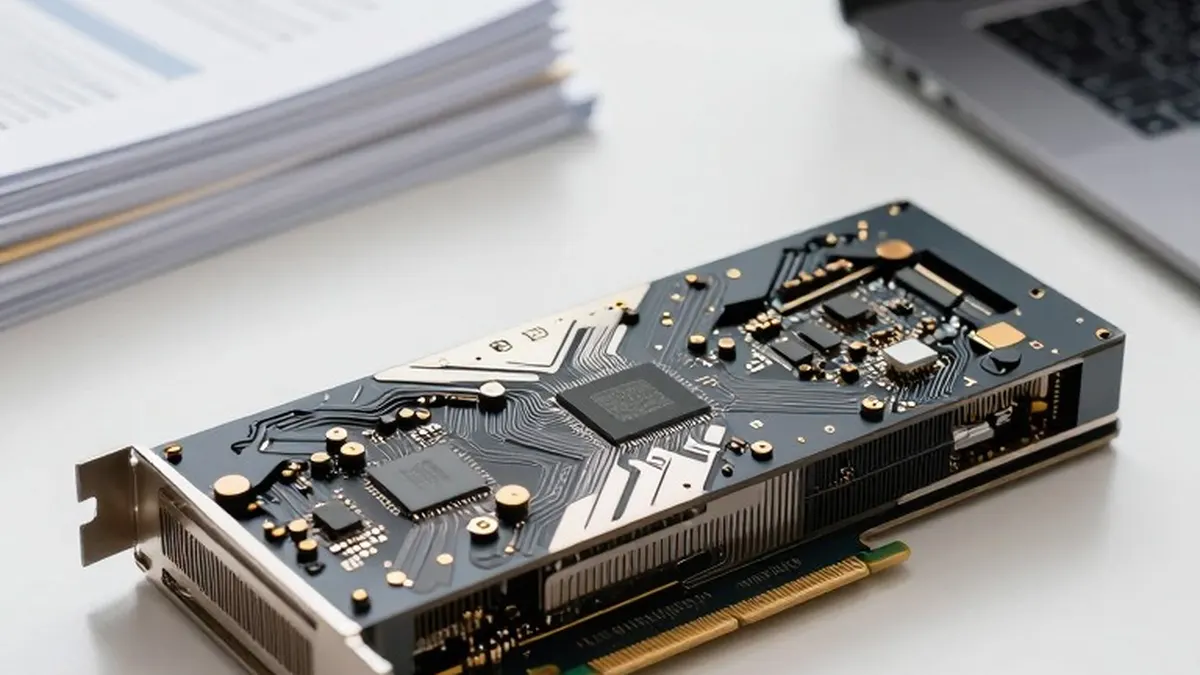
The Trump administration has authorized the sale of advanced Nvidia artificial intelligence chips to several Chinese companies that maintain corporate links to US blacklisted entities and military contractors. This development has intensified scrutiny of Washington's national security screening procedures, according to an investigation published by The New York Times on Saturday.
Among the recipients of approval from the US Commerce Department is New Matrix, a firm established only 17 months prior to the report. Reporters who visited the company's registered office in an industrial park outside Beijing found the space vacant, with exposed wiring and no record of the business in the building directory or with park management.
Chinese corporate records indicate that the owners of New Matrix have connections to Wise Road, a prominent private equity fund. Wise Road was added to the US trade blacklist in 2024 for allegedly assisting Beijing in acquiring sensitive semiconductor assets. Two analysts reviewing the data suggested that New Matrix may serve as a front for companies associated with the blacklisted fund.
These approvals follow the December 2025 decision by the Trump administration to allow Nvidia to sell H200 processors to China. This move reversed earlier restrictions designed to limit Beijing's access to advanced technology. Under the new terms, chips manufactured in Taiwan must transit through the United States, where a 25% tariff is applied before the hardware reaches its final destination in China.
The Commerce Department has approved approximately two dozen Chinese entities to purchase or handle these processors. The list includes major corporations such as Baidu, BYD, and Tesla Shanghai, as well as Alibaba, Tencent, ByteDance, and ZTE Kangxun Telecom. Although these firms were permitted to buy tens of thousands of chips, they had not yet reached those limits at the time of the report.
Liza Tobin, a former China director on the White House National Security Council, expressed significant concern that neither the Commerce Department nor Nvidia was performing adequate due diligence. She stated that there were major worries regarding whether the licensing terms were being properly followed by the approved buyers.
In response to the criticism, the Bureau of Industry and Security defended its process, noting that it carefully reviews applications for national security risks. The agency highlighted that it imposed 324 million dollars in penalties for export violations in 2025 and hired more than 90 enforcement officers in 2026 to bolster oversight.
The investigation also identified other approved companies with military connections. Maginfra, another new firm with a deserted registered office, was believed to be associated with Inspur, a technology company on the US entity list due to its military involvement. Both Maginfra and Inspur shared personnel and patents. Additionally, Zhejiang Yindun Cloud Technology was linked to Range Intelligent Computing, which provides cloud services to defense programs, including a satellite project in Hebei province.
Nvidia has defended its sales strategy by arguing that the Chinese military has little incentive to rely on American semiconductor technology. A company spokesman noted that Beijing has restricted H200 imports to support domestic manufacturers, while Nvidia's exports continue to benefit American jobs. Financial disclosures show that H200 shipments to China accounted for less than 1% of Nvidia's data center revenue in the quarter ending in July.
Despite the limited revenue share, concerns persist about Chinese firms using overseas data centers, particularly in Southeast Asia, to circumvent export controls. The findings contribute to an ongoing debate in Washington, where a bipartisan group of senators proposed legislation in December 2025 to freeze any relaxation of advanced AI chip export restrictions for two and a half years.