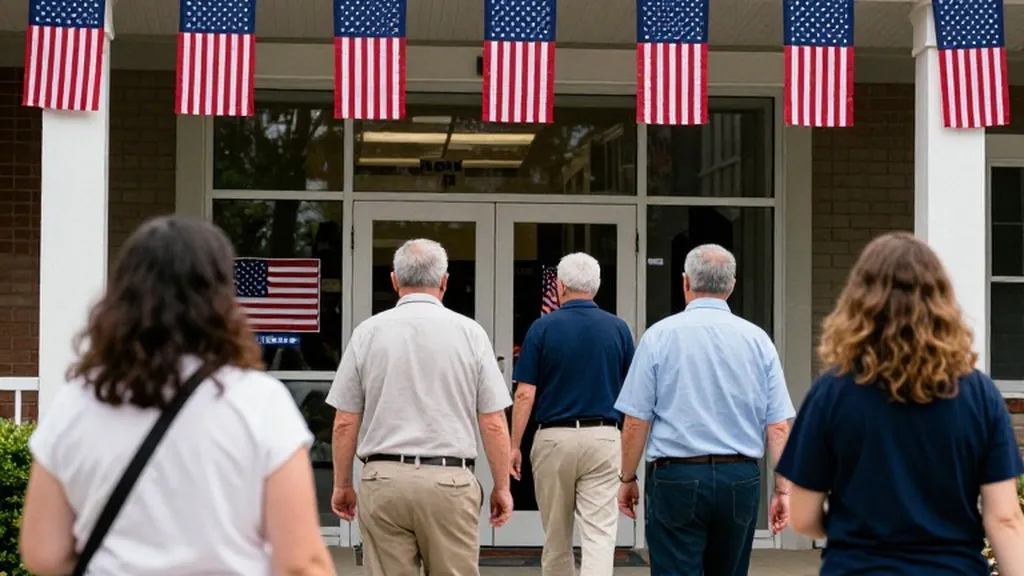
With Election Day approaching on Tuesday, 5.1 million Floridians have already cast ballots early or by mail. This year's turnout is on course to exceed the 2022 midterms, when nearly 7.8 million people voted, according to the Florida Division of Elections. Interviews conducted by Your Florida show that affordability, the Iran war and concerns about corruption are among the issues shaping voters' choices.
Sean Freeder, an associate professor at the University of North Florida and faculty director of its Public Opinion Research Lab, expects high turnout based on trends tracked over the past decade. He cautioned that early participation could also reflect voters becoming accustomed to having several weeks to cast ballots. President Donald Trump is a major motivation, Freeder said, even though he is not on the ballot. He described the historical tendency for a president's party to face difficulties in the following midterms.
Among Republicans interviewed, views differed by age. Michael Fusella, a recent University of South Florida graduate and former president of its College Republicans club, identified affordability, immigration and foreign policy as priorities. He said Trump's handling of the Iran war left him feeling betrayed. Laura Casati, a Tallahassee resident who works with horses, supported the war and said higher fuel prices did not trouble her. Freeder said older voters appear more willing to stand by Trump, while younger voters' dissatisfaction can make them more willing to abandon their party.
In Ocala, Democrat Lynn Miller, who lives in a retirement community, said corruption was her primary concern. She also cited the Iran war, gasoline costs and concerns about Medicaid and Medicare. Daniel Lack, another Ocala retirement community resident, identified the survival of democracy as his overriding issue. At a WUSF listening session, Manatee County Democrat Randi Sathan similarly called for Republicans and Democrats to work together to protect democracy.
Brandon Democrat Youshay Wasim said the Senate contest offered a choice about accountability and corruption. He wants lower living costs and supports Angie Nixon, citing the Senate's investigative authority and his enthusiasm for her plans. Fusella, however, said Nixon's alignment with the Democratic Socialist movement prevented him from supporting her. He also abstained from voting in the governor's race.
University of North Florida polling places Nixon four points behind incumbent Republican Sen. Ashley Moody. Freeder described that gap as surmountable, contrasting it with Republican victories of 15 or 20 points in 2022 and 2020. He said there was little strong evidence that the socialism label was damaging Nixon's campaign.
The university's polling asked voters about competing campaign attacks: Nixon's criticism linking Moody to the Hope Florida controversy and Moody's portrayal of Nixon as a socialist. Freeder said respondents expressed greater concern about Hope Florida. That controversy involves a $10 million Medicaid-settlement payment to a charity connected to first lady Casey DeSantis. An appeals court expunged a grand jury finding that the funds had been misappropriated.
Florida remains a Republican-leaning state, Freeder said, and enthusiasm for Nixon may not be enough to secure victory. Still, he said her candidacy could bring younger voters to the polls who would also support Democratic gubernatorial candidate David Jolly. A former Republican and moderate, Jolly is running against Republican U.S. Rep. Byron Donalds.
Freeder said the Democratic candidates could benefit each other by appealing to different voters. Nixon energizes younger, more left-leaning Democrats, while Jolly is persuading some Republicans to cross party lines. University polling puts Jolly two points behind Donalds, and Freeder considers a Jolly victory a real possibility.