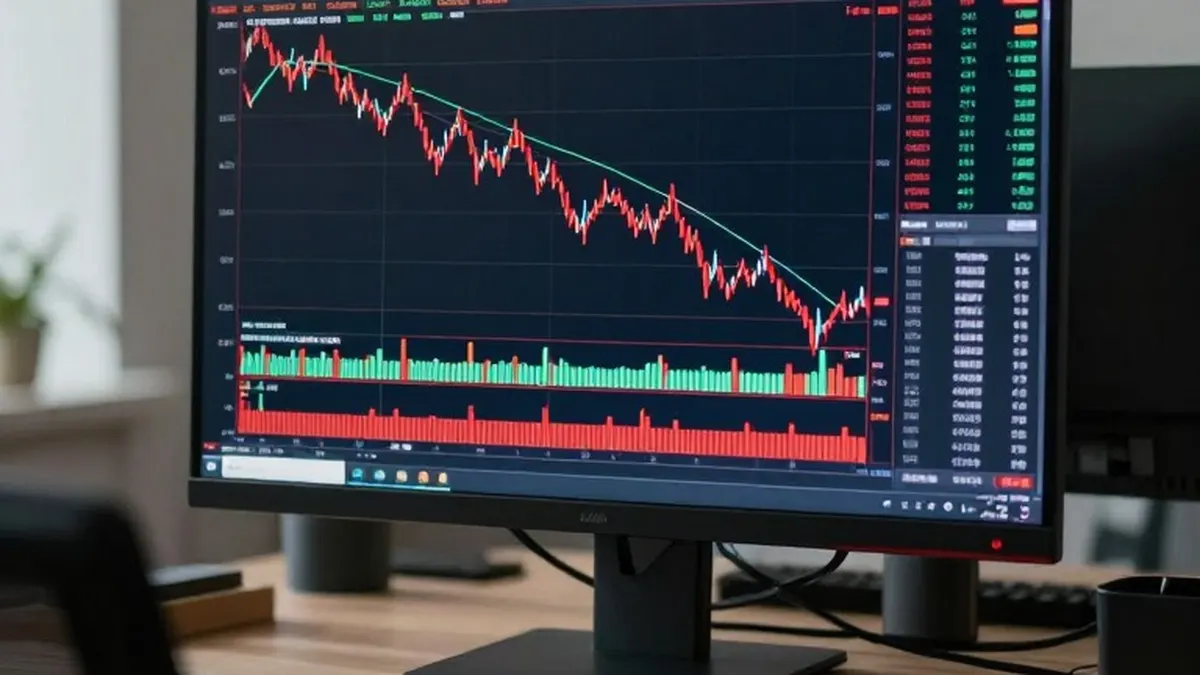
The recent stock market volatility has forced investors to rethink their strategies after the S&P 500 experienced its largest single-day loss in market value on record. On Thursday, the index dropped by 4.4%, reversing a brief period of relief that had followed Democratic Party victories in the recent elections. This sharp decline was particularly pronounced within the technology sector, which fell by 7.3% during the same session.
The downturn was most severe for companies involved in building artificial intelligence infrastructure. The PHLX Semiconductor Index, which tracks hardware firms essential to AI development, slid by 12.2%. This significant drop highlights the heightened sensitivity of the market to factors affecting the tech industry's growth trajectory and capital requirements.
One major driver of this sell-off appears to be growing concerns over the increasing borrowing costs for hyperscalers and other major tech firms. These companies are currently raising substantial amounts of capital to fund data center construction, cloud computing services, and AI development. Additionally, investors are wary of the dilution effect that occurs when these companies issue new stock to raise cash, a dynamic that Jurica Dujmovic described as AI changing the bargain between Big Tech firms and their shareholders.
In response to the equity market turmoil, many investors have moved into safer assets, contributing to a decline in long-term interest rates. As of early Friday, the yield on 10-year U.S. Treasury notes stood at 4.87%, down from 5.29% at the end of September. Analysts are now examining the potential for further decreases in these rates as bond prices rise, which could influence broader investment decisions.
While some investors are exiting the stock market, others are looking for entry points in heavily discounted stocks. Nvidia, for instance, saw its shares drop by 9.3% on Thursday, leaving the stock down 25.4% from its intraday high set on October 6. Some professional investors argue that this decline has created a compelling opportunity for new buyers. Consequently, the weighted valuation to consensus earnings estimates for the PHLX Semiconductor Index has been cut in half.
Despite the tech-led decline, dividend stocks have shown resilience this year. The ProShares S&P 500 Dividend Aristocrats exchange-traded fund, which tracks a specific index of high-quality dividend payers, has returned 16.3% in 2026 with dividends reinvested. This outperforms the S&P 500, which has returned 8.4% over the same period. Financial advisors are currently highlighting these 68 constituent stocks as potential hedges against market volatility.
Beyond immediate market movements, the broader adoption of generative AI is beginning to reshape various business models, particularly in the internet sector. Users are increasingly relying on AI summaries for information, which may reduce the need for traditional search engine clicks. This shift is prompting a reevaluation of how large and small businesses that depend on internet traffic generate revenue, as outlined by financial writer Bill Peters.
In the housing market, a notable trend has emerged where a record number of first-time home buyers are opting to pay cash rather than securing mortgage loans. This approach allows buyers to avoid interest payments, certain fees, and the delays associated with loan processing. It also eliminates the need to deal with escrow accounts for taxes and insurance, potentially giving cash buyers more leverage to negotiate lower prices from sellers.
Looking ahead, the Internal Revenue Service has released new income tax brackets for 2027, which are expected to influence investment and retirement planning. Experts are advising individuals to consider how these changes, including adjustments to the standard deduction and SALT tax breaks, might affect their financial strategies. Additionally, the new capital gains tax rates for various income levels are providing new considerations for investors planning their 2027 activities, such as Roth IRA conversions.
For those seeking guaranteed income without relying on annuities, Treasury I-bonds are being presented as an attractive alternative. These instruments offer inflation protection and stable yields, allowing investors to create their own income streams. Meanwhile, personal finance advice continues to address complex family wealth issues, including inheritance disputes and the management of unexpected financial gains within households.