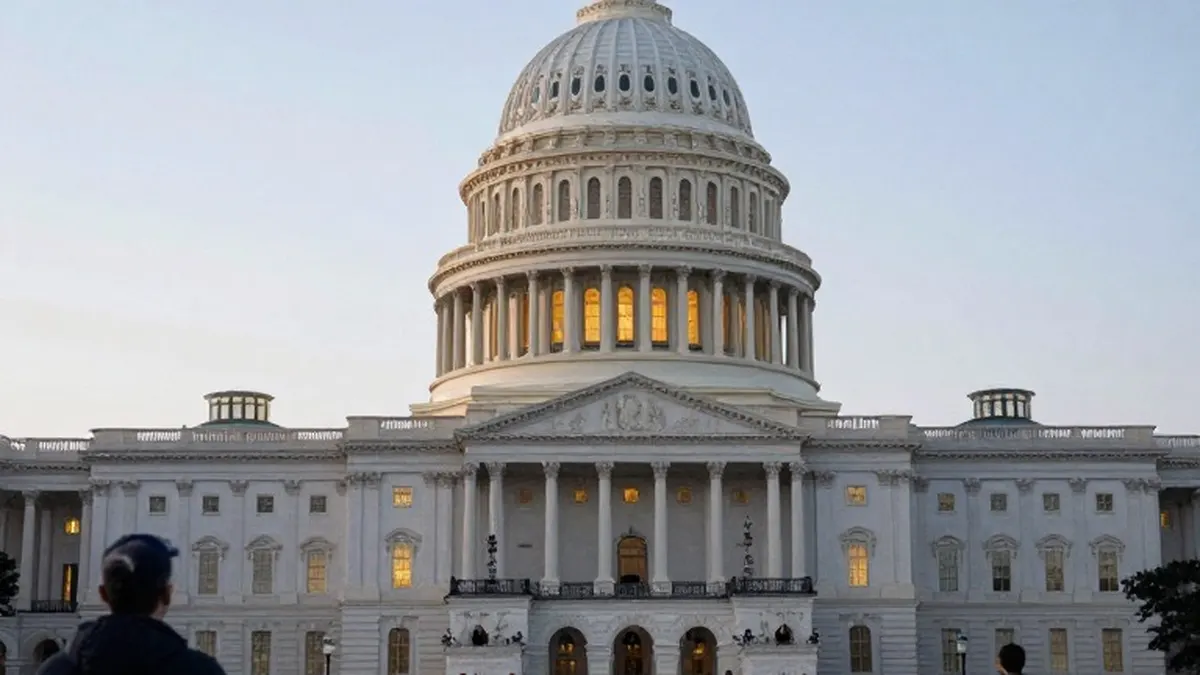
The midterm elections taking place on Tuesday will fundamentally decide the balance of power in the United States Congress for the remainder of Donald Trump's presidency. Voters will choose between a continued Republican hold on both chambers of Congress or a shift that could leave the president with limited legislative influence. If the Republican Party retains control, Trump is positioned to push major policy packages with minimal resistance from the legislature. Conversely, a Democratic victory in one or both chambers would significantly constrain the president's ability to enact his remaining legislative priorities and could lead to gridlock in basic government functions.
Current polling and betting odds suggest Democrats are in a favorable position, particularly regarding the House of Representatives, which is currently held by Republicans. However, the final outcome will not be known until all ballots are counted, a process that may take days or even weeks in some jurisdictions. The Senate race is expected to be especially tight, with analysts noting that if the result hinges on the state of Alaska, the nation may face a delay while that state completes its count. Republicans currently hold a larger majority in the Senate than they do in the House.
Financial analysts have warned of potential immediate market reactions as the election results emerge. Stifel, a Washington policy strategy group, published an analyst report on Sunday predicting that Democrats will win control of the House while the Senate remains too close to call. The firm noted that while investors might initially trade on the assumption of a Democratic victory, this knee-jerk reaction could reverse once markets realize that legislative gridlock is the most likely policy outcome regardless of the specific party controlling the chambers.
If Democrats capture even one chamber of Congress, the legislative process in Washington would become more contentious. The ability to pass single-party budget reconciliation bills, a key procedural tool for major spending and policy changes under current tight margins, would be lost. This shift would necessitate bipartisan cooperation to advance essential legislation, including government funding packages, defense spending, and the upcoming debt ceiling increase. In a divided government, the party not controlling the White House often uses these critical moments to extract concessions from the majority party, a dynamic that frequently leads to brinksmanship.
Should Republicans defy expectations and maintain their Senate majority, Stifel anticipates a relief rally in sectors that might otherwise react negatively to a Democratic win. In this scenario, Democrats would govern the House, leading to continued gridlock. Senate Republicans would serve as a check on both Democratic initiatives and many of President Trump's populist impulses. If Republicans keep both chambers, the status quo would be maintained, allowing Trump's legislative agenda to proceed with fewer obstacles, though Democrats would still retain some leverage through the Senate's 60-vote filibuster threshold.
Democratic lawmakers have indicated they intend to use any congressional majority to launch investigations into the White House and businesses that have worked with the Trump administration. Holding the majority grants the party subpoena power in congressional committees, a tool they are expected to utilize aggressively. In the event of a full Democratic sweep of both chambers, the party may pursue party-line reconciliation measures. While these measures might not become law due to the president's veto power, they would provide a significant political platform for Democrats ahead of the 2028 presidential election.
Even if Democrats control both chambers, passing legislation will not be straightforward. Deals will still need to be brokered with the White House, and the Senate's filibuster rule, which requires 60 votes for most legislation, remains a significant hurdle. It is highly unlikely that any single party will secure the 60 seats necessary to override this threshold, meaning bipartisanship will remain essential for most major bills. Analysts expect President Trump to increase his use of executive orders in response to congressional gridlock, regardless of whether the result is a divided Congress or unified Democratic control.
The outcome of Tuesday's election will thus set the tone for the final two years of the current administration. Whether the result is a unified Republican government, a divided legislature, or a unified Democratic Congress, the interplay between the executive and legislative branches is poised to become more complex and potentially more contentious than in previous periods.