What sits beneath the sheets largely explains why no two mattresses feel alike. Memory foam contours to the body, latex has a springier feel, and hybrids combine foam or latex layers with a supportive coil system. A Wired guide dated 2025-06-17 sorts the market into five main types: hybrid, innerspring, memory foam, latex and smart beds. It draws on comments from John Merwin, CEO of 3Z Brands, the parent company of Helix, Birch, Bear, Nolah and Leesa, and founder of Brooklyn Bedding.
The guide suggests starting with four questions. The first is feel: do you want to sink in or sleep on top? Memory foam hugs closely, latex is springier and makes position changes easier, and hybrids can go either way. The second is sleeping position. Side sleepers usually need cushioning at the shoulders and hips, back sleepers a balance of cushioning and support, and stomach sleepers a firmer surface that keeps the midsection from sinking.
Temperature and partners matter too. Latex and hybrid beds offer more airflow than memory foam, which tends to trap heat, though gel infusions and phase-change fabrics can help. For couples, memory foam absorbs movement well, pocketed coils add some bounce without shaking the whole bed, and innerspring is the bounciest. Partners who disagree on firmness may do best with a split or adjustable mattress.
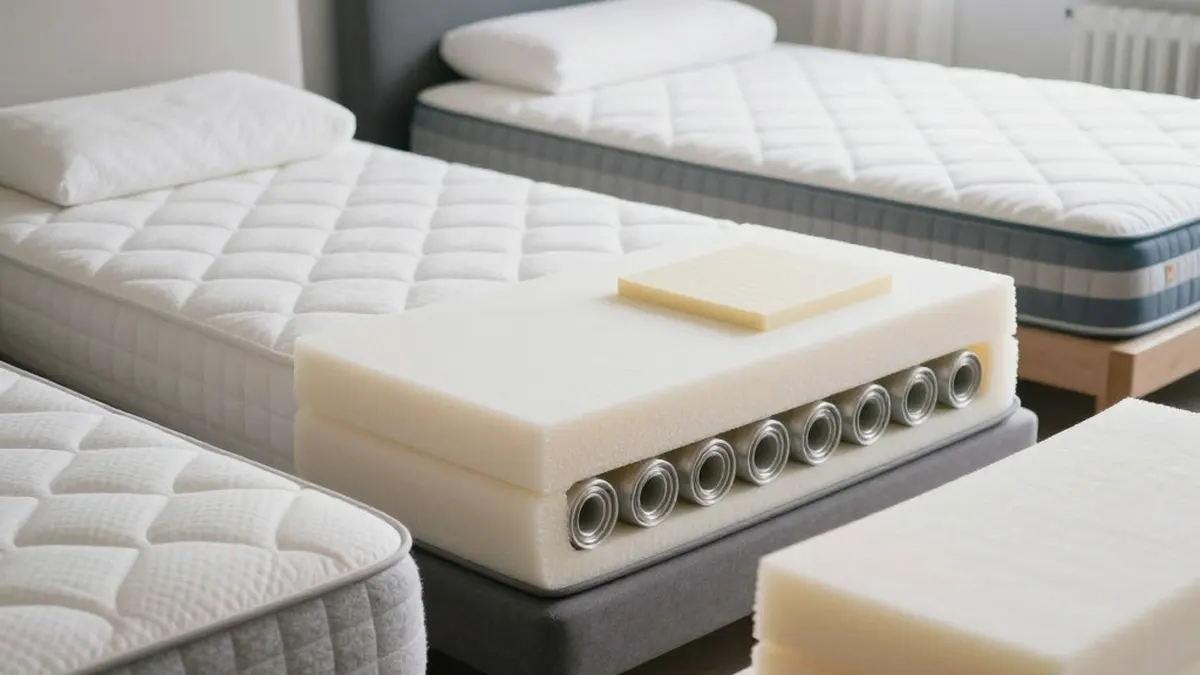
Hybrids are what shoppers will most likely meet today, aside from all-foam and latex models. They can pair foam and coils, latex and coils, or a mix of all three, giving pressure relief on top and support from the coil core. The key terms are "pocketed coils" or "individually wrapped coils." Each coil compresses independently, so the bed feels firmer where weight is concentrated, such as the hips and shoulders, and movement is less likely to travel across the surface. The guide also notes that hybrids do not need a box spring, and using one may void a warranty.
Traditional innerspring beds use Bonnell coils, which connect both laterally and vertically and compress as a single unit. They are highly responsive and snap back quickly as a sleeper moves, but they offer less pressure relief than modern hybrids. Merwin said pocketed coils "respond independently to movement and pressure," which reduces motion transfer and gives more targeted support. Such beds are being phased out in favor of hybrids, though the Saatva Classic still uses traditional coils in a secondary layer at the bottom for durability and support.
Memory foam, the guide says, traces back to NASA, and it gained ground when Tempur-Pedic arrived in the 1980s. Merwin explained that it is made by combining liquid polyurethane with chemicals such as polyols and isocyanates, then pouring the mixture onto a moving line where it expands into large blocks called "buns." Body heat flows into its tiny air pockets and softens the foam so it contours to the sleeper. It excels at pressure relief and dampening movement, but its biggest weakness is heat retention. Brands respond by adding graphite, copper, gel or phase-change materials.
Latex is made from rubber, often organic rubber sap, and is similar to memory foam for pressure relief but far more reactive to movement. The two common types are Dunlop and Talalay, named for their production processes. Dunlop is firmer, while Talalay feels more plush. Latex also tends to stay at an even temperature rather than accumulating heat.
Smart beds let users change firmness with a remote or app, using internal air chambers or sensors that adjust coil firmness. Some add sleep tracking and massage settings, as the Bryte Balance Pro does. They often rely on adjustable bases that raise the head and foot, so buyers should budget for the base separately.
The guide also weighs in on delivery. Some argue that compressing a mattress into a box hurts its long-term durability and support, which is why certain brands insist on fully set-up delivery. Boxed-mattress makers counter that the materials are resilient, and that a bed set up within the stated window, usually 30 days, performs fine. The guide's author concludes that neither is inherently better and that it depends on the manufacturer. Among its picks, it names the Helix Midnight Luxe as the top overall hybrid, the Nolah Evolution for side sleepers, the Bear Original and Nectar Premier in memory foam, and the Birch Luxe Natural in latex.