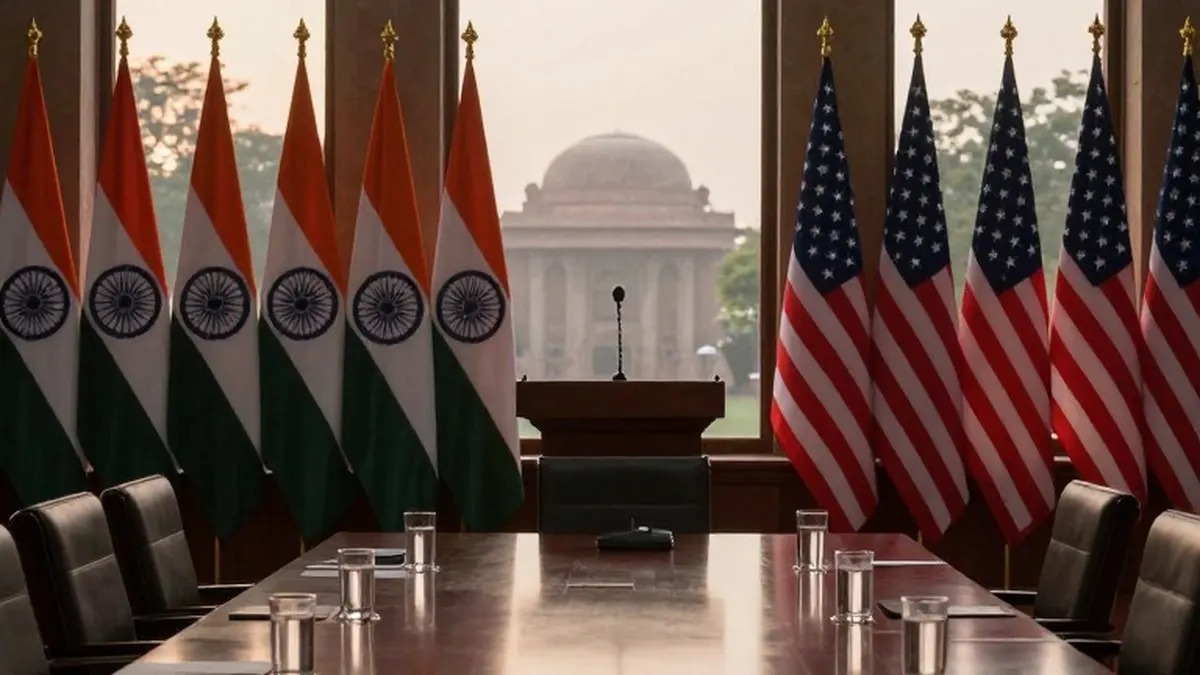
In 2019, Indian Prime Minister Narendra Modi stood beside Donald Trump at a Houston stadium rally attended by more than 50,000 Indian Americans and praised him as warm, friendly, energetic and witty. He even adapted a campaign slogan to cheer on the US leader's re-election bid. Trump lost that race. Seven years later, with the US midterm elections approaching, the relationship looks very different.
Indian officials have recently been more direct than ever in criticizing the Trump administration, following a series of setbacks in bilateral ties. Many analysts now believe the Modi government may prefer a Trump chastened by losses in Congress, which could weaken his legislative agenda.
India has long enjoyed bipartisan support in Washington, though its strategic community has often felt more at ease with Republican presidents. Ties were reset under Ronald Reagan as the Cold War wound down, and George W Bush oversaw a landmark civil nuclear deal between 2006 and 2008, along with major military agreements. Democratic administrations, by contrast, have often been seen in New Delhi as more critical of India's human rights record.
Trump's second term has broken that pattern. Last month in New York, Foreign Minister S Jaishankar said the administration had been insensitive to India's concerns over terrorism, had warmed to rival Pakistan, and had pursued self-centred trade policies that hurt the Global South. Finance Minister Nirmala Sitharaman said earlier this month that trade talks had reached a "plateau beyond which giving or taking might be very difficult."
The list of irritants is long. It includes punitive tariffs, pressure on India to stop buying Russian oil, Trump's repeated claims that he mediated a 2025 India-Pakistan ceasefire, which New Delhi rejects, higher H-1B visa fees, and an immigration crackdown that has affected Indian workers. Early in his term, undocumented Indian migrants were sent home shackled in chains, stirring outrage in India. Anti-Indian rhetoric from parts of the MAGA movement and on social media is also at an all-time high.
After the US Supreme Court struck down Trump's sweeping tariffs in February, his administration turned to other tools, including a new 10 percent global tariff. Last month Trump signed a law allowing tariffs of up to 100 percent on countries like India that buy Russian oil, but paused it to avoid raising US energy prices before the midterms. Secretary of State Marco Rubio, visiting Mumbai this week, said the tariffs were not meant to punish India, but did not rule out similar measures returning, calling the balance "a challenge."
Milan Vaishnav of the Carnegie Endowment for International Peace said India can tolerate genuine policy differences, but attacks on India and Indian Americans "have struck a nerve." He also said a chastened Trump would serve India's interests, noting that many Democrats and Republicans in Congress are angry about the handling of the relationship. Praveen Donthi of the International Crisis Group said the bipartisan consensus on India appears to have ended and that the measures have revived distrust among India's strategic establishment.
Others are less sure that election results would change much. Michael Kugelman said he doubts Trump's approach to India would shift, since the president will keep pursuing what he sees as US economic interests and would threaten more tariffs if he thought it useful. Donthi added that a weakened Trump might not bring relief, given broad support among Trump-aligned Republicans for pressuring India.
Trump faces his worst approval ratings yet, amid record gas prices tied to the global energy crisis triggered by the US-Israel war on Iran, which began in February. For New Delhi, the contrast is stark. Days after Trump's 2024 victory, Jaishankar said that unlike many countries, India was not nervous about the US. Those smiles, the article's analysts suggest, are now gone.