Democrat Mary Peltola is positioned to win Alaska's still-undecided Senate race whether she secures an outright majority or the contest moves to a ranked choice tabulation, according to an NBC News Decision Desk analysis of counted and outstanding ballots. Republican Sen. Dan S. Sullivan, the incumbent, appears increasingly unlikely to hold onto his seat as the state's lengthy count continues weeks after Election Day.
Peltola currently leads Sullivan by 3.7 percentage points, a margin of just over 10,000 votes, with 96% of the expected vote reported. The Decision Desk now considers Peltola the likely winner, though a final answer may not come until Wednesday, Nov. 18.
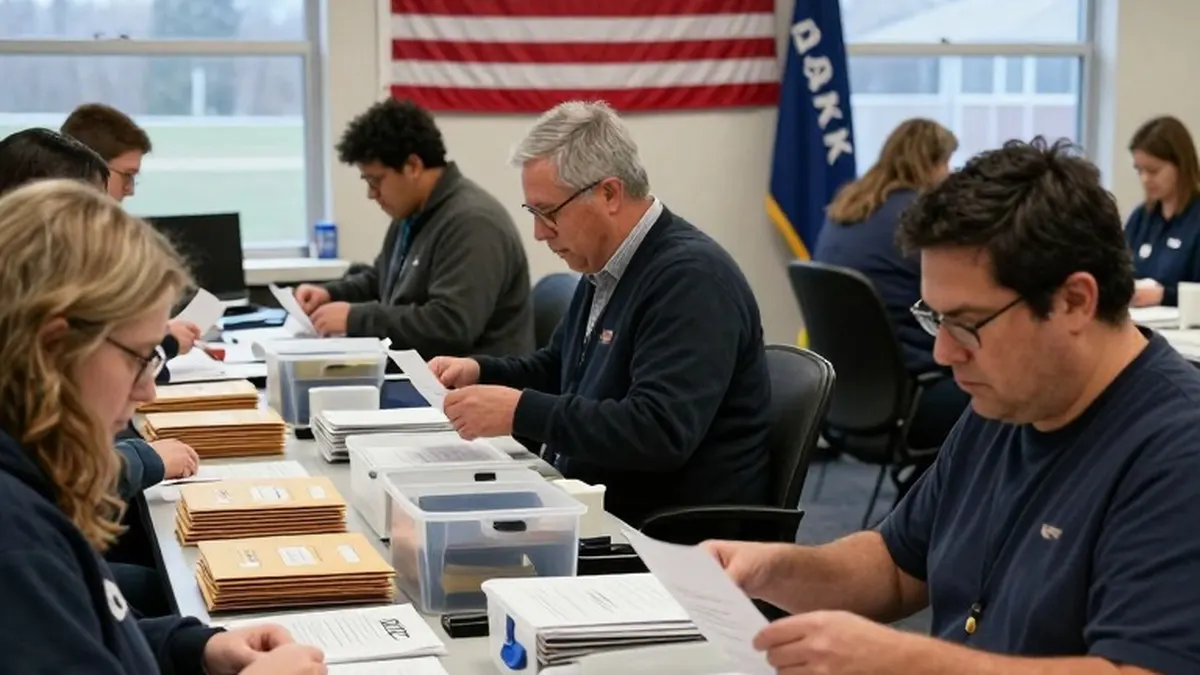
That date carries weight for two reasons. It is Alaska's deadline for final mail absentee ballots to reach election officials, which helps explain why this close race has dragged on, and it is also the day the state Division of Elections would conduct the ranked choice tabulation if one is needed. Alaska releases its votes in uneven batches, and the remainder is expected early next week.
Under Alaska's system, if no candidate tops 50% of the vote, the lowest-ranked candidates are eliminated one at a time and their ballots are redistributed based on each voter's ranked preferences. Ballots from voters who did not rank the remaining candidates are treated as exhausted and drop out of the final count.
Peltola could avoid that process entirely by finishing above 50%. She needs 53.8% of the remaining ballots to clear the threshold, a plausible outcome given her recent strength: on Friday night she captured 58% of newly reported votes, while Sullivan took 38%.
Sullivan's first possible path back is overtaking Peltola in first-choice rankings, but the math is forbidding. With roughly 12,000 votes still outstanding, he would need about 92% of them just to tie, a performance around 46 points better than he has managed in the count so far and well beyond anything either candidate has posted in any single batch.
His second path runs through ranked choice redistribution, and the Decision Desk analysis suggests it is effectively closed. About 11,300 tabulated ballots list a first-choice candidate other than Peltola or Sullivan, a pool that could grow to roughly 12,000. To erase his deficit, Sullivan would need around 93% of those redistributed votes. The state's Cast Vote Record, covering more than 270,000 ballots, shows he does receive a significant transfer from voters who backed third-place Republican Gerald Heikes, but over 45% of voters who ranked Heikes, Dan J. Sullivan Jr. or a write-in did not rank either leading candidate afterward, leaving those ballots exhausted.
If current patterns hold, only about 6,600 ballots will actually flow to the top two finishers. Should Sullivan trail by more than that once every ballot is counted, catching Peltola in the ranked choice tabulation becomes mathematically impossible. The Decision Desk said it will evaluate incoming ballots before deciding whether to formally project the race or leave the outcome to the state's ranked choice process.