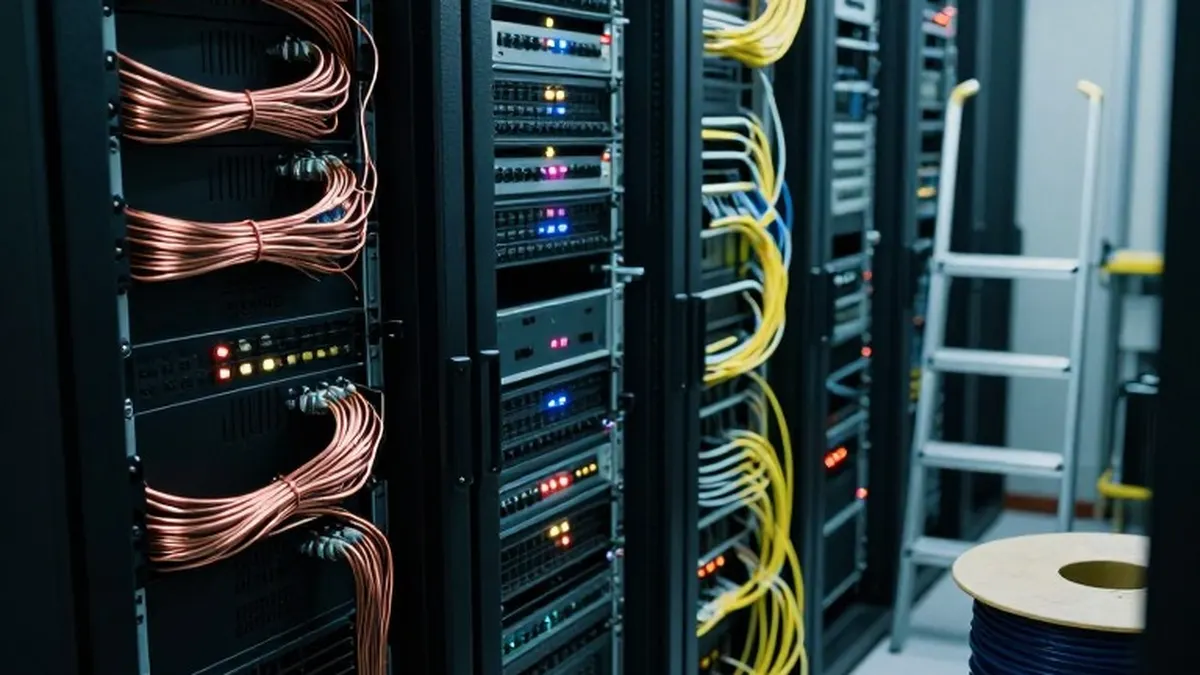
Transportation Secretary Sean Duffy said Friday that the nationwide ground stop ordered by the Federal Aviation Administration was linked to work replacing outdated copper wiring with a fiber optic line at what he described as a remote FAA facility. Speaking at a press conference, Duffy characterized the job as routine maintenance rather than part of a major modernization push.
The secretary explained that the old copper line was being retired altogether. He told reporters it was "such an old wire that it was being discontinued, meaning that line was going to get shut down," which made the upgrade necessary.
What remained unclear, according to Duffy, was the root cause of the failure that followed. He said the problem could have stemmed from faulty hardware, a misconfigured router, or incompetence on the part of contractor L3Harris.
Whatever the cause, Duffy said the newly installed router began flooding other routers across the Air Traffic Control system. He described more than 1,000 connection attempts every 4 to 5 seconds, a surge that disrupted radar feeds and communications with aircraft and led to thousands of flights being grounded on Friday.
Duffy also used the occasion to press Congress for additional funding to modernize the Air Traffic Control system and to defend the FAA's progress so far. "We are building, we are building safely, but we are building fast," he said, while noting that Congress had provided only a partial payment toward the work he says is required.
L3Harris, the contractor involved in the upgrade, said it has been modernizing the communications infrastructure that supports the National Airspace System in close coordination with the FAA.
In its statement, the company said it had completed more than 70 percent of the planned conversion of airspace communications from legacy copper wires to a fiber optic system, working alongside its telecommunications partners and the FAA.
L3Harris added that it is supporting the FAA's investigation into the conditions that led to the November 13 ground stop, and said it takes the stoppage and its impact on travelers, airlines and air traffic operations seriously. The company said safety and reliability are its highest priorities.