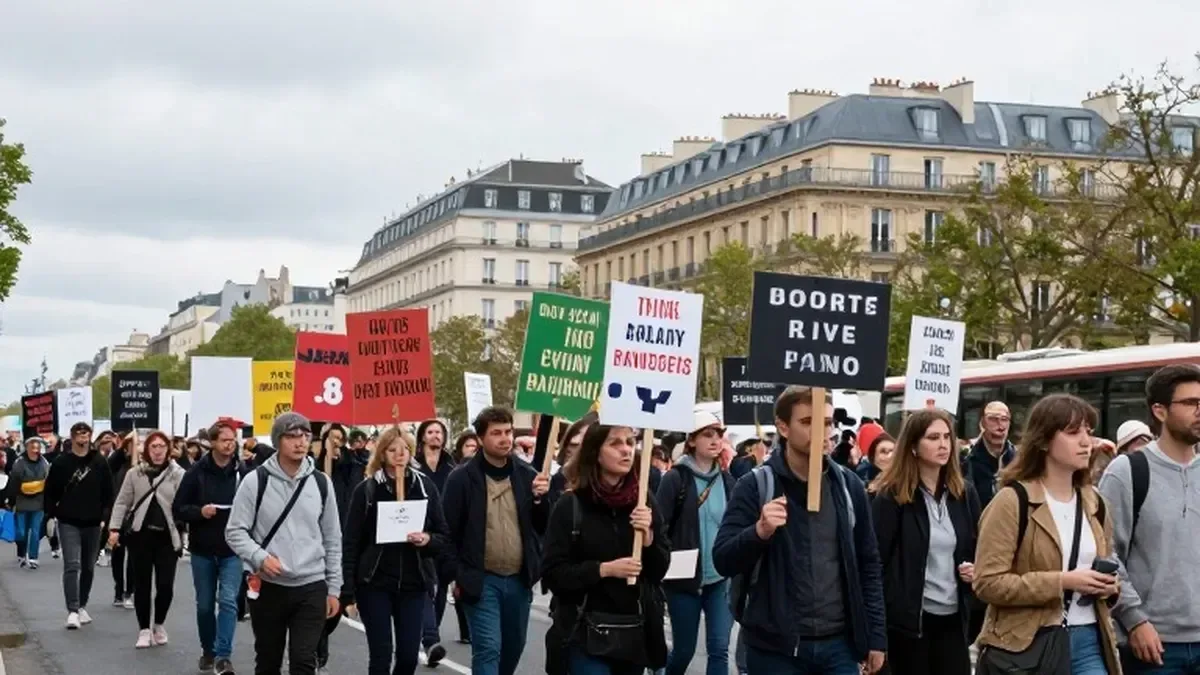
Large scale labor strikes and public demonstrations took place across France on Thursday, with hundreds of thousands of participants expected in the streets. Trade unions organized the action, drawing crowds to major cities including the capital, Paris, as well as Marseille and Lyon in the south, Nantes in the west, and Lille in the north.
The protests have become a recurring feature of the French political landscape since September. The movement initially began with students protesting poor conditions in public high schools. Over the past few months, the scope of the demonstrations has broadened to include various grievances related to the rising cost of living and social services.
Participants on Thursday demanded specific economic and structural changes. Key demands included an increase in the minimum wage, higher salaries for all workers, tax reforms, and improved conditions within the education system. Organizers reported that protests were scheduled in 260 different cities and towns. The Education Ministry estimated that 16 percent of teachers nationwide would join the strike.
President Emmanuel Macron responded to the growing unrest by convening a defense and security meeting on Wednesday. The purpose of the gathering was to ensure public order during the demonstrations. This move highlights the tension between the government and the protesting populace as the country navigates these widespread strikes.
The timing of these protests is politically significant for France. The country is set to hold a presidential election in April of next year. Incumbent President Macron is barred from seeking another term due to the two term limit. Current polls indicate that Marine Le Pen, a far right candidate, is the favorite to win the election. If she succeeds, she would become the first female president of France.
Rebecca Collard, reporting from Marseille for Al Jazeera, noted that the movement started in Paris with the student initiative. She observed that the protests have spread rapidly across the country in recent weeks, with Marseille becoming one of the locations for some of the largest gatherings.
In Lille, Hugo, a history student, expressed frustration with the current social climate. He stated that workers are angry about low wages and increasing expenses. He also pointed out a perceived lack of public services in universities and high schools, describing a common anger that motivated his participation in the protest. He added that wealth is concentrated in the hands of a small group, necessitating a fight to change the situation.
The demonstrations were not without incident. The Reuters news agency reported that riot police deployed tear gas at a demonstration in Lyon. France has faced criticism regarding its handling of the recent unrest, with several individuals making allegations of police violence.
The G7 foreign ministers meeting, which was originally planned for Marseille, has been moved to Paris at the last minute. This decision follows six weeks of nationwide protests. According to diplomats who spoke to Reuters, the abrupt change was chaotic and is expected to harm France's international image.
These events in France mirror trends in other parts of Europe. Several countries, including Germany and Portugal, have experienced similar protests in recent weeks. The common themes in these demonstrations include declining living standards and a shortage of affordable housing.