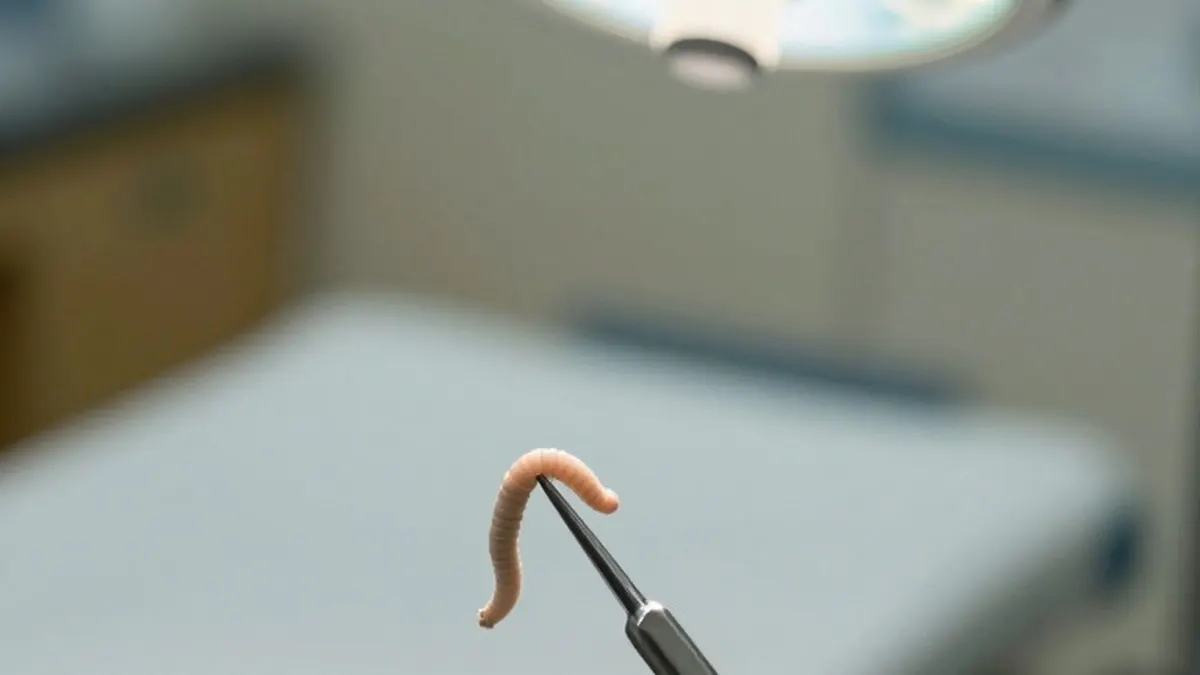
A 71-year-old crop farmer in South Korea has undergone a medical procedure to remove eleven living worms from his eyes. The patient had been experiencing significant discomfort for two months prior to his visit to an eye clinic. During the extraction process, doctors discovered that many of the female worms were pregnant, meaning the man avoided having living larvae hatch directly into his eyes.
The man reported to his doctors that he felt something stuck in both of his eyes for the previous two months. His symptoms included redness and blurry vision. When ophthalmologists examined him, they immediately identified multiple mobile, whitish roundworms. The condition of his eyes was consistent with the presence of the parasites.
Physical examination revealed that the blood vessels in the conjunctiva, the membrane covering the eye, were enlarged. This dilation caused the red appearance of his eyes. Additionally, the cells of the cornea, which is the transparent outer layer of the eye, had eroded. Doctors suggested that this erosion may have resulted from the mating activities of the helminths within his eyes.
The details of the case were published in a report in the New England Journal of Medicine. The medical team administered a topical treatment to numb the man's eyes before beginning the removal process. Using fine forceps, the doctors carefully plucked out the worms one by one.
In total, the team collected eleven adult worms. The specimens varied in size, ranging from 11 to 22 millimeters in length. The successful removal of the parasites marked the end of the man's two-month ordeal with the foreign objects in his vision.
Following the extraction, the doctors examined the worms under a microscope to identify the specific species. They identified the parasites as Thelazia callipaeda nematodes. These particular worms are widespread across Asia and have also established populations in parts of Europe.
The Thelazia callipaeda nematode primarily infests the eyes of cats and dogs. However, the parasite can occasionally transfer to humans inadvertently. In this case, the farmer likely contracted the infection through contact with the typical animal hosts.
The discovery of pregnant female worms among the extracted specimens highlighted the potential severity of the infestation. Had the doctors not removed the adults before they reproduced, the man would have faced a higher burden of larvae within his eyes.
This case underscores the importance of seeking medical attention for persistent eye irritation, particularly for individuals who work outdoors or in agricultural settings. The timely intervention prevented further complications from the parasitic infection.
The medical team's careful approach ensured that all eleven adult worms were removed. The identification of the specific nematode species provides valuable data for understanding the distribution and behavior of Thelazia callipaeda in the region.