The documentary form has long been a source of debate, with controversies dating back to Robert Flaherty's 1922 film Nanook of the North. That early work redefined cinematic imagination but drew criticism for staged scenes and the use of actors. Similar disputes arose decades later when Errol Morris released The Thin Blue Line, a compelling reexamination of a Texas murder case that led to an overturned conviction but also prompted inquiries into his reconstruction of events. More recently, Michael Moore's Fahrenheit 9/11 brought millions to theaters while generating heat over what was exaggerated or omitted.
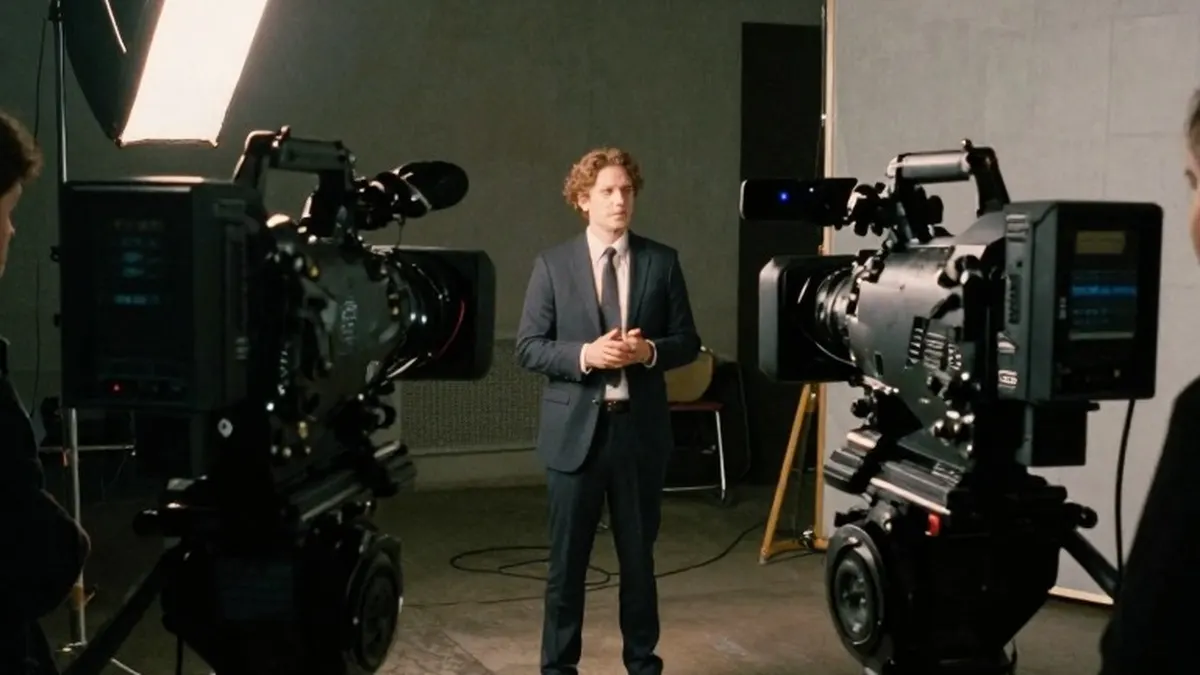
This year's documentary sensation, You Can See Everything, directed by Nathan Fielder and Lance Oppenheim, presents a unique challenge. The film ostensibly investigates the lies told by Elizabeth Holmes and her husband, Billy Evans. However, it has attracted box office numbers typically reserved for midbudget thrillers, while simultaneously inviting skepticism about its methodology. The production utilized two camera setups for every reaction, and Holmes initiated the project, possibly with the help of crisis PR specialist Risa Heller, who also secured a soft interview in The New York Times.
Skepticism extends beyond standard concerns about selective editing. The project is composed by individuals known for presenting falsehoods as truth. Holmes spent years convincing presidents of her reality, raising questions about the honesty of her on-screen statements. Fielder, who built a career blurring fiction and truth, including a season finale of his HBO show The Rehearsal that convinced a child he was the boy's father, adds another layer of complexity. His involvement casts a shadow over the exercise, leaving viewers to wonder how much of what they see is shaded for effect.
Even Amanda Seyfried, who serves as the audience surrogate, is a skilled performer. Despite her history of playing fictional roles, such as introducing writers to William Randolph Hearst or being raised by Jean Valjean, viewers tend to trust her as a conduit for reality. The film promises that the audience can see everything, yet it appears to dissect the truth at every turn. Filmmakers Matt Pearce noted on Substack that Fielder claims to be accurate while lying through his teeth.
Despite these criticisms, the film is considered great fun and a compelling meditation on gullibility. However, its power relies heavily on its categorization as a documentary. If the film were fully invented, it would lose much of its impact. There is a risk that such productions could turn the genre into a vehicle for postmodern irony, which is a concerning development in an ecosystem where shared facts are already struggling.
Other recent documentaries have faced similar issues. Alex Gibney created a speaking avatar of Elon Musk using the tech mogul's own words, while Ava DuVernay used AI to animate archival photos in The 14th. These choices seem minor compared to the complexities of You Can See Everything, yet they all contribute to a double reckoning for the genre. Documentary filmmaking is currently grappling with technological challenges in the age of deepfakes and ethical questions about defining reality in an era of echo chambers.
An irony persists in the current landscape: a largely scripted movie may paint a truer picture than observational works. Sacha Baron Cohen's new film Ali G: Who Iz I? picks up on the lab experiment started in his 2018 series Who Is America?. Fielder worked on that series and learned from Baron Cohen the power of unmasking foolishness. Baron Cohen's new work achieves similar aims without hiding behind the protective shield of the word documentary.
In a time of rampant disinformation and conspiracy theories, where objective facts are often viewed with suspicion, You Can See Everything stands as an emblematic work of the era. The film opens a window not just on Holmes, but on society itself. It serves as a fascinating snapshot of our social state, even if its status as a traditional documentary remains up for debate.