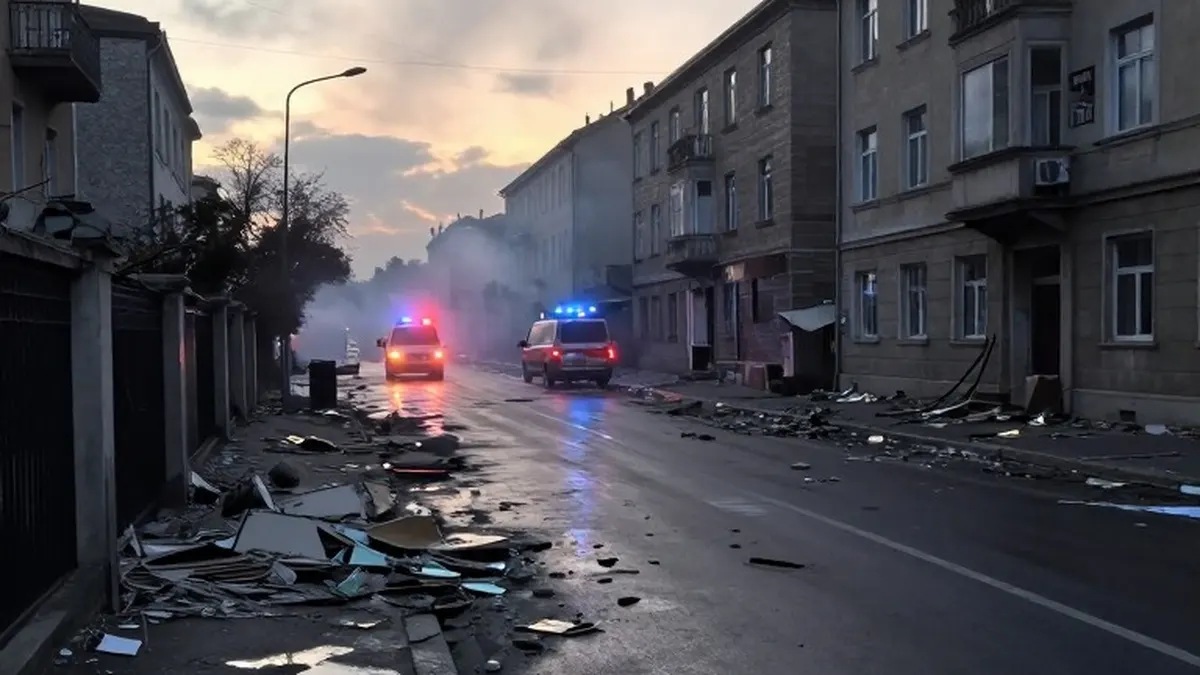
Missile and drone attacks struck multiple regions of Ukraine on Saturday, wounding at least nine people as Kyiv and Moscow prepared for a new round of diplomatic talks. Ukrainian President Volodymyr Zelenskyy reported that Russia employed 36 missiles and 172 drones to target critical infrastructure across the country. He noted that only four of the missiles were intercepted, highlighting a gap in air defense capabilities. The strikes affected Kyiv and twelve other regions.
Zelenskyy accused the Russian side of intensifying its offensive operations just before high-level discussions were set to begin. Negotiators from Russia, Ukraine, and the United States are scheduled to meet on Tuesday in Abu Dhabi, the capital of the United Arab Emirates. This fourth round of negotiations aims to end the war, following previous talks held in Geneva in February. Western governments supporting the peace initiative are currently working on a new formula to break the diplomatic impasse, while acknowledging that key questions regarding territory and security remain unresolved.
"Russia has a very particular view of diplomacy, as a subtype of aggression," Zelenskyy wrote on social media. He added that he hoped the United States and other partners would act on principle during the upcoming discussions.
In the Ukrainian capital, overnight attacks damaged homes and commercial properties, triggering new fires. Local authorities reported that a kindergarten was partially destroyed, with photos showing rubble near the damaged building. Kateryna Korniichuk, a 64-year-old resident, described the chaos of the blast wave that threw her and her granddaughter against the walls of their home. She told The Associated Press that the lack of sleep and peace was difficult for everyone, especially the children.
The strikes also forced officials to close the Northern Bridge in Kyiv, a major route connecting the city with residential areas on the east bank of the Dnipro River. Russia's Ministry of Defense confirmed the bridge was a target, citing its role in transporting weaponry and military hardware for Ukraine's armed forces. Kyiv Mayor Vitali Klitschko stated that repair work had begun and that water pressure had been stabilized, although he had earlier described the city's energy situation as extremely difficult.
Ukraine's Energy Ministry reported that the missile attacks damaged power networks carrying electricity from nuclear plants to Kyiv and central regions. Outages were most widespread in the Kyiv, Zhytomyr, Kharkiv, Donetsk, and Dnipropetrovsk regions. These disruptions were separate from the scheduled rolling blackouts already in effect to protect the grid. Russia also claimed strikes on an industrial facility producing Flamingo missiles, a power station, and an ammunition plant in the wider Kyiv region.
Zelenskyy indicated that preliminary findings at one energy facility showed Russia used KN-23 missiles manufactured and supplied by North Korea. He described this as further proof that global sanctions regimes need to be significantly strengthened, while technical assessments at other sites continue.
Recovery efforts continued in southern Ukraine, where the village of Komyshuvakha remained devastated by Russian guided bombs dropped on Monday. Emergency services recovered nine more bodies in the previous 24 hours, bringing the death toll to 55 early Saturday morning. Dozens of people remain missing. Mykola Krasnov, a 72-year-old resident, said he was still searching for his wife, who went to collect humanitarian aid when a 3-ton bomb struck the area.
In Russia, a Ukrainian drone attack killed one person in the Belgorod region when it hit a private home in Grayvoron. The Russian Ministry of Defense said its forces shot down 411 Ukrainian drones overnight across ten regions, including over Crimea and the Black and Azov Seas. In the Saratov region, a drone attack damaged civilian infrastructure and residential buildings, with reports indicating the Saratov Oil Refinery was hit. In Oryol, officials said attacks damaged commercial and production sites, including the Proton-Electrotex plant.
These developments underscore the continued intensity of the conflict as both sides engage in military operations while diplomatic channels remain open.