Iran’s Islamic Revolutionary Guard Corps has issued a sharp warning to France, cautioning the European nation against falling into what it describes as an Israeli trap. The statement follows Paris’s recent accusation that an Iranian cyber unit targeted the refrigeration systems of hundreds of supermarkets across the country. IRGC spokesman Hossein Mohebbi characterized the French allegations as ridiculous, suggesting that Israel is attempting to turn European nations against Tehran to secure their backing.
In a post on the social media platform X on Saturday, Mohebbi urged Paris to be wary of the false flag operations attributed to the Israeli regime. He emphasized that, unlike the United States and Israel, the IRGC does not typically target civilian infrastructure. This defensive posture highlights the broader diplomatic friction emerging between Tehran and key Western allies amid ongoing regional conflicts.
France specifically identified Shahid Kaveh, an offensive cyber unit within the IRGC’s Electronic Warfare and Cyber Defence Organisation, as the group responsible for the incursion. According to the French foreign ministry, the attacks occurred during the night of October 11 to 12 and impacted refrigeration control systems at more than 700 retail locations. The disruption caused fires, significant physical damage, and the loss of food valued at tens of millions of euros.
In response to the incident, Paris stated it would summon the Iranian ambassador to discuss the matter. Additionally, the French government proposed the introduction of new sanctions targeting specific individuals and entities within the European Union. Iran’s foreign ministry countered that the allegations were unfounded, asserting that Tehran would take necessary steps to protect its national interests and security against what it deemed illegal actions by foreign states.
This diplomatic dispute unfolds against a backdrop of escalating military confrontation between Iran and the United States, particularly regarding the strategic Strait of Hormuz. On Sunday, Tehran claimed to have launched an attack on a US radar site located in Bahrain. Iranian state media reported that the IRGC used six drones to strike a US air defence radar station at Riffa Air Base.
Bahrain’s interior ministry issued multiple warnings to the public regarding the potential threat, advising residents to take cover. This latest claim follows a similar announcement made by the IRGC on Friday, in which it stated that it had destroyed a US early-warning radar facility in the same country. The frequency of these claims has intensified scrutiny of the region’s security dynamics.
US Central Command, however, offered a different perspective on the Friday incident. Centcom rejected the IRGC’s account, stating that American forces had successfully intercepted two Iranian attack drones heading toward Bahrain. The US military reported that there were no injuries or damage resulting from the interception.
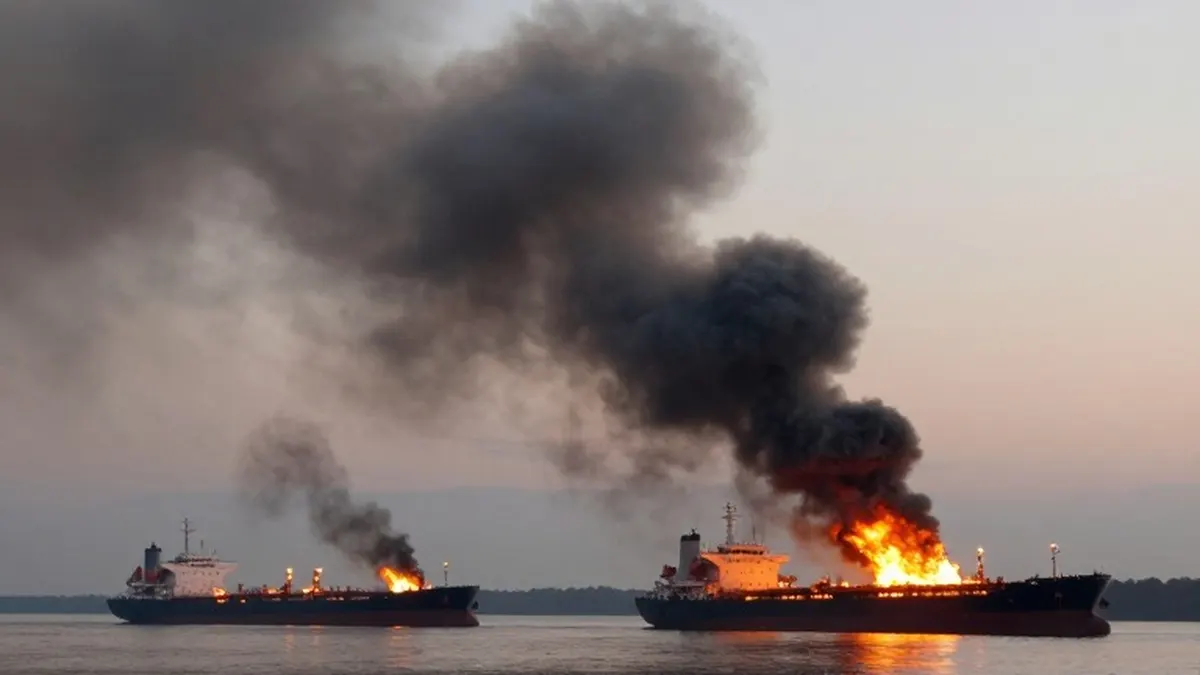
The situation in the Strait of Hormuz has also deteriorated significantly, with reports of oil tankers striking naval mines and catching fire while attempting to navigate the waterway. The IRGC Navy announced early on Sunday that two tankers had exploded and caught fire after hitting mines south of the strait. The vessels were accused of using an unauthorised route with their navigation and automatic identification systems turned off.
These events followed reports on Saturday of two similar incidents involving tankers in the southern part of the waterway. Reuters noted that Iranian state media had described three tankers catching fire after striking mines on Saturday, with one incident occurring in the eastern section of the strait. The IRGC Navy has since warned shipping companies to coordinate with its maritime traffic control centre before transiting the strait.