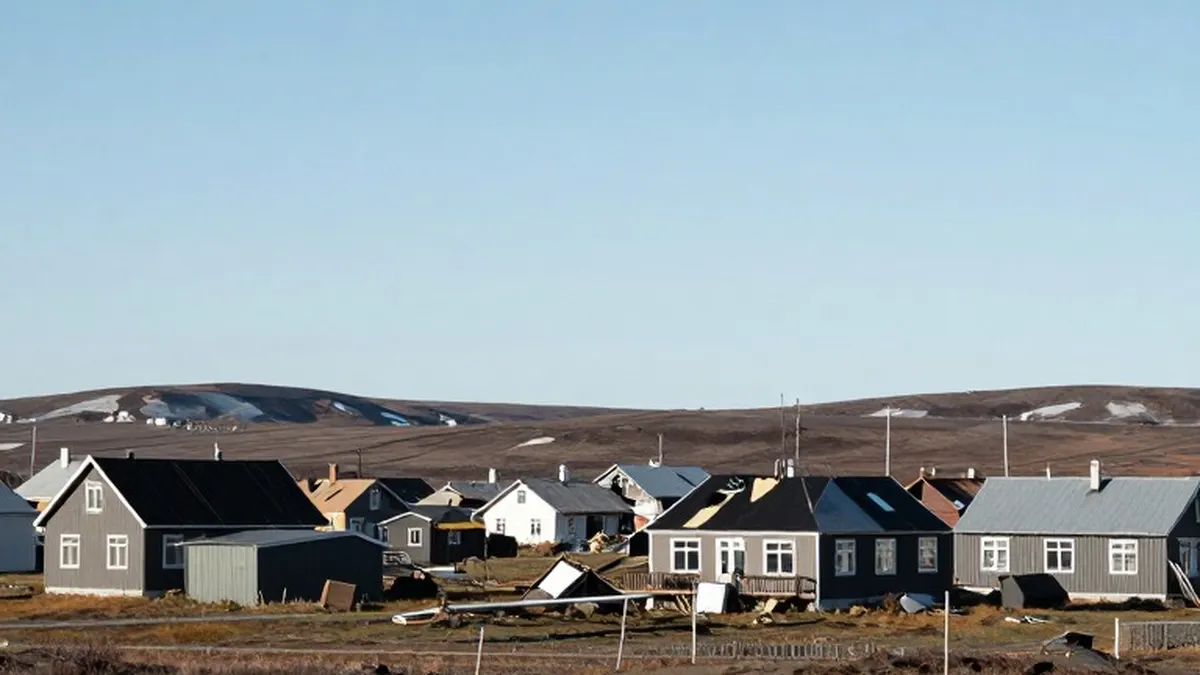
A year after the remnants of Typhoon Halong devastated communities in Western Alaska, hundreds of people remain displaced. In Kipnuk, among the villages hit hardest, construction crews are repairing homes, but residents still do not know when their community will be reunited.
The storm damaged infrastructure, lifted houses from their foundations and forced more than a thousand people from their homes across numerous Alaska Native villages beyond the road system. Kipnuk, a tundra community with fewer than 200 homes, is consistently reachable only by air. Alaska’s Emergency Operations Center reported damage to 90% of its residences. Dozens of houses were carried off their foundations, sometimes while families were inside.
Much of Kipnuk’s population is now dispersed across Alaska, with some residents living outside the region their ancestors inhabited for thousands of years. Several dozen workers have spent long days rebuilding the village. During a clear August day, a crew led by Eddie Chuckwuk used air compressors in an effort to lift a building back onto its foundations. Chuckwuk, who grew up in Kipnuk, said his goal was to bring people home from unfamiliar places where displacement has been difficult.
State officials estimate that Federal Emergency Management Agency funding will help make most homes habitable by Thanksgiving, through work including replacing soaked insulation and fixing roofs, windows and doors. Most residents lacked home or flood insurance, according to the state. The available assistance will not fully restore some badly damaged houses to their condition before the storm, and Alaska is seeking additional funding for replacement housing.
Other barriers remain. There is no estimate for reopening the school. Leona Paul, who has cooked for construction crews, said the storm left some residents too traumatized to come back, particularly older people. Climate change is also increasing the vulnerability of communities such as Kipnuk to future storms. Most people in the village want to rebuild in a safer location, but the FEMA money received so far is restricted to restoring damaged property. Funding for relocation has not been secured.
For many displaced residents, life in larger communities, including Anchorage, has brought its own difficulties. They describe speaking less Yugtun, their native language, and being separated from loved ones. Children accustomed to roaming around the village must adjust to traffic. Leona Paul, who spent part of the summer in Kipnuk, said she valued the freedom of being there.
Displacement has also interrupted Alaska Native traditions of hunting and gathering food. Some families returned during the summer to spend time together and practice subsistence. On a tundra bluff upriver from Kipnuk, Burt Paul’s family gathered buckets of orange salmonberries, known in coastal Yugtun as naunraqs. After the destruction, Paul had wondered when he would see the native plants growing again.
Paul remained in Kipnuk as a community leader after his family evacuated. Their usual camping and berry-picking outings lasted days, but this summer they took shorter trips when everyone could be in the village. He said maintaining those practices mattered despite the disruption. When his family and the wider community will finally be together again remains uncertain.