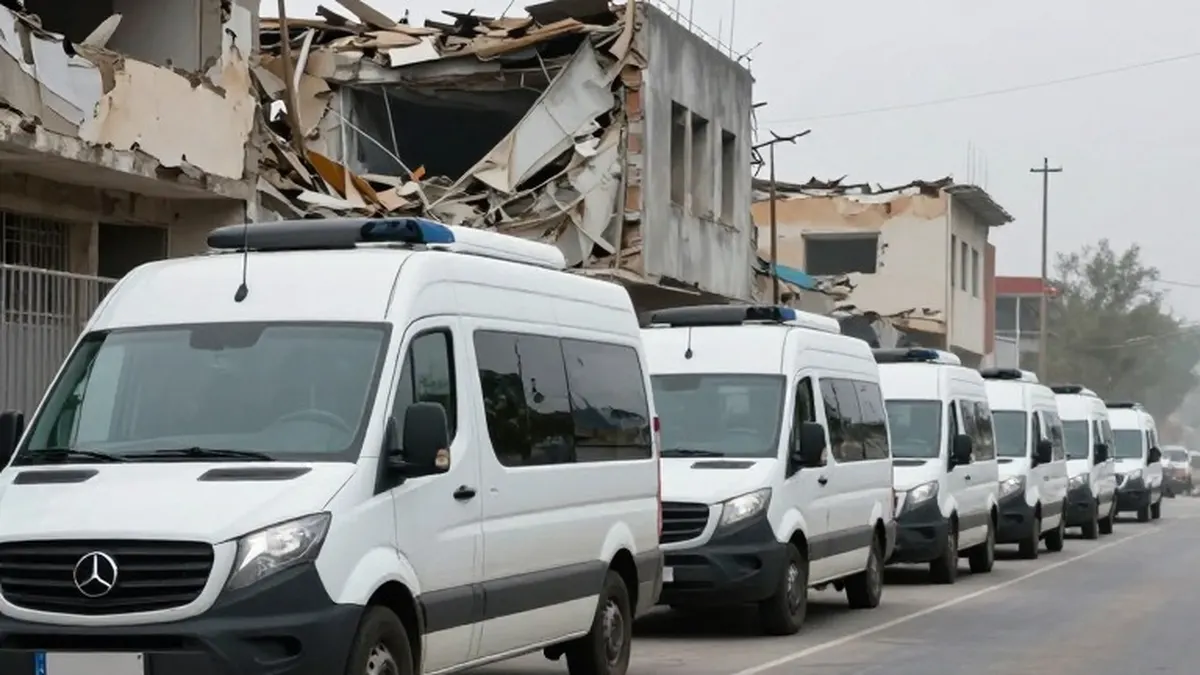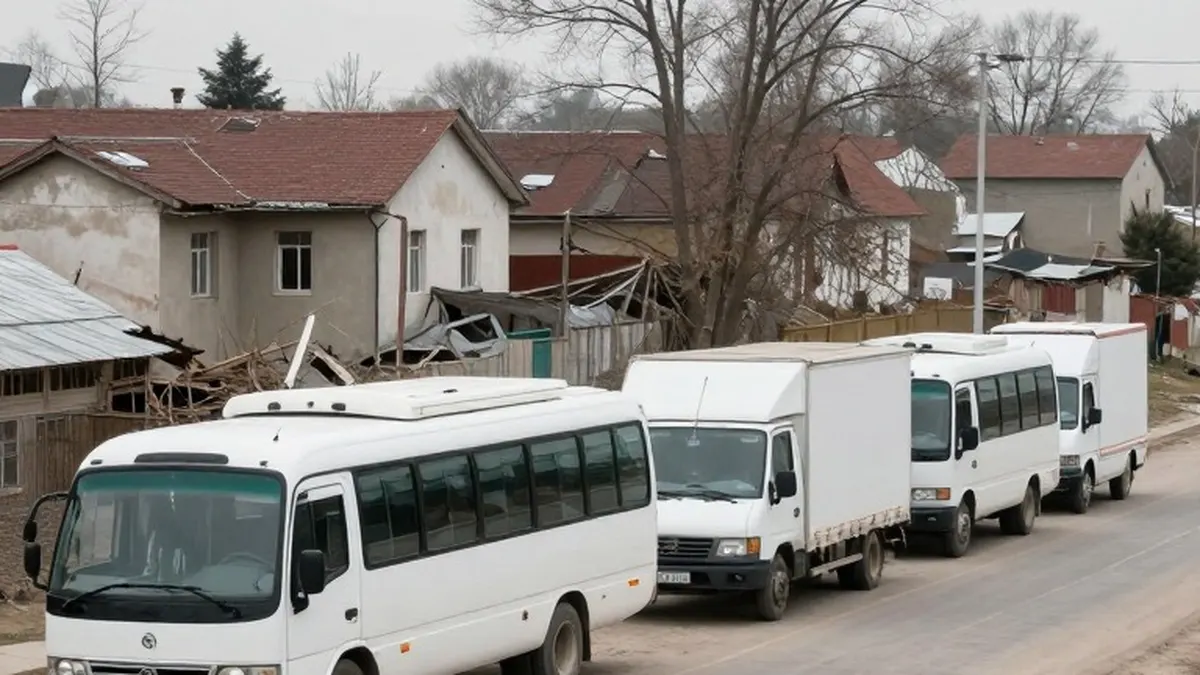
An aid convoy entered the Russian-held town of Oleshky in Ukraine's southern Kherson region on Friday, marking the culmination of weeks of logistical efforts to organize a relief operation for the local population. The Russian newspaper Izvestia reported that the vehicles carried essential food and medical supplies. This development occurred as the six-day localized ceasefire, brokered by the United States, extended into its third day. Moscow emphasized that this specific truce in Oleshky should not be interpreted as part of a broader pause in hostilities.
High-level humanitarian officials met in the town overnight to oversee the operation. Ukrainian Human Rights Commissioner Dmytro Lubinets and his Russian counterpart, Yana Lantratova, coordinated the efforts, according to Russian state TV channel Vesti. Lantratova stated that 25 buses with at least 750 seats were on standby to evacuate residents who wished to leave the city. She noted that these evacuations would continue until 2 pm local time, which corresponds to 12:00 GMT.
Lubinets issued a statement confirming that remaining residents would have the opportunity to depart safely. He underscored the critical importance of maintaining the six-day ceasefire to ensure the safety of those still in the area. The town was seized by Russian forces soon after Moscow launched its invasion of Ukraine in February 2022. The humanitarian crisis in Oleshky had intensified in recent weeks, prompting urgent diplomatic and logistical responses from both sides.
On Thursday, both Moscow and Kyiv announced that demining operations around Oleshky had been completed, clearing the path for the aid delivery and evacuation process to begin. Lantratova added that two people were killed during the demining efforts within the city. The completion of these safety measures was a prerequisite for opening the corridors that allowed the convoy to enter and for the buses to transport residents out.
The White House maintains that US First Lady Melania Trump mediated the ceasefire in Oleshky. She described the situation as being on the brink of disaster, with food and medical supplies running perilously low for the up to 2,000 people still living in the town. According to the White House, she initiated talks after learning about the humanitarian conditions at one of her events during the United Nations General Assembly session in September. Oleshky, which was once home to approximately 24,000 people, currently lacks electricity, heat, and running water as it approaches another harsh winter.
The Vatican has presented an alternative narrative regarding the origin of the truce. The Holy See suggested that the Pope was instrumental in helping to pause the fighting through direct phone calls with Russian President Vladimir Putin and Ukrainian President Volodymyr Zelenskyy. This differing account highlights the complex diplomatic channels active in the region, even as the primary credit for the specific Oleshky arrangement is attributed to Washington.
While the truce in and around the devastated city has been observed since Tuesday, the wider war that began more than four years ago continues elsewhere. Kremlin spokesman Dmitry Peskov stated on Russian state TV on Friday that the situation in Oleshky is an isolated case. He cautioned that this local agreement should not be extrapolated to indicate progress in the broader peaceful settlement process for Ukraine.
Combat operations persisted in other parts of Ukraine on Friday. Ukrainian officials reported on the Telegram messaging app that Russia struck an industrial facility near Kremenchuk while also hitting the capital, Kyiv, and Kharkiv, the country's second-largest city. Moscow stated that it targeted energy infrastructure in and around Kyiv, as well as in the Dnipropetrovsk region. Additionally, Russian forces hit port facilities in the Odesa region and cargo vessels that they claimed were being used by the military.
In the Russian capital, Mayor Sergei Sobyanin reported on Telegram that authorities had downed most of the more than 850 drones that were heading toward Moscow overnight. The continued exchange of long-range strikes underscores that the localized peace in Oleshky exists within a much larger and still active conflict.