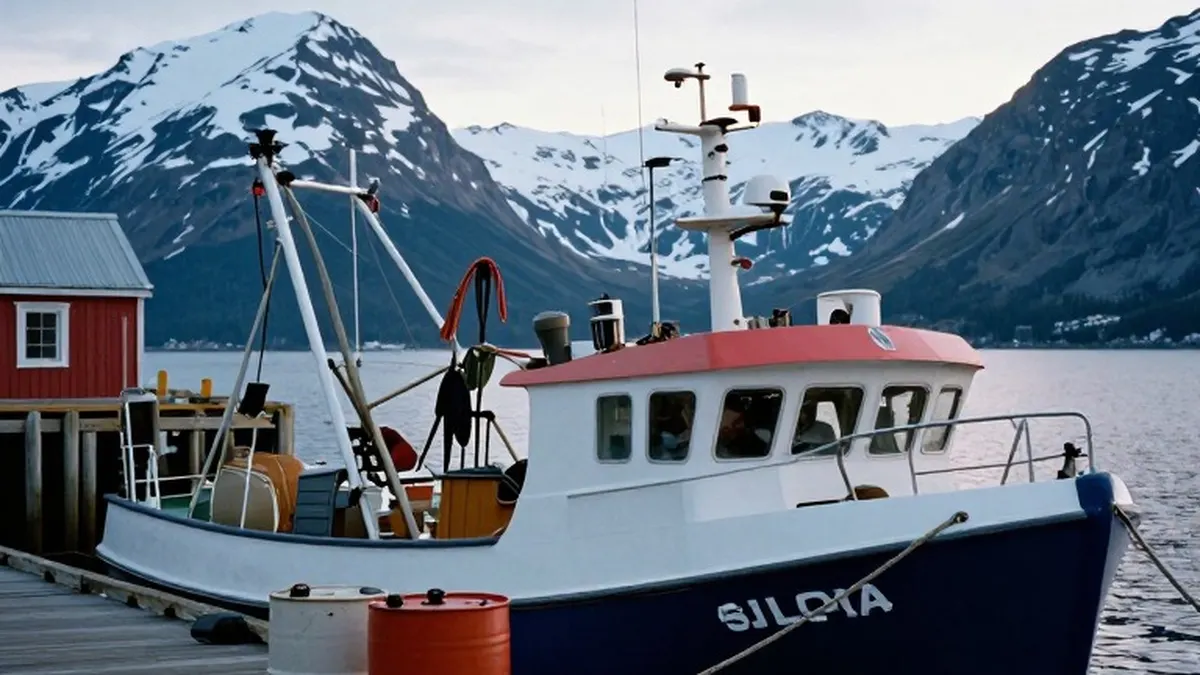
As Republicans work to hold their slim majority in Congress, an unusual contest is unfolding in Alaska, where the threat to the party's grip comes not from a Democrat but from an independent commercial fisher making his first run for office.
Bill Hill, an Alaska Native with a background in education and construction, is running to flip the state's single House seat, presenting himself as a working-class candidate determined to make life more affordable for families like his own. Alaskans, like voters nationwide, are deeply concerned about the rising cost of basic necessities, and Hill says he has felt that squeeze personally, pointing to high fuel prices he attributes to Donald Trump's war on Iran.
"When the spring fuel barge showed up in my home town of Naknek this spring, I went from paying $118 to fill my truck up to over $200," Hill said. "Our gas went from $6.70 a gallon to almost $9 a gallon." He added that heating fuel has nearly doubled, from $4.50 to $8.30 a gallon, while in remote Indigenous villages along the Kobuk River near the Arctic circle, such as Ambler and Shungnak, gas has topped $25 a gallon. "This is crushing Alaskans," he said.
Hill's bid to unseat Republican congressman Nick Begich has picked up steam in the closing weeks before the 3 November election, drawing backing from national Democrats and increased advertising. The nonpartisan Cook Political Report recently moved the race from "likely Republican" to "leans Republican," with the district favoring Republicans by 6 percent. Recent polling shows Hill trailing by single digits, though his support rises as voters learn more about him. The Democratic Congressional Campaign Committee placed the race on its "red to blue" list in September.
Hill has not said whether he would caucus with Democrats if elected. He is one of several independents taking on Republicans in red states this cycle, alongside Senate candidates Dan Osborn in Nebraska and Todd Achilles in Idaho. In Alaska's four-way ranked-choice contest, Begich stands to benefit as the only Republican on the ballot, while support for Democrat Eric Hafner, who is imprisoned in New York and has no evident ties to Alaska, could complicate Hill's path.
Hill has made his personal connection to Alaskans' economic struggles the core of his campaign. "I have spent a life being in the ditches, in the school hallways, on the back decks of fishing boats with hard-working people," he said. A report published earlier this month by the United Way of Anchorage and Alaska 211 found that more than one in three Alaskan households do not earn enough to cover housing, food, childcare and other essentials. Hill blames cuts to Snap and Medicaid, expiring Affordable Care Act tax credits, tariffs, federal job losses and cancelled renewable energy projects for added burdens, with many cuts under the president's One Big Beautiful Bill Act taking effect in 2027.
Hill has also drawn a sharp contrast with his opponent's wealth, calling Begich a "multimillionaire working for billionaires." Hill's reported assets are valued at $119,000, while Begich is worth at least $7.4 million. "He's somebody who doesn't represent the everyday Alaskan in his work," Hill said. Begich's office did not respond to multiple requests for comment but has previously denied his wealth influences his votes, with spokesperson Silver Prout telling the Anchorage Press that the congressman's personal finances have no impact on his legislative decisions. Begich hailed the One Big Beautiful Bill Act as a "transformative victory" and continues to back Trump's war in Iran.
In 2024, Begich, the conservative son of a prominent Alaska Democratic family, narrowly defeated incumbent Democrat Mary Peltola by 2.4 percent, even as Trump carried the state by 13 percent. Peltola is now running for US Senate. Like her, Hill supports gun rights, in keeping with Alaska's hunting tradition, and backs both the oil and renewable energy industries.
A Dena'ina Athabascan, Hill has fished commercially since age eight, worked union construction jobs with Laborers' Local 341, and spent 25 years in education as a union teacher, principal and superintendent. More than 20 labor organizations, including the Alaska AFL-CIO, have endorsed him in a state with the nation's third-highest union membership rate, 18.1 percent as of 2025. Begich has signed on to the National Right to Work Act and holds a 0 percent lifetime score from the AFL-CIO. "At the end of the day, unions built the middle class of this country, and they're the ones who can do it again," Hill said.