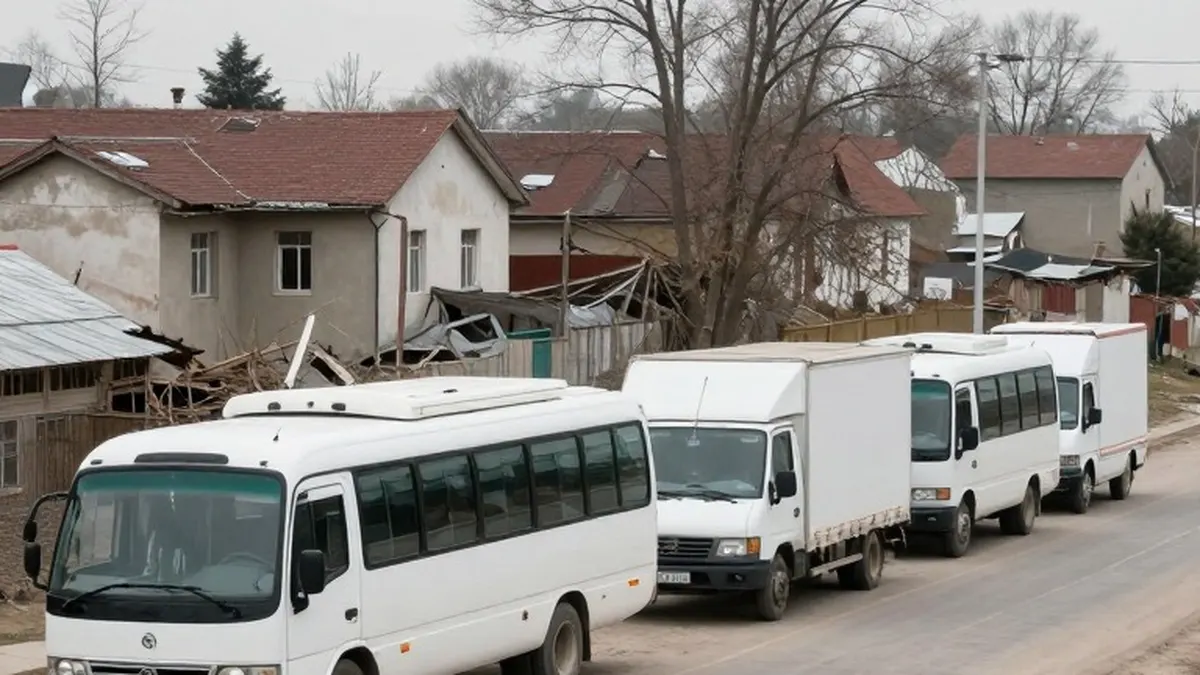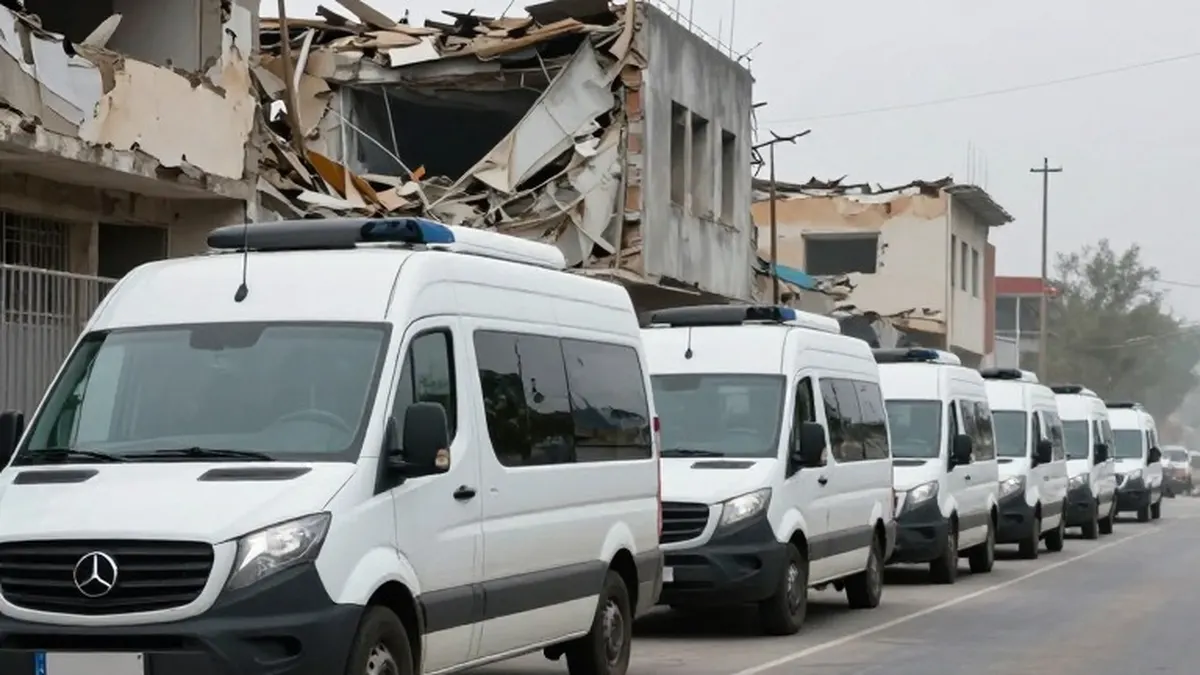
A historic joint relief operation began in the southern Ukrainian town of Oleshky on Friday, marking the first coordinated humanitarian effort between warring sides in over four years of conflict. Under a localized ceasefire brokered by U.S. First Lady Melania Trump, an aid convoy entered the Russian-held town, allowing starving residents the opportunity to evacuate if they chose to do so.
The operation represents a significant moment of cooperation between Ukraine and Russia. While the local ceasefire has held for more than three days in Oleshky, fighting continues elsewhere. Russian forces launched overnight strikes on seven regions, the capital Kyiv, and the southeastern city of Dnipro. Moscow reported shooting down 1,043 Ukrainian drones over its own territory during the night.
In Oleshky, evacuation buses began filling with residents. Russian human rights commissioner Yana Lantratova noted that groups were boarding vehicles, with some heading to Ukraine and others to Russia. Ukrainian Prime Minister Sergiy Koretskyi told parliament that those traveling to Ukraine would move through Russia and Belarus before entering the Kyiv and Chernihiv regions. It remained unclear how many residents had decided to stay behind.
Lanatratova and Ukrainian counterpart Dmytro Lubinets appeared together to confirm the delivery of essential supplies, including food, hygiene products, medical equipment, and fuel. Lubinets stated that all residents in need would receive assistance and emphasized the agreement to facilitate travel for citizens wishing to move to either country. Footage shared by Lubinets showed emotional residents greeting the Ukrainian delegation.
Oleshky, located on the Dnipro River opposite Kherson, was captured by Russian troops in the early days of the full-scale invasion in February 2022. The town has endured extensive damage and severe flooding following the destruction of the Kakhovka dam in 2023. Residents have described dangerous journeys along mine-strewn roads, nicknamed the "road of death," to obtain basic necessities like food and water. Many reported surviving on minimal rations of rice or buckwheat.
The local ceasefire in Oleshky and the Kherson region took effect early Tuesday. Lubinets described it as the first time since 2022 that a ceasefire has been maintained across such a large stretch of the front line for such a significant duration. Prior to the arrival of the aid convoy, demining operations were conducted, during which one sapper and one other person were killed.
Logistical preparations for the evacuation included 25 buses, with special accommodations for bedridden individuals and 50 medical personnel on site. A dedicated bus equipped with pet cages was also provided for residents wishing to bring their animals. This operation offers a glimpse of potential cooperation despite the ongoing intensity of the war, where long-range airstrikes have intensified while front lines remain largely static.
Kremlin spokesman Dmitry Peskov highlighted a "high degree of co-ordination" between the two human rights commissioners. Looking ahead, U.S.-mediated peace talks are scheduled to resume in Abu Dhabi next month for the first time since February. President Donald Trump aims to end the conflict, with Russia hoping to pressure Kyiv into accepting terms such as full Russian control of the Donbas region and a ban on NATO membership. Kyiv seeks to ensure continued U.S. intelligence sharing and access to military hardware, including Patriot missiles and the Starshield communications system.