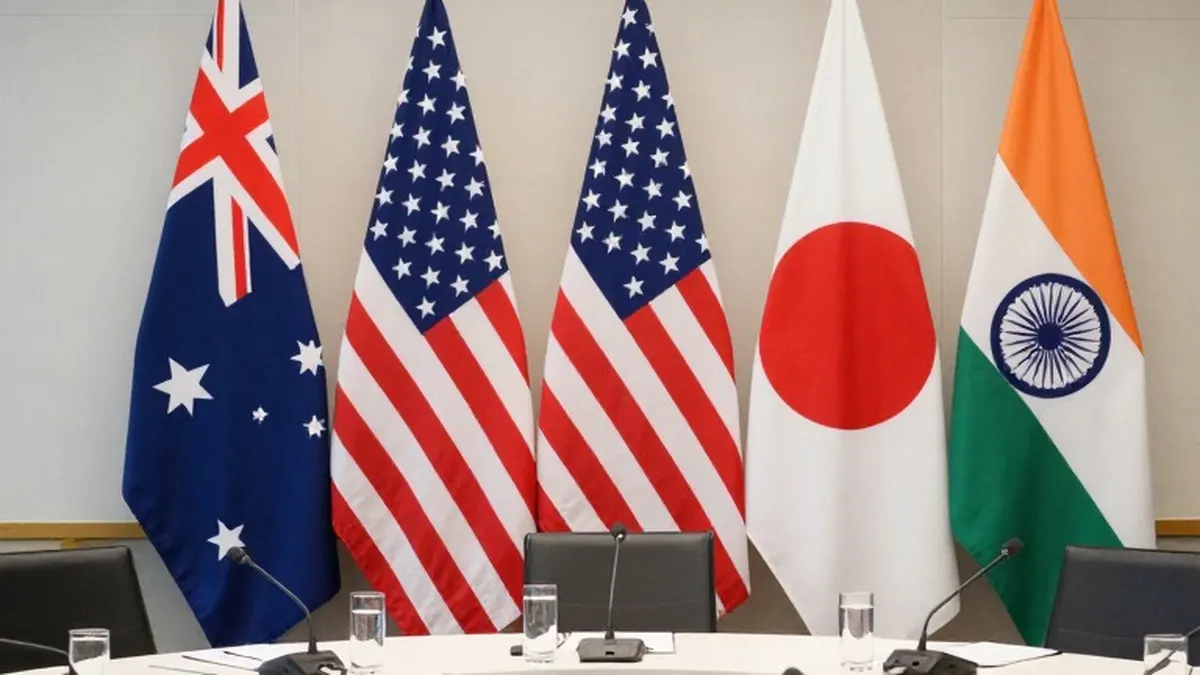
Prime Minister Anthony Albanese is entering a delicate diplomatic phase as he prepares to meet with US President Donald Trump in Manila this Tuesday. The central goal of the upcoming discussions is to secure a rapid resolution to the ongoing conflicts in Iran and Ukraine. Simultaneously, Albanese intends to persuade Washington to maintain a robust presence and active engagement within the Indo-Pacific region.
This gathering in the Philippines marks the first Quad leaders' summit to be hosted by Trump during either of his presidential terms. The US president arrives in the region following a significant midterm election result, where his party faced heavy losses. He will assume a prominent role in various meetings with Asian leaders and will also prepare for historic trilateral talks involving Chinese President Xi Jinping and Russian President Vladimir Putin later this week.
A key underlying objective of the federal government's diplomatic strategy is to avoid provoking China. This is particularly sensitive given that the Quad leaders are convening for the first time since 2024. The timing follows Australia's recent participation in a new agreement alongside the United States and Japan, which focuses on protections for critical artificial intelligence technologies.
The San Francisco Declaration, designed to stabilize supply chains for chips and critical minerals, aims to foster cooperation in response to China's growing influence in AI development. Officials describe this accord as part of the Pax Silica international framework. The goal is to ensure that the US works with its partners to establish AI standards rather than ceding that leadership to other nations. Signatories to the agreement include the United Kingdom, India, Israel, South Korea, and Singapore.
Speaking at the Asean-Australia summit on Monday, Albanese emphasized the necessity of friendship, mutual trust, and optimism for regional prosperity. He stated that in times of global instability, the cooperation demonstrated in these forums helps nations confront shared challenges both domestically and regionally.
Government sources indicate that the intense schedule of international engagements, which includes Albanese's attendance at the Apec leaders' meeting in Shenzhen at the end of the week, is driven by a desire to maintain a strong relationship with Trump. The strategy aims to prevent the United States from withdrawing from its role in global leadership during the final two years of his administration.
Premesha Saha, a senior fellow at the Asia Society, noted that the Quad discussions will likely center on critical minerals, maritime security, and energy security. She highlighted that keeping the US engaged in the Indo-Pacific is a core strategic interest for Australia. The Quad provides one of the few platforms where the US president is integrated into a regional agenda alongside three close partners.
Saha added that after a year where Washington focused its attention elsewhere and opened direct channels with Beijing, securing a Quad leaders' meeting in the region is significant for Australia. While Beijing is expected to criticize the summit as bloc politics, Saha cautioned against overstating the level of Chinese anger, noting that the Quad is not a military alliance or an anti-China coalition.
Jennifer Parker, a non-resident fellow at the Lowy Institute, argued that criticism of Albanese's participation in the annual summit season is shortsighted. She maintained that regional relationships are essential for Australia's security, which in turn underpins national prosperity. Parker suggested that while the US has enduring economic and strategic interests in the area, it is sometimes beneficial for Australia to remind Washington of those interests.
On Monday, Albanese announced a new digital economy program with Asean to support AI safety and digital trade standards. He emphasized that humans must remain in control of AI technology. In separate talks, Albanese discussed the deaths of two Australian backpackers in Laos with President Saleumxay Kommasith, calling the case a tragedy and expressing concern over the charges, while the Lao president stated that officials were working to bring the perpetrators to justice.