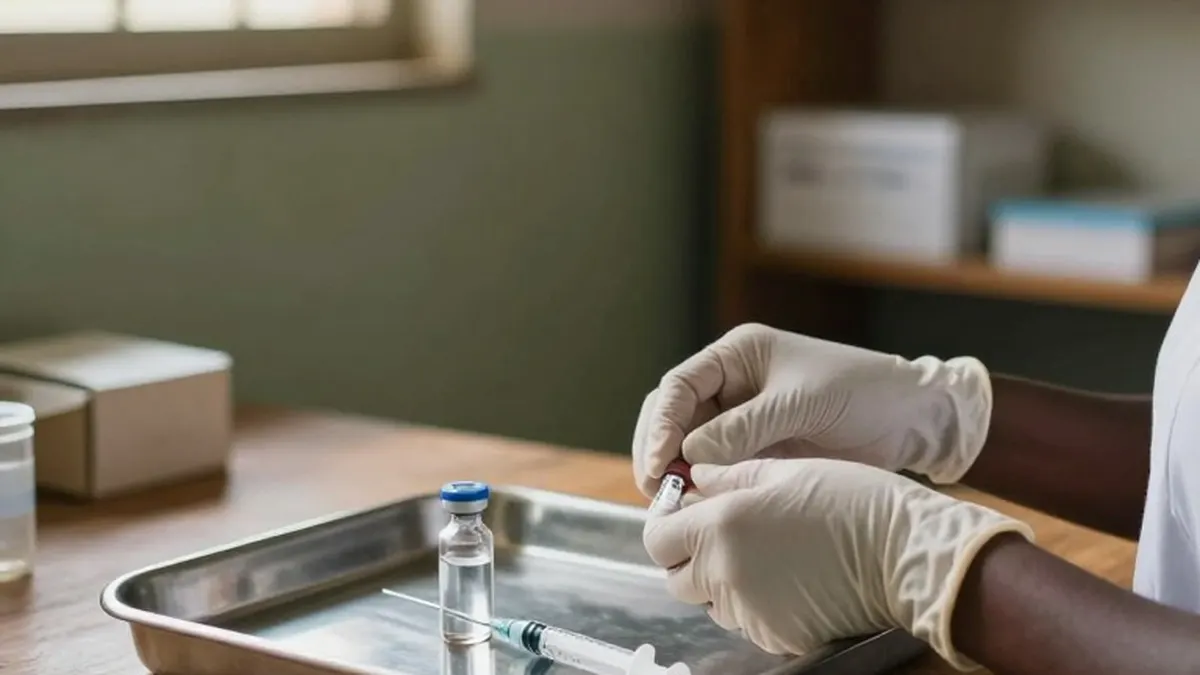
The U.S. Food and Drug Administration has approved a generic version of the world's only twice-a-year shot to prevent HIV, a move expected to make the medication available cheaply and more quickly in 120 low- and middle-income countries.
The manufacturer and the organizations that helped accelerate development of the drug, known as lenacapavir, announced the approval on Monday morning.
In the countries covered by the effort, the shot is expected to cost $40 per person each year, the same as daily preventive pills already on the market. But the injections are far more convenient because they are needed only twice a year, and they nearly eliminated new infections in two groundbreaking studies of people at high risk.
Adherence has long been a weakness of daily pills. People do not always take their daily dose, "and if you do not take it, you cannot get protected against HIV," said Carmen Pérez Casas, HIV lead for the grant-making organization Unitaid. "With lenacapavir, we are much more hopeful."
Advocates say the medication could ultimately drive down HIV and AIDS cases and deaths. According to the World Health Organization, 41 million people worldwide were living with HIV last year and 570,000 died from HIV-related causes. Carolyn Amole, who leads the HIV program for the Clinton Health Access Initiative, said an affordable, quality generic "could help to scale this to the 20 million people around the world who need PrEP," the preventive medicine taken by at-risk people before exposure. "And if we scale to those levels, we can actually begin to bring an end to the HIV epidemic," she said.
The generic cannot be sold in the United States, where Gilead Sciences' brand-name version, Yeztugo, approved last year, remains under patent. Its U.S. list price is $28,218 a year before insurance, which Gilead officials say is similar to some other forms of PrEP. The FDA cleared the generic under a longstanding practice meant to ensure the quality of HIV drugs the U.S. government supplies to other countries, and the approval is designated tentative, the agency's standard label for generics while the original drug remains patented. FDA approval can also speed regulatory review in many other nations.
Until now Gilead has been the sole supplier of lenacapavir, and demand in low- and middle-income countries has outstripped supply. Last year the company signed royalty-free licensing agreements with six generic manufacturers covering specific countries in sub-Saharan Africa, Asia and Latin America. "We share the sense of urgency around expanding access to lenacapavir for HIV prevention," a Gilead spokesperson said, adding that the company believes it has enabled "the fastest and most sustainable path" to reach the communities most affected.
The newly approved generic was developed by India-based Dr. Reddy's Laboratories under an agreement brokered by Unitaid, the Clinton Health Access Initiative and Wits RHI, an African health research institute. Common side effects include injection site reactions, headache and nausea. Patients must be tested for HIV before starting the drug and with each injection, because drug-resistant HIV has been identified when the shot was used by people with an undiagnosed infection. "For any kind of PrEP you need to have HIV testing in advance," said Saiqa Mullick, director of implementation science with Wits RHI. "For many of the low- and middle-income countries, that is a rapid test."
Generic lenacapavir should begin reaching some places within weeks, according to those involved, though rollout could take longer in countries that require their own approvals, and versions from the other five manufacturers have yet to be cleared by the FDA. "The work is not done. Now, we need the funding to actually buy it for everyone who needs it," Amole said. "But this is a great milestone." Pérez Casas expressed optimism that scientific advances, political will and funding can help curb the virus. "Now," she said, "we have the tools."