Federal prosecutors have announced the arrest of fourteen men accused of orchestrating a sophisticated ring that targeted freight trains across Southern California. Over a period of more than two years, the group allegedly stole over $22 million worth of merchandise from at least three dozen different trains. The investigation, which lasted fourteen months, revealed a brazen operation in which the suspects documented their crimes on video.
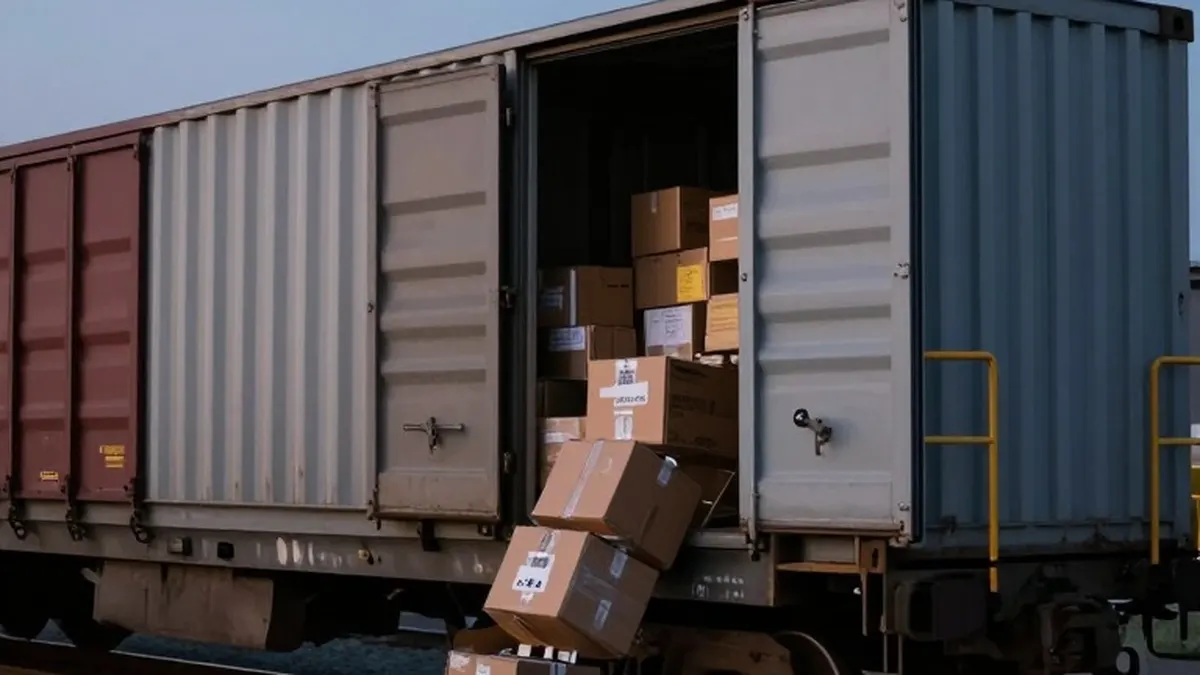
The stolen goods included high-value items such as Nike sneakers, electronics, and power tools. According to federal officials, the thieves would coordinate their attacks using the social media platform Instagram. Their modus operandi involved boarding moving trains and cutting air or brake hoses to force emergency stops. Once the trains halted, the crew would haul the stolen goods to nearby stash houses before selling the items on the black market.
The suspects left a significant digital trail by filming almost every stage of the heists. One video captured a suspect sawing into a cargo container while the train was still in motion. Another clip shows multiple men moving merchandise, with one individual posing for the camera during the theft. This self-documentation has become a common feature in modern cargo theft rings, providing law enforcement with substantial evidence.
The fourteen arrested men face several charges, including conspiracy, theft of interstate railroad cargo, and possession or receipt of stolen interstate railroad cargo. The Department of Justice also charged them with violence against railroad carriers. Los Angeles County District Attorney Nathan Hochman described the case as the granddaddy of all train cargo theft prosecutions in the county, highlighting its scale and impact on the region.
During a news conference, LAPD Deputy Chief Alan Hamilton noted that the use of social media by criminals has made investigations more straightforward. He remarked that cases are always easier when suspects post their own activities online. The arrests are part of a broader trend in the United States where train heists are becoming an increasingly significant problem for the transportation sector.
The economic impact of these thefts extends beyond the immediate loss of goods. Police officials state that disruptions to supply chains can lead to delivery delays and higher prices for consumers. The FBI estimated that cargo theft losses in the United States and Canada reached nearly $725 million last year, representing a 60 percent increase from the previous year. The Department of Homeland Security places the annual cost of cargo theft in the U.S. between $15 billion and $35 billion.
In response to this growing threat, law enforcement agencies across the country are intensifying their efforts. In October, a first-of-its-kind national blitz was conducted involving federal agents, railroad police, and local law enforcement in more than two dozen states. The operation aimed to track thieves targeting cargo trains through coordinated surveillance and arrests.
A key component of these modern efforts is the use of advanced technology. Officials utilized infrared drone technology to track heat signatures along train tracks and in rail yards. Cmdr. Michael Ware, who leads the Cook County Sheriff's Police Organized Retail Crime and Cargo Theft Task Force, described the drones as a third eye in the sky that gives law enforcement a distinct advantage.
Ware explained that the technology allows for the collection of compelling evidence that is difficult for suspects to dispute. He shared footage from a recent case where two men were seen breaking seals on a container holding $35,000 worth of electronics. Ware noted that while suspects often claim they were not in the container, the drone footage provides undeniable proof, making it a game-changer in apprehending cargo thieves.
The combination of digital evidence from suspects and high-tech surveillance tools is reshaping how law enforcement combats organized cargo theft. As the frequency of train heists rises, these integrated strategies are proving essential in recovering stolen goods and holding the perpetrators accountable.