Milcho Manchevski, the North Macedonian director whose 1994 debut "Before the Rain" won the Golden Lion in Venice and earned an Oscar nomination, returns to competition at the Tokyo International Film Festival with "Sister Brother Manhole Cover," a dark comedy stalled for years after he accused his country's film agency of corruption.
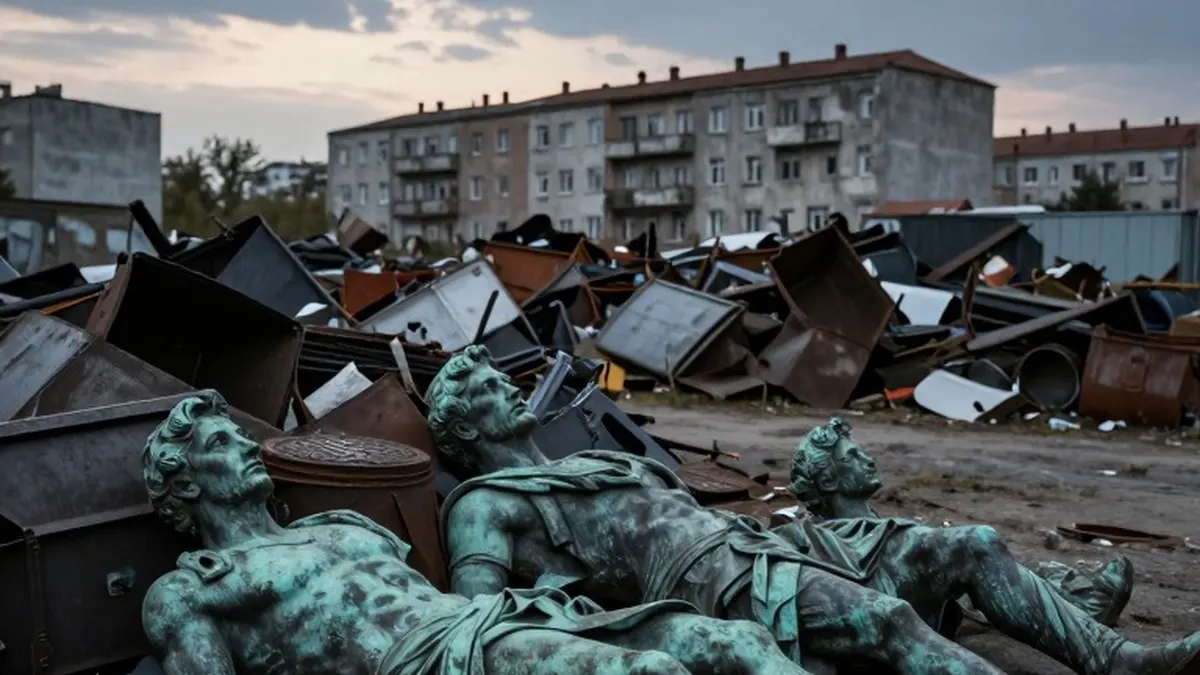
The film follows Malina and Viktor, a sister and brother scraping by on the fringes of post-Communist Macedonia by stealing bronze busts of national heroes, plus manhole covers, and selling the metal. When a job goes wrong and Viktor is seriously hurt, Malina cuts a deal with a crooked doctor, and the siblings go on the run, sheltering with the doctor's wealthy blind mother, Todora.
Manchevski said he wanted to focus on a bond rarely placed at the heart of a film. "I wanted to tell a story about a kind of love that is rarely at the center of films, yet it is so beautiful: the love between a brother and a sister," he told Variety. He also drew on traditional Macedonian songs about sisterly love, which he called poignant and at times shocking. Of Malina and Viktor, he said: "They are far from ideal people. But they are deserving of understanding and affection," adding that "idealized characters make for bad movies."
Manchevski said he never wanted to turn the lawbreaking siblings into objects of pity, framing their refusal to see themselves as victims as reclaiming their own story. "Poverty is not picturesque. It is painful and dehumanizing," he said. "The circumstances that shape these lives are real, and they are political."
The busts, he said, embody values a society claims to honor while abandoning people like his heroes: "They would rather eat than venerate the past and the ideals." The manhole covers, everyday infrastructure that turns hazardous the moment it vanishes, also "keep a lid on the ugliness of society, on its septic underground."
The film unfolds in two movements, first trailing the siblings through a rough, unpredictable world, then narrowing on their inner lives. He said he follows characters and story rather than picking a genre in advance. "Art should not talk down to its audience," said the director, who grew up under Communism. "It should open up a world, not close the discussion." He mourned what he calls "the death of beauty in cinema today," blaming festivals and European film funds that have "abdicated their role in promoting and boosting brave films."
Manchevski said that after he reported corruption at the Film Agency, which he says goes all the way up to the Prime Minister, the already financed project was blocked for years and he faced political harassment, a media smear campaign and criminal proceedings. He reported the alleged corruption in 2020 and 2022; the project was first approved in 2023. He said he won two court cases against the agency, that the State Commission for Prevention of Corruption and the State Audit Office confirmed his account, and that the Venice Film Festival, Whistleblowing International and Transparency International backed him.
"I would not reduce the situation of all Macedonian filmmakers to my own experience," he said. "But when a filmmaker can be prevented from working for political reasons, that points to a dysfunctional society." Once the blockade lifted, he shot the film alongside "Good People," a documentary about those affected by the Kočani nightclub fire. Its problems are global, he argued: "We are all the third world today. In that sense, wealth inequality is the new global warming."
It is his fourth time at the Tokyo festival, where "Kaymak" played in competition in 2022; his credits also include "Dust," "Shadows," "Mothers," "Willow" and an episode of HBO's "The Wire." The film is a co-production spanning North Macedonia, Bulgaria, Serbia, Albania, Italy and the U.K., produced by Jane Kortoshev with Banana Film as lead company and Coccinelle Film handling world sales. Next is "Homecoming," a simple story about regret and forgiveness.