BP reported third-quarter profit of $8.5 billion on Friday, nearly four times its year-earlier result, as strong refining margins and improved trading performance lifted earnings. Underlying replacement cost profit, a measure used as a stand-in for net profit, surpassed the $6.191 billion analyst forecast in a consensus compiled by LSEG. The comparable figure a year earlier was $2.2 billion.
The company's finances also strengthened over the first nine months of the year. Operating cash flow rose to $28.55 billion from $16.89 billion in the corresponding period of 2025, while net debt declined to $13.87 billion from $26.05 billion. BP attributed its quarterly earnings primarily to better gas and marketing trading performance and substantially higher realized refining margins.
The results came amid disruptions to energy supplies and trade routes. Chief Executive Meg O'Neill said refineries had been operating near capacity to compensate for shortages, while shipping had shifted to alternative, longer routes. Releases from commercial stockpiles and strategic reserves were also helping cover gaps in supply.
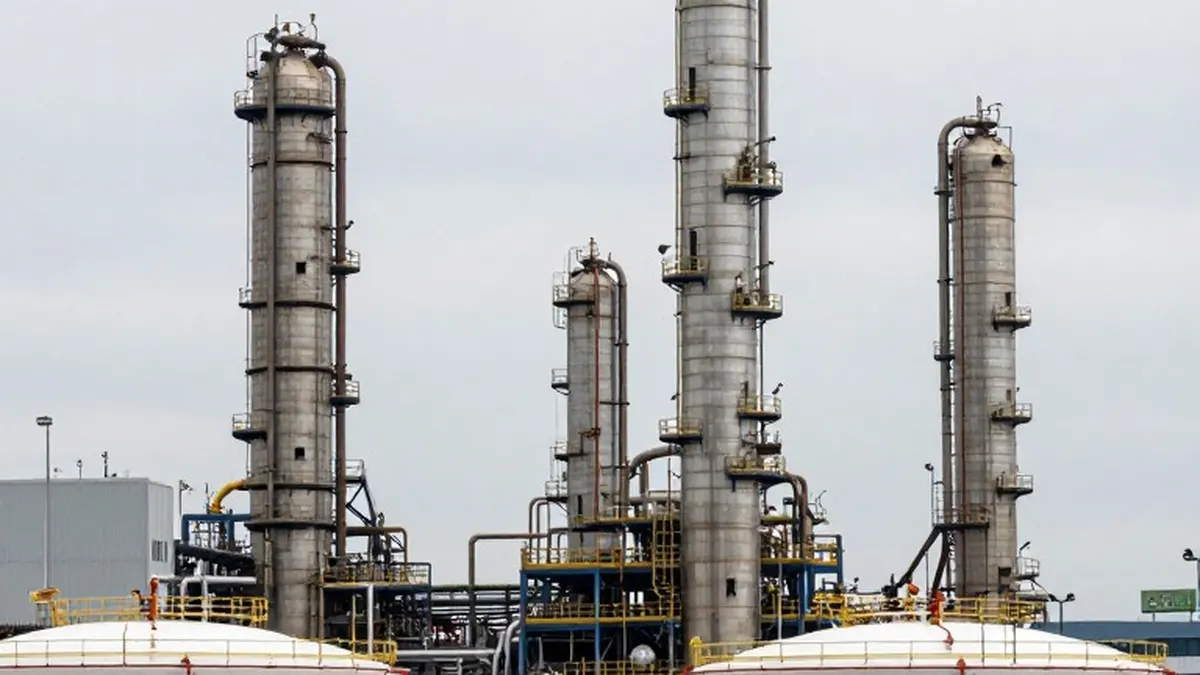
Shell and TotalEnergies reported on Thursday that their refining margins had reached historically high levels. Those margins represent earnings from turning crude into fuels such as gasoline, diesel and jet fuel. Refinery outages and damage linked to conflicts, including the Russia-Ukraine war and fighting in the Middle East, have constrained global fuel supplies this year and driven product prices sharply higher relative to crude.
Crude markets have also experienced large swings as traders responded to unpredictable developments in the U.S. and Israel's war with Iran. Benchmark prices remain close to twice their level a year earlier. With refined products commanding premiums over crude at decade-high levels, analysts have questioned whether, and when, expensive energy will weaken demand enough to relieve pressure on refineries.
Speaking to CNBC's "Squawk Box Europe" on Friday, O'Neill described BP's quarterly refining indicator margin of $46.7 a barrel as "incredibly strong." She linked the performance to demand for its products and refining reliability above 96%. BP had adjusted its refinery operations to prioritize the products most needed, she said, although margins were beginning to ease as demand typically falls after the third quarter's busy driving and holiday season.
The earnings follow a strategy announced last year that redirected BP toward its established oil and gas businesses and away from renewables. The company also announced plans to consolidate its leadership structure and reduce debt. O'Neill said strengthening the balance sheet was central to maintaining shareholder rewards through changing market conditions, noting that strong oil prices would eventually decline.
Part of that work involves the $5.9 billion BP still owes the U.S. government and states under settlements related to the 2010 Deepwater Horizon oil spill in the Gulf of Mexico. O'Neill said the company intended to set aside additional cash for those obligations as it sought to improve its financial resilience.
O'Neill also acknowledged the disaster's lasting consequences, including the deaths of 11 men and the damage to the Gulf Coast and its environment. She said the lessons had become deeply embedded within BP, while meeting the remaining financial commitments would help put the company on a stronger footing for future years.