The administration of US President Donald Trump has reportedly shifted strategy away from alternating between military engagement and negotiations, opting instead for a sustained campaign of economic pressure on Iran. US Secretary of State Marco Rubio informed his Group of Seven counterparts in Paris on Tuesday that a naval blockade, strict sanctions, and disruptions to overland borders could continue indefinitely. He added that the Iranian economy is continuing to collapse and that conditions are likely to worsen over the next one to three months.
Tehran-based economist Isaac Saidian warned that if the economic siege reduces Iran's oil incomes to near-zero levels, the country will face one of its most significant challenges in recent history. He noted that the issue extends beyond a simple decline in foreign currency. The government must also manage current expenditures, pay salaries and pensions, supply essential goods, maintain the value of the national currency, and prevent budget deficits from triggering new waves of inflation.
Iranian President Masoud Pezeshkian has stated that the civilian government is preparing for a prolonged crisis driven by these restrictions. While he acknowledged that the current state of no war and no peace is harmful, authorities have insisted that an economic collapse is not imminent. They have also suggested the possibility of breaking the blockade if necessary, though the specific methods remain unclear.
In a directive issued on November 3, the administration outlined two main scenarios for the coming year. The first assumes the continuation of sanctions, maritime blockades, and current regional conditions. The second predicts an improvement in the situation, involving fewer financial restrictions and potentially the substantial or complete removal of the blockade. Mohammad Ghasemi, deputy for coordination at the Plan and Budget Organization, told local media on Monday that the government must prepare for a contingency where oil revenue reaches zero.
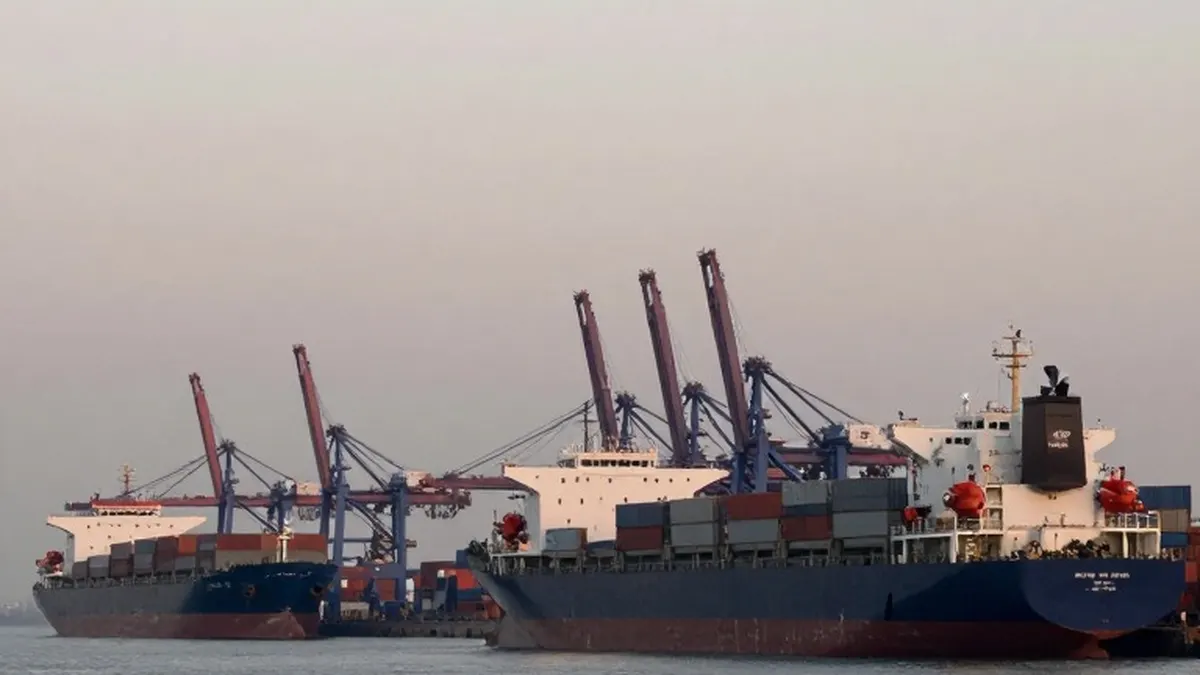
The US military first imposed a naval blockade on Iran's southern ports on April 13. A brief memorandum of understanding in June lifted these restrictions, allowing some trade through the Strait of Hormuz, but the agreement collapsed within weeks. A second blockade has been in effect since July 14, coinciding with ongoing disputes over control of the strait. The US military reports that it has redirected 147 ships, disabled five vessels, and destroyed 10 Iranian oil tankers linked to the Islamic Revolutionary Guard Corps shadow fleet.
According to the US Treasury, Iran has not loaded oil onto vessels since August 25. A late October assessment by Kpler indicated that Iranian oil production had fallen below 2 million barrels per day in recent months. This is a significant drop from the 3.45 million barrels per day recorded in January, just before the war with Israel and the US began on February 28. Kpler also noted that the volume of Iranian crude floating outside the blockade zone dropped from 88.8 million barrels in mid-July to zero in mid-October.
Because Chinese buyers typically pay one to two months after discharge, Kpler anticipates that crude and condensate receipts may dry up around mid-December. Approximately 43 million barrels remain stranded inside the blockade area. Meanwhile, US sanctions have limited air travel, and a new task force announced this week aims to disrupt most of Iran's land borders with its seven neighbors.
The Iranian economy has long struggled with chronic inflation, falling investments, and banking imbalances. Removing oil revenues is expected to exacerbate these issues. Although the government has increased reliance on taxes, oil still accounts for roughly one-third of planned government funding in the 2026-27 budget proposal. Saidian suggested that the government should review public spending, cut overlapping administrative costs, and suspend low-return investment projects to ease fiscal pressure.
Other potential measures include reforming tax exemptions, tackling tax evasion, and issuing bonds or selling non-essential government assets. However, Saidian cautioned that abrupt cuts to salaries, pensions, or social support could deepen poverty. The government has signaled it will likely reduce fuel and energy subsidies gradually to limit the impact on inflation. It will also continue distributing electronic food coupons, though preserving their value has become difficult due to rising prices.
Year-on-year inflation reached nearly 89 percent in the Iranian calendar month ending October 22, according to the Statistical Center of Iran. Government spokesperson Fatemeh Mohajerani stated that next year's budget will prioritize inflation control through fiscal discipline and tighter banking oversight. Saidian emphasized that while non-oil exports are essential, they cannot replace oil revenue in the short term due to banking and transport restrictions. He argued that the 2027-28 budget should serve as a plan for structural reform rather than just a tool for managing a difficult year, warning against letting the government stay afloat on paper by shifting costs to the public.