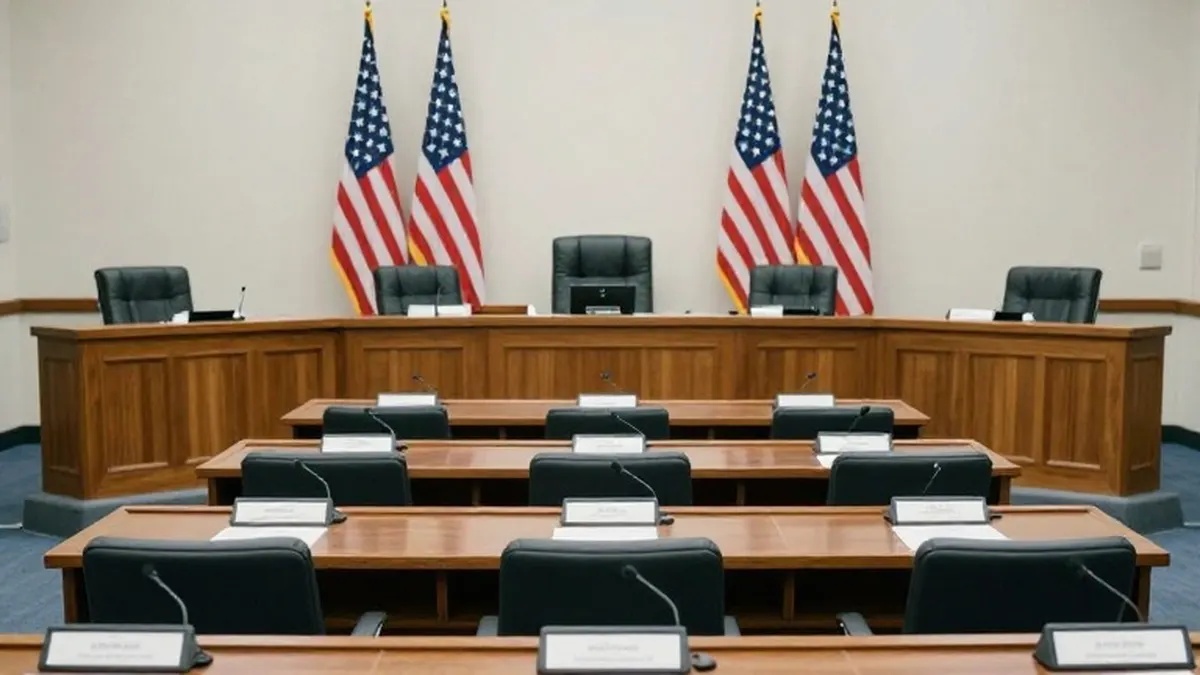
The United States House of Representatives held its first formal forum between members of the House Foreign Affairs Committee and ambassadors from the nations involved in the Abraham Accords on November 11. This event marks a significant milestone, as it is the first time such a direct congressional dialogue has occurred since the agreements were signed in September 2020. The session was organized by Representative Brian Mast, the chairman of the committee, who highlighted the importance of re-engaging with the diplomatic framework established six years ago.
Representative Mast, a member of Congress from Florida since 2017 and a recent reelection winner, announced the convening of the forum on the social media platform X. He noted that the discussions centered on strengthening regional cooperation, addressing current challenges, and defining Congress's role in the next phase of the Accords. The gathering aimed to demonstrate the continued relevance of the agreements and to foster closer ties between diplomatic envoys and legislative leaders.
Youssef Amrani, the Moroccan ambassador to the United States, described the roundtable as a timely and engaging opportunity. He noted that the session brought together committee members and the ambassadors of the United Arab Emirates, Bahrain, and Israel. The group exchanged views on the progress achieved under the Accords, as well as the evolving dynamics in the Middle East. Amrani emphasized that the meeting served as a valuable chance to reaffirm the necessity of sustained diplomatic engagement to shape a more peaceful and prosperous region.
Other members of Congress also expressed support for the initiative. Representative Andy Barr of Kentucky, who has served in Congress since 2013 and recently won his reelection bid, called the Abraham Accords a historic peace deal. He stated his intention to work with all involved parties to strengthen the agreements. Meanwhile, Representative Bill Huizenga of Michigan, who represented his district since 2011 but lost his recent election, shared that he was pleased to participate in what he described as a special meeting.
The composition of the House Foreign Affairs Committee is expected to shift significantly with the incoming Congress. The committee currently consists of 53 members, with 28 Republicans and 25 Democrats. Following the recent midterm elections, Democrats are projected to hold 259 seats in the House, compared to 176 for Republicans. This change suggests a new balance of power that may influence future foreign policy discussions.
The November forum follows an earlier hearing held in July 2026 titled "Building a New Regional Security Architecture: The Next Phase of the Abraham Accords." That session took place in the Rayburn House Office Building and featured testimony from former US ambassador to Israel Daniel Shapiro. Shapiro, a distinguished fellow at the Atlantic Council, argued that the Accords had survived the regional turmoil following the events of October 7, 2023.
Shapiro highlighted that the agreements facilitated unprecedented security cooperation between Israel and Gulf states. He noted that since the war with Iran began on February 28, Israel deployed Iron Dome missile defense systems and personnel to the United Arab Emirates. This marked the first time the system had been deployed outside of Israel or the United States. He also referenced the Negev Forum, launched in 2022 under the Biden administration, which focused on cooperation in education, health, energy, and security among several regional nations.
Despite these achievements, Shapiro warned that the conflict with Iran, tensions between Saudi Arabia and the UAE, and the unresolved Palestinian issue posed threats to further regional integration. He recommended that Washington prioritize regional diplomacy by reviving normalization talks with Saudi Arabia and advancing the India-Middle East-Europe Economic Corridor. He also urged the pursuit of security agreements between Israel and both Lebanon and Syria.
Shapiro concluded by stating that expanding the Abraham Accords would entrench regional integration as an organic force for stability. He believed that interdependence and partnership could help the Middle East move past recent conflicts and return to a period of optimism and cooperation.
This latest forum underscores the ongoing effort to keep the Abraham Accords at the forefront of US foreign policy. As the political landscape in Washington shifts, the dialogue between Congress and regional diplomats remains a critical component of maintaining and expanding these diplomatic ties.