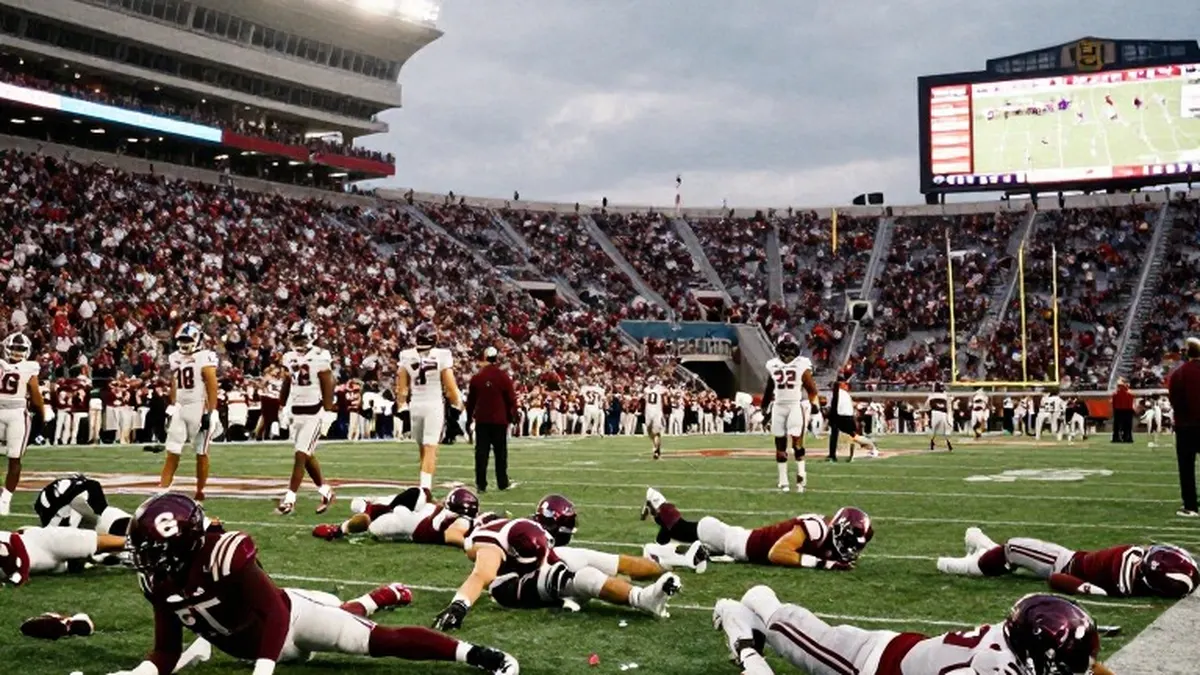
For the third week in a row, a team in the AP top two lost to an unranked opponent. No. 1 Texas fell to Oklahoma in Week 6, No. 1 Georgia lost to Auburn in Week 7, and No. 2 BYU was beaten by UCF in Week 8. The only other season in which that happened was 2007, the benchmark for chaos in college football, according to ESPN analyst Bill Connelly.
Saturday added to the disorder. The No. 2, 8, 11, 15 and 16 teams all lost to unranked opponents, and the No. 7 team lost to a lower-ranked one. With five weeks left in the regular season, 19 teams have already lost conference games as double-digit favorites, compared with 25 in all of last season. The Athletic's Jason Kirk noted that only three FBS teams remain unbeaten heading into Halloween, the fewest at this point since 2003.
Texas survived thanks to its defense under coordinator Will Muschamp. The Longhorns have allowed more than 5.0 yards per play only once this season, and they held Ole Miss to three first-half points. The Rebels rallied from 24-3 down to tie it at 24-24, but Texas shut them down again, allowing three points over their last four drives. Quarterback Trinidad Chambliss completed 10 of 23 passes in that stretch. The offense remains shaky, with Arch Manning again committing costly turnovers, and Raleek Brown's 23 carries for 157 yards helped carry the load. Texas still faces Missouri, LSU and Texas A&M, and has just a 12% chance of finishing 10-2.
The SEC has been the most unpredictable league. Eight different teams have held a top-four spot in its title odds over three weeks, and the conference accounts for 21% of the double-digit-favorite upsets while making up 12% of FBS. Only Georgia, Alabama and LSU have at least a 60% chance of reaching 9-3, and only Georgia has better than a 35% chance of reaching 10 wins. That sets up a November of arguments over strength of schedule.
Miami looked far steadier in beating Pittsburgh. The Hurricanes gained 506 yards, never went three-and-out and led 38-7 two minutes into the second half. Quarterback Darian Mensah went 22-for-26 for 274 yards and three touchdowns, while receiver Malachi Toney caught all 12 of his targets for 159 yards and two scores. The defense is still a question, since Pitt averaged 6.6 yards per play and Florida State managed 6.9 a week earlier.
Texas Tech moved in the other direction. After routing Arizona State 53-25 in Week 7, the Red Raiders lost 37-24 to Cincinnati. They went 3-for-15 on third downs, quarterback Will Hammond had a 41.8 Total QBR with two turnovers, and the team trailed 24-6 at halftime. Tech's Big 12 title odds fell 16.2 percentage points to 18.9%, behind Utah at 33.4%, and it has a 58.9% chance of reaching 10-2.
The Big Ten has been surprisingly predictable despite widespread quarterback injuries. SP+ projections have landed within a touchdown of the final margin in 40% of its games, versus 34% in the SEC. That could change now that Ohio State, a 60% favorite for the conference title, will be without quarterback Julian Sayin for the foreseeable future. Freshman Luke Fahey and sophomore Tavien St. Clair will compete to replace Sayin.
Indiana beat Michigan 13-6 in overtime despite a struggling Josh Hoover, who appeared to be dealing with an arm or wrist issue. Coach Curt Cignetti kept Hoover in the game, and he finished 8-for-18 for 81 yards with an interception. Michigan freshman Tommy Carr, making his first start, threw for 167 yards but took four sacks. In overtime, Hoover hit Brock Schott for 21 yards and then scored from 4 yards out. Earlier, a sack by Rolijah Hardy had forced a game-tying Michigan field goal in the final minute of regulation.