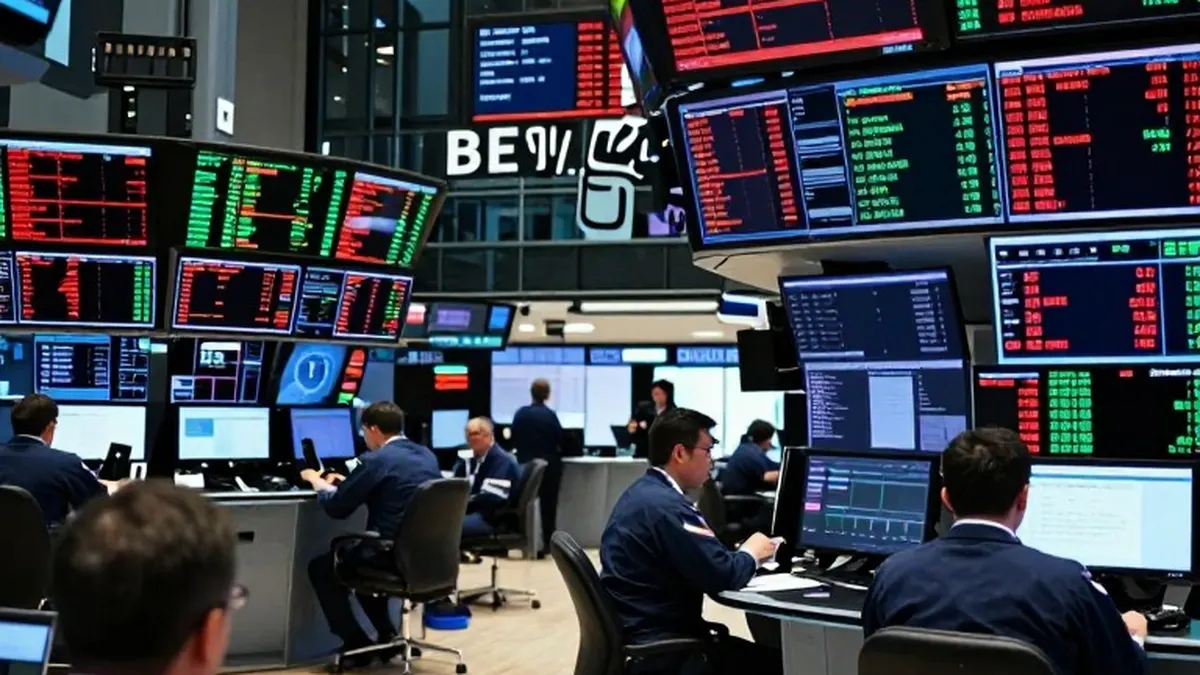
The US stock market underwent a dramatic series of fluctuations in the week following the midterm elections. After a period of uncertainty, investors initially rallied on Wednesday, driven by the relief that the voting process had concluded. On that day, the Dow Jones Industrial Average surged by 3%. Meanwhile, the S&P 500 and the Nasdaq Composite each rose by approximately half that amount, indicating a broad appetite for equities.
Despite the initial optimism, analysts warned that the immediate reaction to the election results might be overly positive. Democrats secured control of both the House and the Senate, along with several swing-state gubernatorial races. This outcome raised concerns that a Democratic wave could potentially slow down the rapid expansion of data centers, a key driver of the current artificial intelligence trade.
Those warnings proved accurate on Thursday, as the three major indexes recorded their worst single-day sessions since April 2025. The tech-heavy Nasdaq plunged by 5.5%, pushing the index into correction territory, which is defined as a drop of at least 10% from recent highs. The index had only set a record high more than a month prior. The selling pressure was not entirely unexpected, as the AI trade had been wavering for weeks due to concerns about the high levels of borrowing required to bring new computing capacity online.
During the sell-off, defensive sectors such as healthcare and consumer staples moved higher. However, few areas of the market provided a safe haven on Thursday. Stocks related to the data center buildout were the epicenter of the decline. Investors feared that if fewer data centers come online in future years, the projected earnings for chipmakers and power companies may be too lofty. Consequently, Micron lost more than 17% of its value, while Intel and Nvidia dropped over 10% and 9% respectively.
In contrast, Cardinal Health finished the day in positive territory after reporting an impressive quarterly earnings report before the market opened. The stock rose 8.5% for the week, making it the top performer in the CNBC Investing Club portfolio. The team used this strength to book profits and increase their cash position. They also trimmed their holdings in Eli Lilly, a move consistent with the strategy of not solely focusing on losing positions.
By Friday, the market staged a bounce-back rally. While the Dow closed modestly lower, the S&P 500 and Nasdaq recovered some ground. For the full week, the Dow lost 1%, while the S&P 500 and Nasdaq declined by 2.7% and 3.4% respectively. This performance continues a trend from October, characterized by a slump in technology stocks and an upswing in defensive market segments.
As the volatility settles, two key themes have emerged. First, not all AI-related companies are equally vulnerable to a slowdown in data center construction. Neoclouds that rely heavily on financing for growth, such as CoreWeave, are considered the most at risk. Established hyperscalers like Amazon, Alphabet, and Microsoft hold stronger positions due to their massive scale and ability to adjust spending if necessary.
Second, the recent market action reinforces the importance of owning a diversified portfolio. At the CNBC Investing Club's 4th Annual Meeting held on Friday, Jim Cramer outlined a strategy to lighten exposure to data center stocks and pivot toward non-AI equities. He stated that the goal is to redeploy capital into less risky stocks to reach higher ground.
Alongside portfolio director Jeff Marks, Cramer updated views on various holdings and highlighted two stocks for purchase: FedEx and Kimberly-Clark. The team has been actively trading to increase positions in non-tech companies, including Boeing and Goldman Sachs, while also boosting cash reserves by trimming DuPont. With more than 15% of the portfolio in cash, the team maintains ample dry powder, though Cramer noted that he is not eager to deploy it immediately.