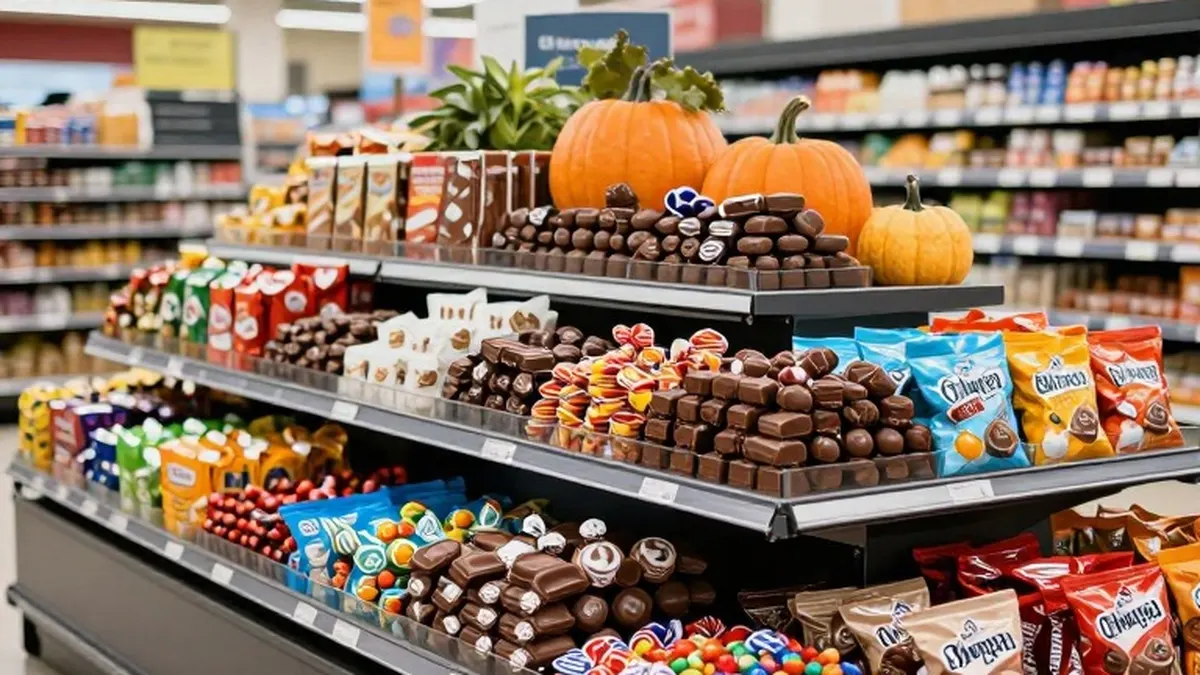
Higher prices are stretching Halloween budgets this year, with candy, costumes and pumpkins all becoming more expensive. The National Retail Federation expects Americans to spend $13.5 billion on the holiday, exceeding last year’s record $13.1 billion. But weaker candy sales and a more cautious outlook from Hershey suggest that enthusiasm for the celebration is accompanied by growing concern about affordability.
The increases extend beyond sweets. The average retail pumpkin price reached $5.36 this year, an 11% increase from September 2020, according to the U.S. Department of Agriculture. In parts of Texas, a major pumpkin producer, drought cut yields by roughly 30% to 40%. NRF vice president of industry and consumer insights Allison Zeller said consumers continue to prioritize Halloween spending while keeping costs in mind.
Candy prices have been rising faster than broader food prices, although the pace has eased. September’s Consumer Price Index showed candy and chewing gum prices increased 7.7% from a year earlier, while the sugar-and-sweets category rose 5.5%. Weather has strained the sugar supply outlook, with unusually wet conditions disrupting Brazil’s sugarcane harvest and drought and other extremes affecting production elsewhere.
Chocolate has faced particular pressure following cocoa supply disruptions caused by poor growing conditions in Côte d’Ivoire and Ghana. A potential El Niño and dry Harmattan trade winds could also threaten the 2026-27 West African crop. Cocoa prices have fallen sharply from historic highs, according to David Branch of the Wells Fargo Agri-Food Institute, but shoppers have yet to see that relief reflected in chocolate prices.
Wells Fargo Agri-Food estimates chocolate prices will be about 8% above last Halloween’s levels, with prices paid after promotions increasing roughly 5% to 8%. Much of this season’s chocolate was made with cocoa purchased six to 12 months earlier. Branch said manufacturers now face challenges involving expensive inventories, falling futures prices, negotiations with retailers and consumers’ sensitivity to price increases.
Sales figures show the strain. NIQ reported that Halloween chocolate dollar sales fell 7.2% from a year earlier during the nine weeks ended Oct. 17, a decline estimated at $33.1 million. Milk chocolate accounted for a $34.4 million drop, while dark chocolate gained $2.3 million. Across Halloween candy, gum and mints, sales were down 6.7%. That was a smaller decline than the 11.7% recorded in early market data through Sept. 19.
Retailers including Walmart and Target are using flash deals and substantial discounts on candy and costumes to encourage purchases. Shoppers are also choosing smaller candy packages: packs weighing nine ounces or less increased 24% in dollar sales and 14% in units, according to NIQ, while every larger size declined. Wells Fargo expects greater interest in value packs and lower-cocoa options such as gummies, sour candy, wafers and caramel.
Hershey shares rose Friday as investors shifted from artificial intelligence stocks toward consumer staples, but analysts flagged challenges ahead. After reporting third-quarter results Thursday, the company reduced its 2026 organic sales growth forecast to 3%, from a range of 3% to 3.5%. Jefferies analyst Scott Marks said the revision implied approximately flat organic growth in the fourth quarter and pointed to consumer and cost pressures.
Hershey CEO Kirk Tanner told analysts the company was looking at tailored promotions to offer value to financially pressured consumers. Marks lowered his share-price target to $170, joining reductions at several other brokerages. According to FactSet, consensus estimates for Hershey’s 2027 earnings declined 3.7% to $9.49 a share.