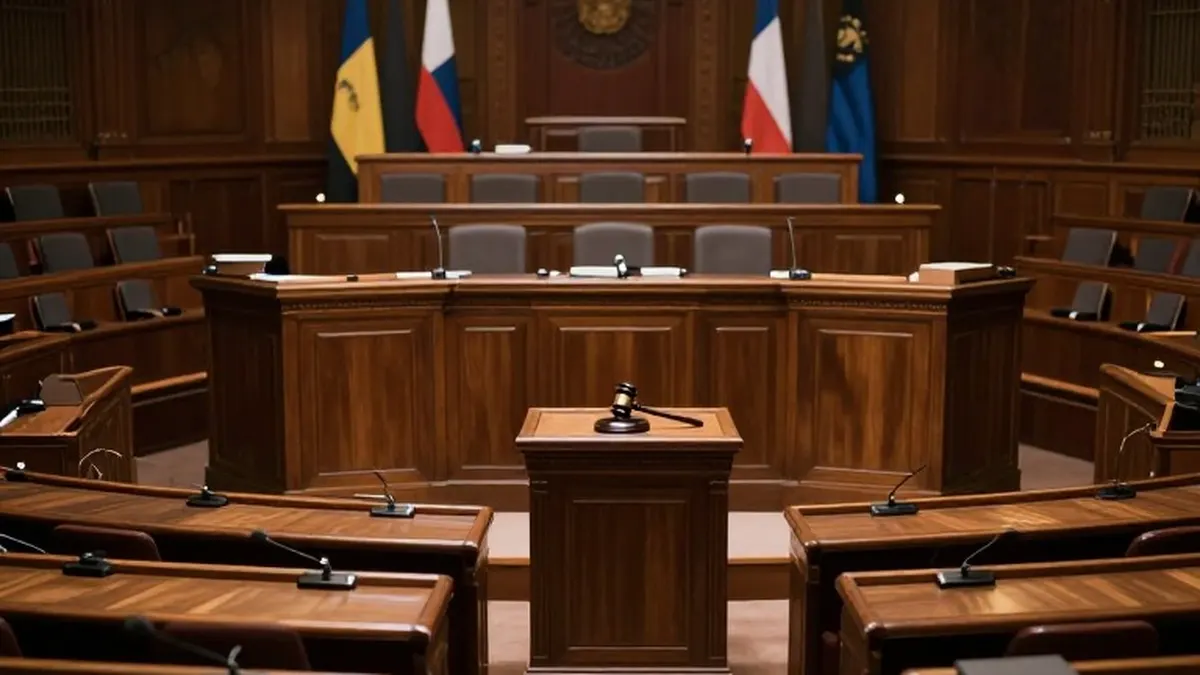
The High Court of Justice on Tuesday rejected a petition that sought to force Knesset Speaker Amir Ohana to schedule a fresh vote for state comptroller, even as the justices found that his extended refusal to arrange one violated an earlier court ruling.
Justice Ruth Ronnen, writing with the consent of Supreme Court President Isaac Amit and Justice Khaled Kabub, concluded that too much time had elapsed and that, with a new Knesset about to be elected, the decision should be left to the incoming parliament rather than the outgoing one in its final days. The court nonetheless ordered Ohana and the Knesset to pay 10,000 shekels in costs to petitioner Yaron Gadot.
The decision leaves Israel without a state comptroller four months after Matanyahu Englman's term ended. According to an explanation the comptroller's office gave The Jerusalem Post, the vacancy has prevented the completion and publication of dozens of audit reports and the issuing of protection orders for whistleblowers.
The office said its audit teams continue fieldwork, meetings with audited bodies and data analysis under the annual plan drafted during Englman's tenure, but they cannot finalize reports or open new audits. It also cannot rule on party and faction financing compliance, impose sanctions, or convene the permits committee that handles conflicts of interest involving ministers and deputy ministers. While public complaints investigators still assist residents, only the comptroller, who also acts as ombudsman, can grant protection to employees who expose corruption. "In the situation that has arisen, we have no legal means of helping employees who turn to us," the office said.
The dispute began on June 3, when the Knesset voted ahead of the end of Englman's term in early July. Retired Supreme Court justice Yosef Elron and attorney Michael Rabello, a longtime lawyer for Prime Minister Benjamin Netanyahu who has also represented Likud, were the candidates. Neither secured the required 61 votes in the first round, with Elron at 60 and Rabello at 57, before a second round gave Rabello a 61 to 57 win.
That second round was tainted by coalition lawmakers filming their ballots amid reported pressure to demonstrate support for Rabello. On July 2, after a series of petitions, the High Court voided the round and ordered it repeated, ruling that ballot secrecy had been materially breached. It named five Likud lawmakers who filmed their votes, Shlomo Karhi, Gila Gamliel, May Golan, Sasson Guetta and Ariel Kallner, along with Shas MK Yinon Azoulay, who openly displayed his ballot, and found a real possibility the breaches influenced the outcome. Ohana had already rejected a fresh vote before that judgment, saying on June 21 that "the Knesset has already had its say."
Ronnen wrote that Section 2 of the State Comptroller Law made scheduling a new vote the speaker's duty, to be carried out with appropriate speed, even if the statute did not directly address a court-ordered repeat. "He failed to comply with the judgment… and acted contrary to the clear position of the Knesset legal adviser, as conveyed to him on several occasions," she wrote, adding that obeying rulings is a fundamental condition of a democracy governed by the rule of law, and that his prolonged failure was tantamount to violating the judgment. She stressed that dismissing the petition did not amount to approval of his "grave conduct."
Knesset legal adviser Sagit Afik had told the court the ruling should be implemented as soon as possible, preferably within the outgoing Knesset's term, while noting in her October 5 response the practical difficulties of assembling lawmakers during recess near an election. Ohana, represented separately, argued the timing fell within his discretion and that, since the comptroller serves seven years, the next Knesset should choose. Gadot, who petitioned on September 6, argued a repeat second round could still be held after the October 27 election and before the new parliament's first sitting on November 10.
The court disagreed, with Ronnen citing a fundamental problem in an outgoing parliament making a consequential appointment after voters had elected its replacement. She left open whether the new Knesset must resume the contest between Rabello and Elron or restart the process, while noting that picking up where the previous parliament stopped appeared problematic. The ruling comes as opposition leaders seek to replace Ohana once the new Knesset is sworn in, and Ronnen wrote that above all, the public had been harmed by the prolonged vacancy.