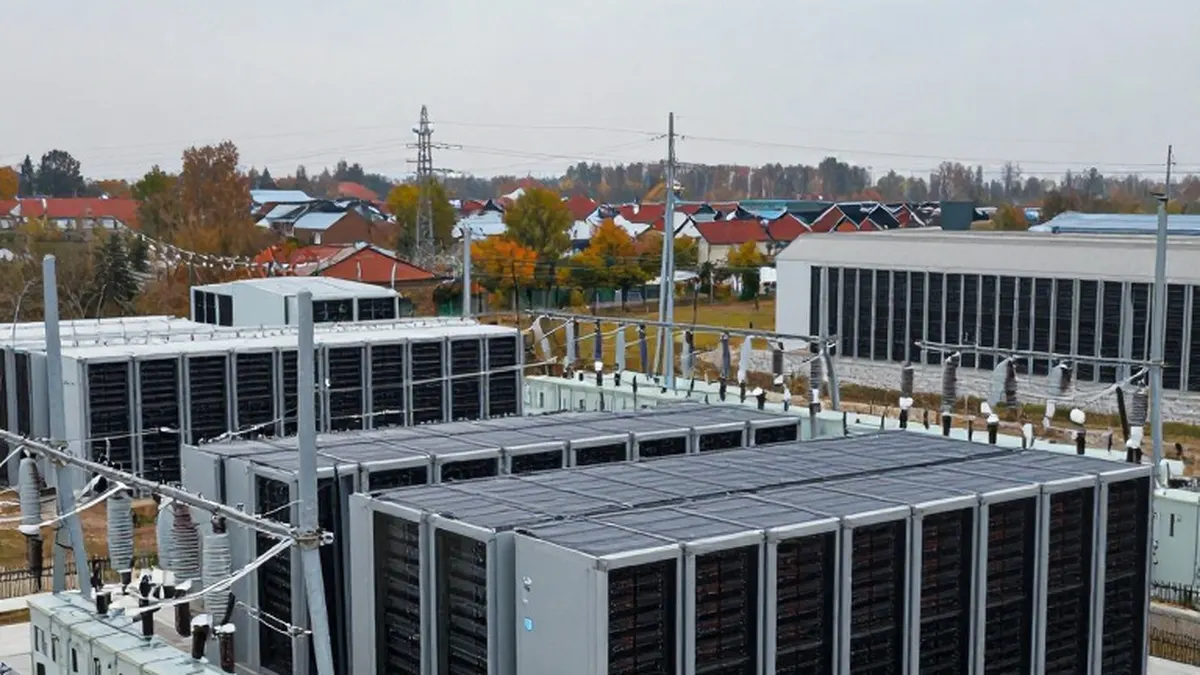
Voters across the United States overwhelmingly backed restrictions on data centre development in Tuesday’s midterm elections, bringing concerns about electricity bills, water supplies and artificial intelligence into local and national politics. Of 41 measures related to data centres, all but one were headed towards outcomes rejecting or limiting development, according to Data Centers on the Ballot, an election-monitoring project run by Redbud Consulting. Two contests remained unresolved but were expected to favour restrictions.
The exception was Harwood, North Dakota, a town of fewer than 800 residents. Voters rejected a proposal requiring independent reviews before large industrial projects, including data centres, could proceed locally. The broader results followed a September poll in which 70 percent of Democrats and 57 percent of Republicans supported limits on new data centre construction, suggesting opposition extended across party lines.
The vote comes amid rapid expansion of infrastructure supporting AI. In April, the Pew Research Center estimated that the country had 3,000 data centres, with more than 1,500 additional facilities in progress. Bhaskar Chakravorti, dean of global business at Tufts University, told Al Jazeera that anxiety about AI replacing jobs had combined with concerns about facilities appearing near people’s homes and placing additional demands on electricity supplies.
The potential costs have become a powerful local issue. Data centres require substantial amounts of electricity and water, and critics argue that surrounding communities can face higher energy bills. A 2026 working paper from the Federal Reserve Bank of Dallas estimated that data centres had increased wholesale electricity prices by 6.9 percent as of 2025. James Mercer, founder of independent advisory firm Metro Colo Advisory, told Al Jazeera that fears residents would bear those costs had helped fuel resistance.
Several winning Democratic candidates made data centre oversight a campaign priority. In Ohio, Sherrod Brown defeated Republican Senator Jon Husted after attacking his support for development. Ohio accounted for 21 of the 47 data centre referendums and measures held nationwide during 2026. In Texas, Gina Hinojosa defeated Governor Greg Abbott after advocating a halt to new approvals until stronger community protections were established.
Texas Senator-elect James Talarico also captured a Republican-held seat while promising tighter regulation. He proposed closed-loop water systems to curb consumption and called for operators to pay for local infrastructure improvements. Water concerns were particularly acute in Corpus Christi, where severe drought left the city’s reservoir at 8 percent of capacity earlier this year. Talarico won the city by 12 percentage points. In another Senate contest, Democrat Abdul El-Sayed won more than 52 percent of the vote after proposing a federal agency to oversee AI.
With Democrats poised to take control of both congressional chambers, the industry faces the prospect of greater scrutiny. Democratic lawmakers are expected to pursue investigations through oversight committees after the new Congress takes office on January 3. Massachusetts Senator Ed Markey signalled plans for subpoenas, while Arizona congressmember Yassamin Ansari called for a pause in advanced AI development, industry regulation and a prohibition on artificial superintelligence.
Companies have begun responding to the political pressure. Following the election, OpenAI released an infrastructure framework promising to prioritise cooling systems that recycle water or use little of it, and to cover its own energy and infrastructure costs. Shortly before the election, it also sought to rename its data centres as compute campuses.
Investor concerns about tighter oversight accompanied sharp market swings. Nvidia lost $450bn in market value on Thursday before rising 4 percent in early Friday trading, leaving it down 6.8 percent over five days. Data centre operator CoreWeave gained 6.6 percent on Friday after Thursday’s decline but remained 16 percent lower over the same five-day period.