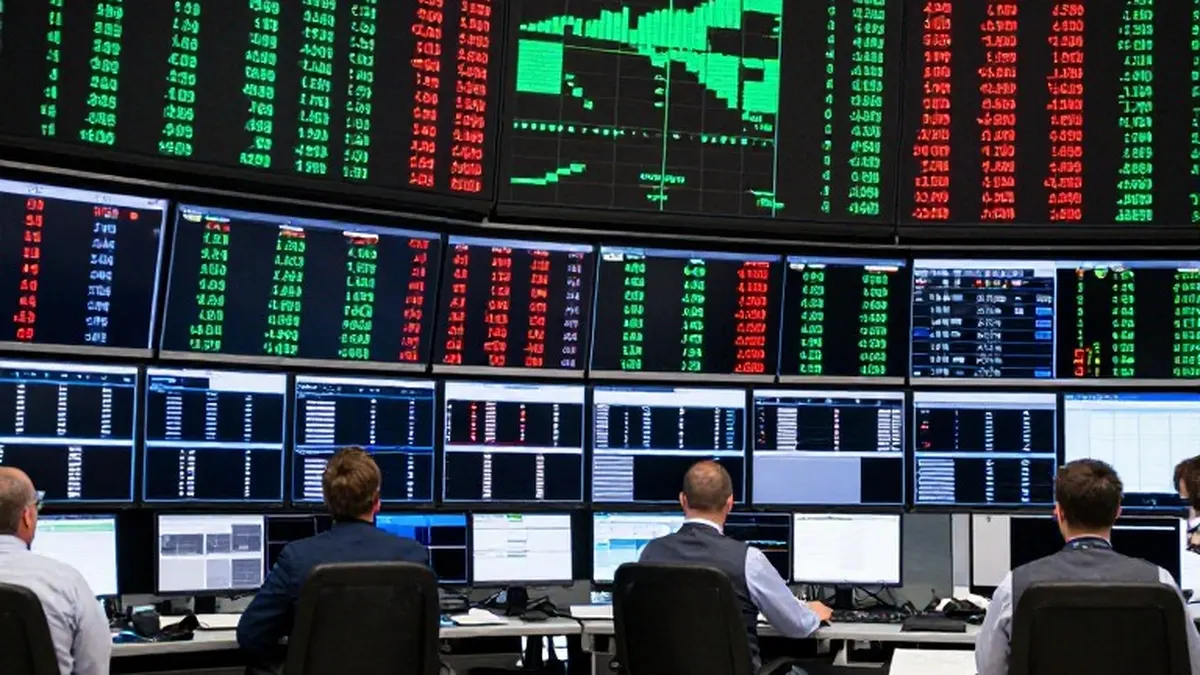
U.S. financial markets demonstrated resilience on Friday morning, with major indices stabilizing after a volatile session on Thursday. The recovery was primarily driven by a rebound in technology stocks, which had previously been hit hard by investor anxieties regarding the pace of data center construction.
In early trading, the S&P 500 advanced by 72 points, representing a gain of nearly 1%. This move effectively wiped out the losses incurred on Thursday, when the index recorded its steepest decline since April 2025. The tech-heavy Nasdaq Composite showed an even stronger recovery, rising 437 points, or 1.8%. Conversely, the Dow Jones Industrial Average dipped slightly, falling 129 points, or 0.2%.
The initial market jolt occurred immediately following the midterm elections earlier in the week. As investors analyzed the results, concerns mounted that sweeping Democratic victories might lead to stricter regulations on data center development and reduced spending on artificial intelligence infrastructure.
Recent voting trends support these concerns. According to an analysis by political research firm Redbud Consulting, voters in communities across the country have approved more than 40 ballot measures aimed at restricting data centers as of Friday.
The Thursday session was particularly harsh for the tech sector. The Nasdaq Composite lost more than 1,400 points, causing the index to enter a correction. In financial terms, a correction is defined as a decline of at least 10% from a previous peak. Friday’s trading session saw a strong counter-move, with tech shares leading the broader market higher.
Leading indicators in the AI sector reflected the improved sentiment. Nvidia, a major bellwether for the artificial intelligence market, gained 6.6% in early trading. Micron Technology, a prominent semiconductor manufacturer, saw an even larger surge, rising 9.8%.
The so-called hyperscalers, which are the major corporations driving the data center buildout, also posted modest gains. Alphabet, the parent company of Google, climbed 2%. Amazon rose 1.1%, and Meta gained 2.4%. Microsoft was the sole outlier among this group, shedding 0.6% of its value.
A central question for Wall Street remains whether AI companies can deliver the revenue growth that investors anticipate. Anthropic, which filed for an initial public offering last month and is expected to debut on the Nasdaq this month, will serve as a significant test case. Although its filing highlighted rapid growth, the company has not yet achieved profitability.
Vicky Redwood, a chief economic adviser at Capital Economics, noted in a research report released on Friday that while the firm expects AI to boost overall productivity, it is less certain that AI revenues will grow quickly enough to sustain current investment levels. The firm anticipates that capital expenditures for AI will slow next year, a trend Redwood suggested could weigh on U.S. economic growth.
The market’s upward trajectory on Friday was also supported by positive labor data. The release of October payroll figures showed robust job gains, with employers adding 165,000 positions. This number exceeded economist expectations, while the unemployment rate decreased slightly to 4.1%.