Édith Pagot, now 82, spent her life unaware of her origins until earlier this year. Her daughter, Émilie Ruffra, began researching their past and discovered that Édith was born in a Nazi-run maternity home known as Lebensborn. The revelation came to light when Émilie found her mother’s birth name mentioned in a book about the program.
The Lebensborn project, established in 1935 by Heinrich Himmler, aimed to produce children who fit the regime's racial ideals. Édith was born on April 11, 1944, in the Oise department of France. Her birth name was Édith de Vicar. She was the daughter of a French woman and a German father, a relationship that was common in these facilities where French women with German partners gave birth.
Émilie contacted Matthieu Niango, the author of the book that sparked the investigation. He confirmed that Édith had indeed been born in a Lebensborn home. For Édith, the news was a shock. She had never imagined her father was a Nazi. Her adoptive parents had told her she was adopted but provided no further details about her biological family.
The facility where Édith was born was located in a manor house in Lamorlaye, near Chantilly. It was called Westwald and was the only Lebensborn home on French soil. Around 23 children were born there. The mothers were subjected to strict scrutiny regarding their genealogy and physical appearance. After giving birth, mothers often had to sign documents abandoning their children to German authorities or move to Germany.
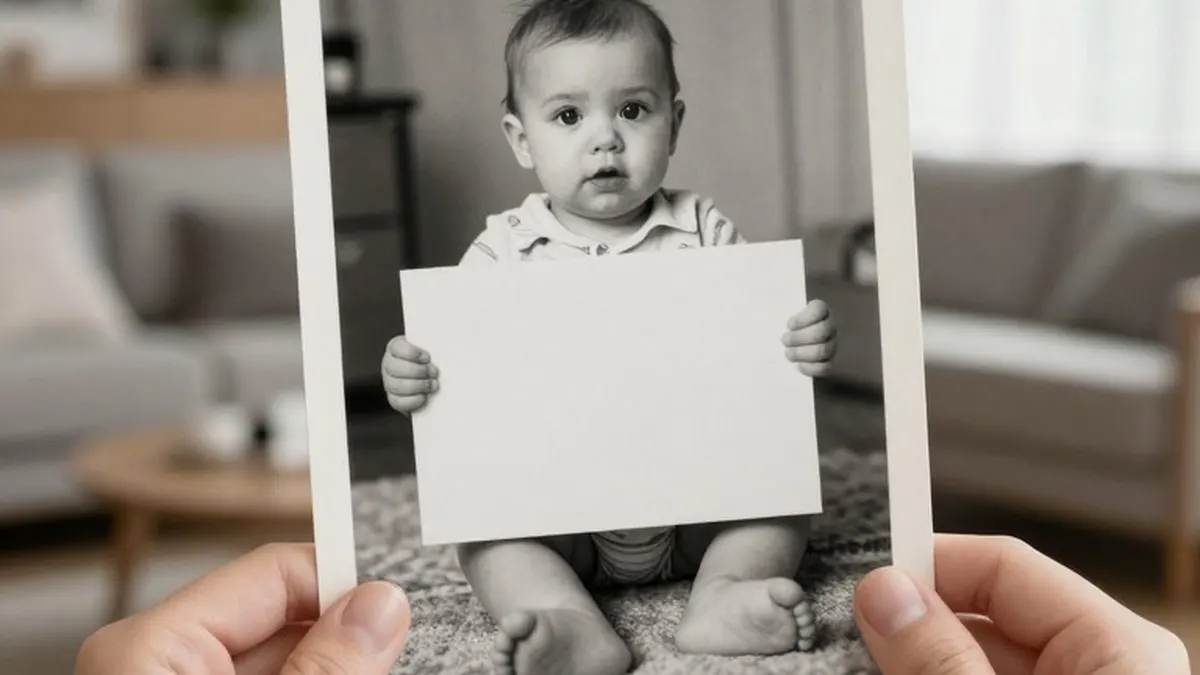
As the Allies advanced in 1944, the children were transported to Germany. Édith arrived in Steinhöring, Bavaria, in April 1945. Later that year, she was moved to a refugee center in Indersdorf, near Munich. It was there that a photograph of her was taken in 1945. The image shows a baby holding a sign with her name, an effort to reunite children with their families.
In August 1946, Édith was repatriated to France. She arrived in Commercy in the Lorraine region with about ten other children. The group was in poor health and was hospitalized for several weeks. To erase their German origins, the children were given new names and places of birth. Édith was renamed Georgette, and her birthplace was officially recorded as Bar-le-Duc.
Two years later, Édith was placed with a childless couple who formally adopted her in 1951. They decided to keep her original first name, Édith. This choice has sometimes caused confusion in administrative settings, such as when renewing her identity card. Despite the adoption, Édith never knew the full story of her early years.
Émilie’s research continued by contacting German archives and local veteran offices. She found that documents from the facility had been burned, leaving many details missing. Nothing is known about Édith’s mother except her surname, and her father’s identity remains a mystery. The lack of records has made it difficult to confirm the exact nature of the relationship between her parents.
The discovery has brought Édith closer to her daughter and to Gisèle Niango, another woman born in a Lebensborn home who arrived in Commercy on the same convoy. Both women now live in Nancy and consider each other sisters. They participated in commemorations in October to mark the 80th anniversary of their return to France.
Émilie is currently using DNA testing to trace potential relatives. While the search for biological family continues, Édith feels a sense of relief. She is not responsible for the past, and knowing her origins helps her accept what happened. The story is not yet complete, but the process of uncovering the truth has helped both mother and daughter move forward.