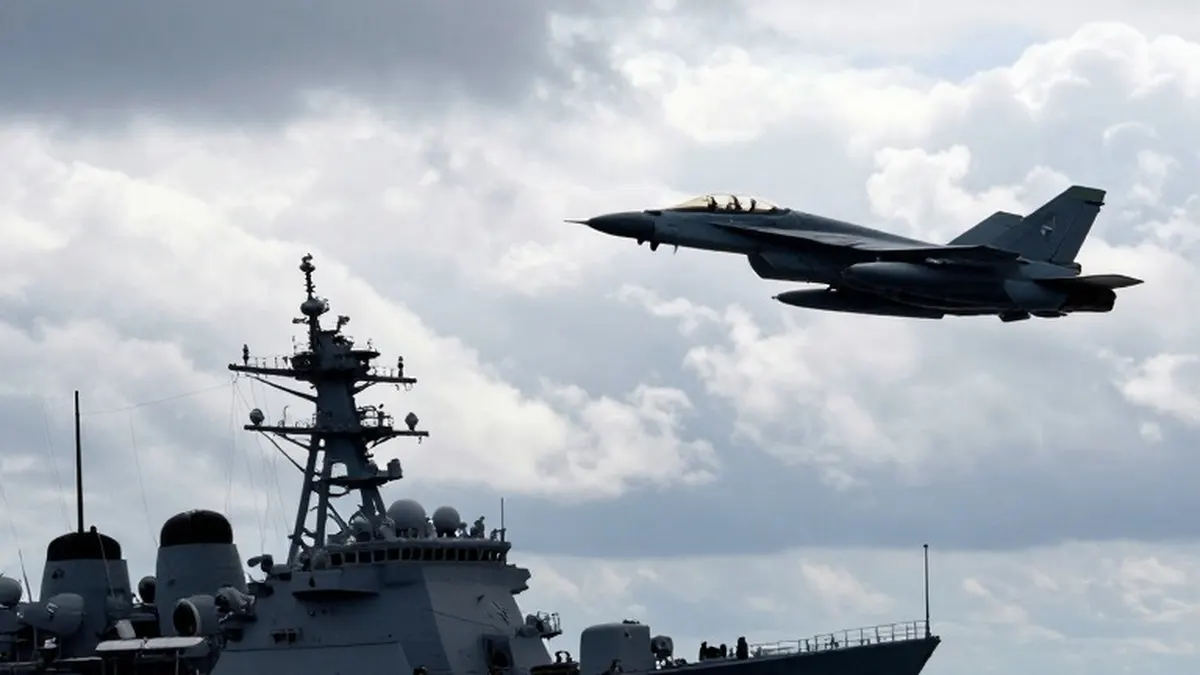
The government of Iran has formally designated the naval and air forces of Argentina as terrorist organisations. This decision serves as a direct reciprocal response to a similar measure taken by the South American nation in March. At that time, Argentina classified the Islamic Revolutionary Guard Corps, or IRGC, as a terrorist group. The Iranian Ministry of Foreign Affairs confirmed the move in a statement released on Wednesday. The ministry stated that it considers the two specific branches of the Argentine military to be terrorist organisations based on the principle of reciprocity. Notably, the statement did not extend this designation to Argentina’s army.
In the same release, Iranian officials warned that the Argentine government would bear full responsibility for any consequences resulting from this new classification. The announcement marked the latest development in a long-standing diplomatic friction between the two countries. Relations have been strained for decades, largely due to the 1994 bombing of the AMIA Jewish community centre in Buenos Aires. Argentina has consistently blamed the Iran-backed group Hezbollah for the attack, which resulted in the deaths of 85 people and left hundreds more injured.
The Argentine foreign ministry reacted swiftly to the Iranian statement. It issued its own declaration on Wednesday, saying that it categorically rejects the designation. The statement described the measure as completely baseless and an unacceptable accusation. This verbal exchange highlights the deepening rift between the two governments. The current escalation is not an isolated incident but rather a continuation of a pattern of mutual accusations that has persisted for years.
The backdrop for these tensions includes recent geopolitical shifts. In March, the office of Argentine President Javier Milei referenced the 1994 AMIA bombing when it issued the original terrorist designation against the IRGC. A statement from the presidential office expressed the hope that this decision would settle a historical debt of more than 30 years owed to the families of the victims. The office also noted that the government is determined to align the Argentine Republic more closely with Western civilization while combating those it believes seek to destroy it.
The diplomatic maneuvering by Argentina aligns with broader international efforts to isolate Iran. This strategy has gained momentum under United States President Donald Trump. The US and Israel launched a war against Iran on February 28 and have subsequently called upon international allies to support their offensive. While many leaders in Latin America have traditionally avoided taking sides in such global conflicts, Milei has positioned his government firmly behind the US and Israel.
President Milei has been known for his abrasive diplomatic style, which has occasionally placed him at odds with other nations in the region. This includes key economic partners such as Brazil. The Argentine leader has also reinvigorated the long-standing territorial dispute between Argentina and the United Kingdom. The dispute concerns the Falkland Islands, which Argentina refers to as Las Malvinas and claims as part of its national territory. These combined factors contribute to the complex diplomatic landscape surrounding the latest exchange between Tehran and Buenos Aires.
The designation of the Argentine naval and air forces adds another layer of complexity to the region’s international relations. It underscores the significant impact that historical grievances and current geopolitical alliances have on diplomatic ties. As both nations continue to navigate these tensions, the focus remains on how these decisions will affect future cooperation and conflict resolution in the region.