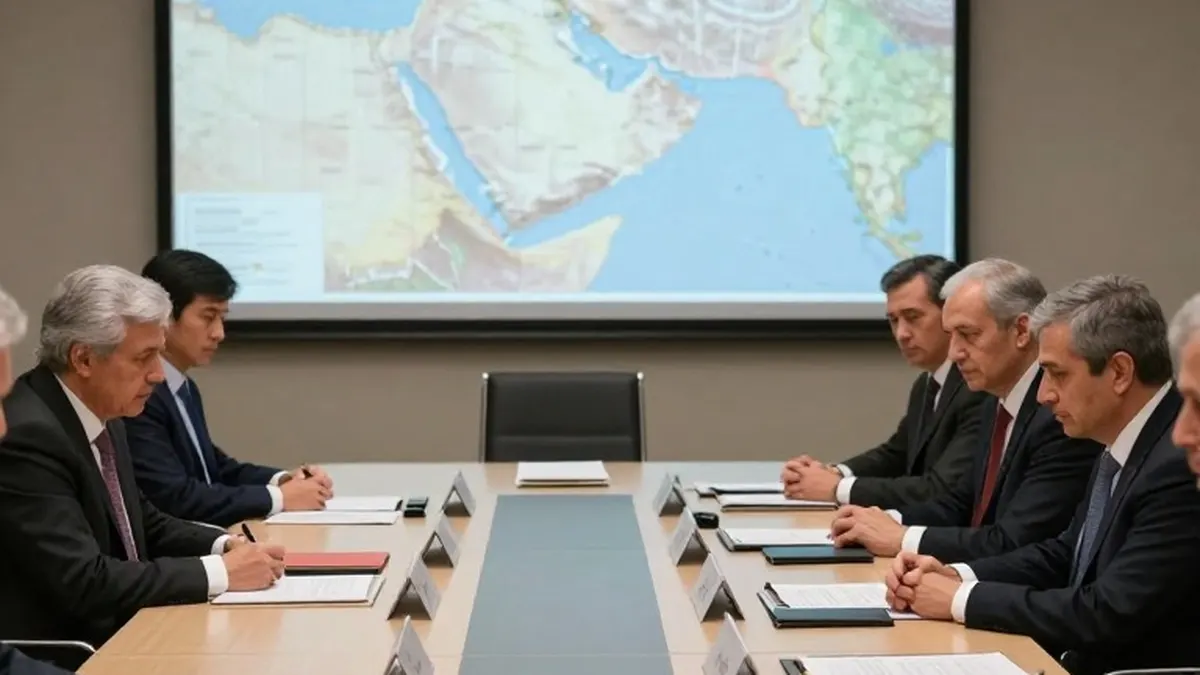
Iranian hardline factions are leveraging President Donald Trump’s recent midterm election defeat to advocate for a significantly tougher stance in negotiations with Washington. According to a report by CNN on Sunday, these factions argue that any conclusion to the current conflict must establish a new global order that favors the Islamic Republic. This shift in strategy appears to be gaining traction within the Iranian leadership as the war enters its eighth month.
The tone of Iranian diplomacy has become noticeably more assertive following the US election results. Supreme Leader Mojtaba Khamenei issued a warning on Wednesday, cautioning his country’s negotiators against showing the slightest inclination towards submission. Hardliners interpret this message as a direct signal to resist pressure from the American side during the ongoing talks.
Support for a harder line is also evident in Iranian media. A column in the hardline outlet Raja News argued that the United States should not be given an easy exit from the conflict before it pays the full price for its attacks on Iran. This narrative aligns with the broader sentiment among hardliners that the US needs to face significant consequences for its military actions.
The hardening of rhetoric follows public acknowledgments by US officials that the war contributed to the Republican Party’s losses. President Trump stated that the conflict was partly to blame for the midterm results. Additionally, Vice President JD Vance wrote on the social media platform X that the reason for the defeat was the war. These comments have provided Iranian leaders with political ammunition to justify their position.
Hamidreza Azizi, a senior Iran analyst at the International Crisis Group, told CNN that the Iranian leadership views the recent election results as a vindication of its strategy against the United States. He noted that because of this perceived victory, the Iranians see no reason to offer Trump any nuclear concessions in the near term.
Despite the diplomatic friction, the war has settled into a stalemate. Qatari mediators are currently working to bridge the gaps between the two sides. In the past week, the US struck Iran’s Qeshm Island several times. However, both Washington and Tehran have played down the significance of these strikes in a clear effort to keep the peace talks alive.
President Trump addressed reporters on Thursday regarding the next steps in the conflict. He stated that he is making a decision on whether to escalate further. While he expressed a preference not to destroy the rest of the country if possible, he acknowledged that he might have to do so if negotiations fail to yield results.
Tehran has outlined seven specific conditions for reopening the Strait of Hormuz. These conditions include ending the war on all fronts, providing compensation, withdrawing US forces, and lifting sanctions. The inclusion of these demands highlights the high stakes involved in the current negotiations.
In his recent message, Khamenei described the ongoing war as laying the groundwork for a new world order. This framing suggests that the Iranian leadership views the current conflict not just as a regional dispute, but as a pivotal moment that will reshape international dynamics in their favor.
As the war continues, the interplay between domestic politics in the US and diplomatic maneuvering in the Middle East remains a critical factor. The ability of Qatari mediators to maintain dialogue while hardliners on both sides call for stronger action will determine the trajectory of the conflict in the coming months.