Democratic victories in the November 3 US midterm elections and an inconclusive Israeli election have added political uncertainty to the confrontation with Iran. Donald Trump retains the presidency, Benjamin Netanyahu remains Israel’s caretaker prime minister, and Tehran sees the Republican defeat as evidence of the war’s political costs. The results have left the prospects for further fighting or a negotiated settlement unclear.
Democrats won both chambers of Congress after the war’s economic effects became a significant Republican campaign liability. Their majorities take effect on January 3, 2027, leaving Republicans in control until then. Even after that transition, Congress’s ability to challenge military funding and authorizations would not automatically prevent Trump from ordering attacks. The boundaries of presidential war powers remain contested.
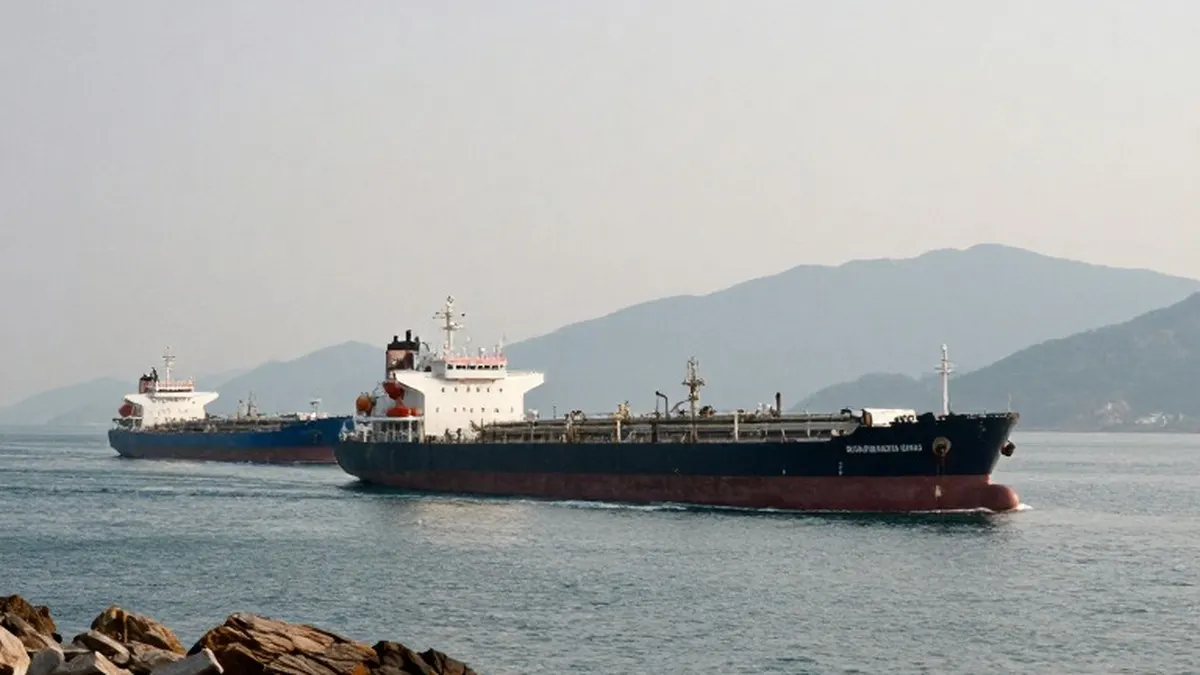
Recent incidents underline the continuing danger. American forces struck Iranian targets on Qeshm Island on Monday in operations US officials characterized as defensive and limited. On Thursday, Iran’s Revolutionary Guards Corps reported fires involving two oil tankers and a tugboat in the Strait of Hormuz, saying one tanker allegedly hit a mine. That account has not been independently confirmed.
Raz Zimmt, who directs the Iran and the Shiite Axis research program at Israel’s Institute for National Security Studies, told The Media Line that Washington faces choices including a broader offensive, sustained pressure, a compromise or a limited attack. Each carries uncertainties. He said political considerations and continuing negotiations appeared to have put an immediate strike on hold, but warned that even a narrow operation could provoke an escalating Iranian response.
Former Iranian diplomat Ebrahim Roshandel told The Media Line that Tehran was using the US election outcome to reinforce its domestic message of resistance, without necessarily becoming more receptive to negotiations. He also believes Iran wants Arab governments to reconsider their dependence on Washington. Nabi Sonboli, a senior expert at Iran’s Institute for Political and International Studies, said confrontation remained possible and questioned whether congressional opposition could restrain it.
Israel’s October 27 election gave Netanyahu’s allied parties 53 of the Knesset’s 120 seats, while a bloc associated with Gadi Eisenkot secured 48. Two Arab-led parties took the remaining 19, leaving government formation unresolved. Zimmt said Eisenkot might pursue a less hawkish approach, but argued that the two leaders share broadly similar perceptions of Iran’s nuclear threat and that Washington ultimately determines American military action.
Uncertainty over Iran’s nuclear material remains central. After losing access to key facilities, the International Atomic Energy Agency has been unable to verify the current location and composition of much of the enriched-uranium stockpile. Its estimate of 440.9 kilograms enriched up to 60 percent refers to June 13, 2025, rather than a confirmed current inventory. That enrichment level exceeds ordinary civilian power-generation requirements but does not establish possession of a nuclear weapon.
Diplomacy has nevertheless continued. Reuters reported that Iranian negotiators departed Doha on Sunday following discussions with Qatari mediators. An official briefed on the talks said a draft proposal was circulating, another meeting was possible and the departure did not reflect negotiating difficulties. Tehran has tied reopening the Strait of Hormuz to ending the US naval blockade through a seven-step framework. Iranian officials say implementation could take two days if their demands are met, but no final agreement has been announced.
Shipping disruptions and the American blockade have intensified regional uncertainty and energy costs, giving Gulf governments strong reasons to avoid renewed fighting. Russia has also maintained diplomatic contacts: President Vladimir Putin met Iranian Supreme National Security Council Secretary Mohsen Rezaei in Moscow on Thursday. The Kremlin confirmed the encounter without detailing its agenda, and no breakthrough was disclosed.