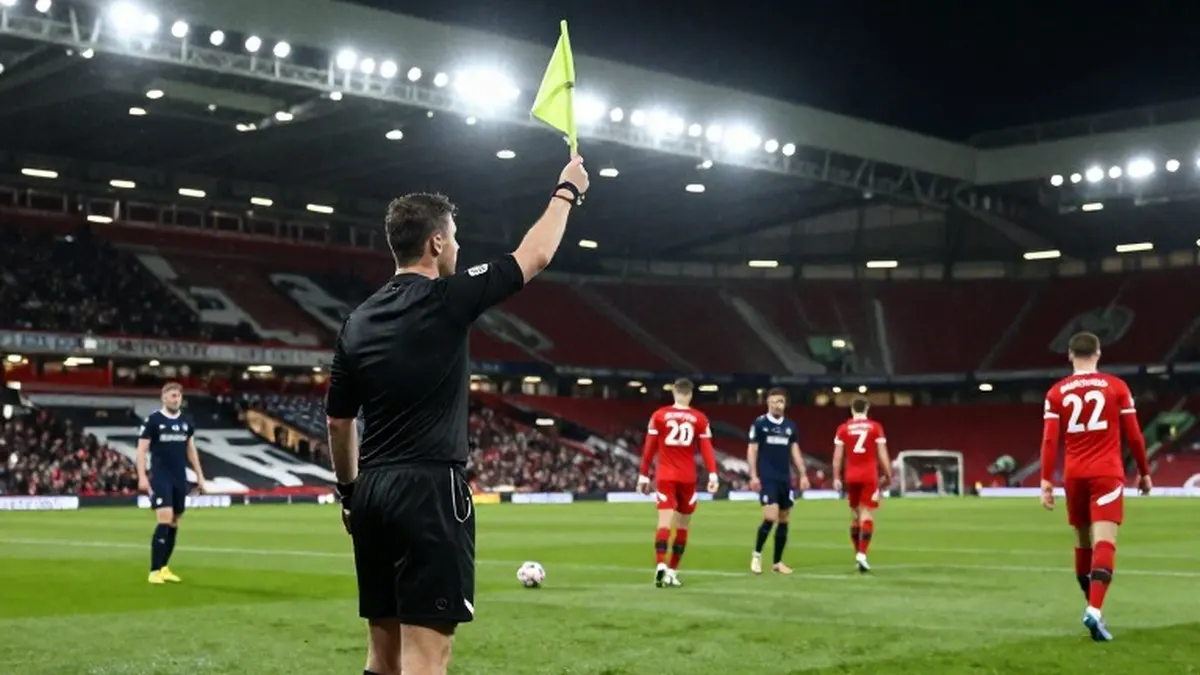
Arsenal's 1-0 victory over Hull City on Saturday did little to disguise a problem that is becoming difficult to ignore. Mikel Arteta's side were caught offside four more times, taking their tally to 35 infractions after 10 Premier League games, 11 more than any other team in the division.
The first half summed up the malaise. Arsenal's most promising opening before the break was wiped out by an offside flag, and a more contentious moment followed when Hull's Nobel Mendy pulled Kai Havertz's shirt as Bruno Guimaraes attempted a long-range shot. Because Havertz had been standing in an offside position, no penalty was awarded, leaving room to debate which offense should have taken precedence.
Arsenal finally broke through in the 72nd minute, when Martin Odegaard bundled in the rebound from Noni Madueke's shot to secure the three points.
The scale of the numbers is striking. Across the last seven Premier League seasons, no club has averaged more than three offsides per game, and only Burnley in 2021-22 and Liverpool two seasons later have even exceeded 2.5, both finishing with more than 100 across a full campaign. Arsenal, not previously a team prone to such offenses, are trending well beyond those marks over a sample that now covers more than a quarter of the season.
Havertz is at the center of it. His 15 offsides are seven more than any other player in the top flight and more than any Arsenal player managed across the whole of last season's title campaign. Bukayo Saka sits third in the league with seven.
The shift is dramatic for a player who ranked 48th among the division's forwards for offside frequency over the previous six seasons. Habitual offenders such as Ashley Barnes, Darwin Nunez and Cristiano Ronaldo were flagged roughly once every 70 to 80 minutes, while Havertz hovered around once every 140. This season he is being caught close to once per half, even though physical data from Gradient Sports suggests he is moving as swiftly as ever.
Arteta acknowledged the issue. 'There are many areas that we need to improve,' he said, conceding of the offsides: 'Certainly it's far too many.' His explanation centered on execution. 'It's all about timing,' he said. 'So there is a signal on the ball, and you need to time it around that. If that's a second too late or half a second too late, that's all.'
The infractions have been spread across the schedule: eight in the win at Aston Villa, seven against Leeds, five versus Coventry and now four against Hull. Odegaard's nine passes to offside teammates also lead the league, a reflection of his tendency to take one extra touch before releasing the ball.
Arteta hinted at a broader stylistic flaw. 'We need to find ways to be more efficient, sometimes even more pragmatic,' he said. 'Sometimes my feeling is that we are trying to score a perfect goal against these low blocks. We need to be much more chaotic than that.' Against Hull, Madueke offered that alternative, driving directly at his fullback rather than relying on the one-twos and overlapping runs that keep ending in flags.
There are reasons to think the surge will not last. Injuries have meant Havertz and Odegaard have rarely shared the pitch in recent seasons, and an extended run together with Saka could restore the old rhythm, reducing this remarkable statistical spike to little more than an intriguing blip.