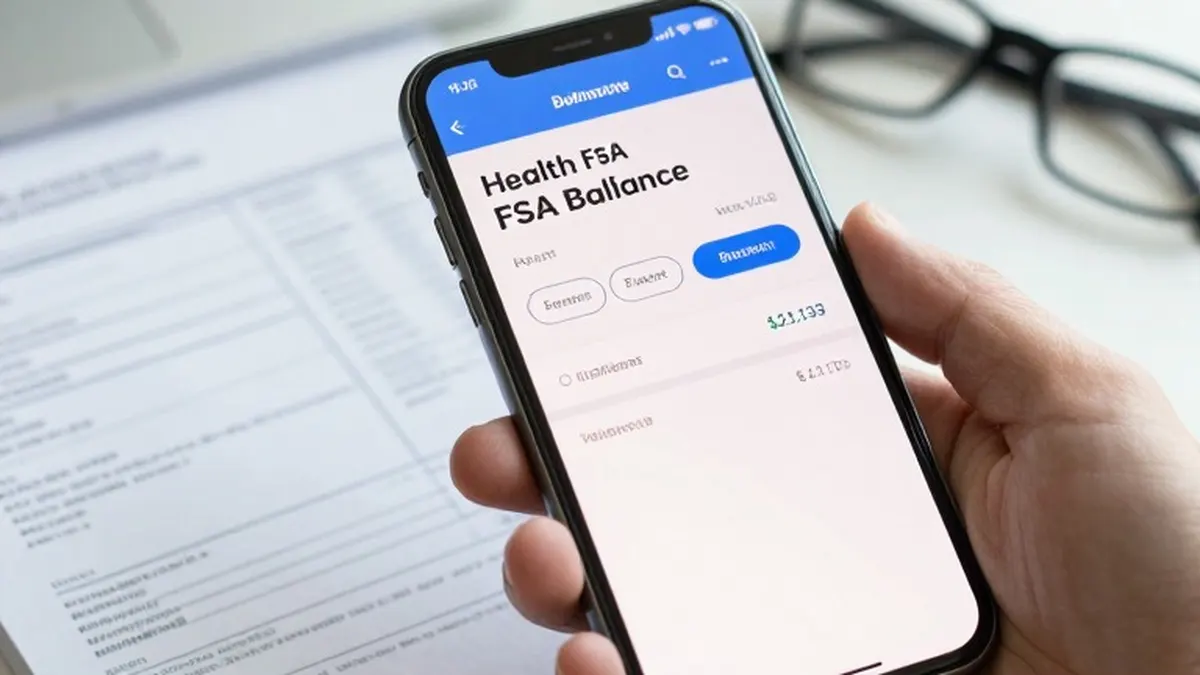
Health flexible spending accounts, commonly known as FSAs, allow workers to set aside pretax dollars to cover eligible medical expenses. However, these accounts are frequently structured with a use-it-or-lose-it provision, meaning any unspent balance is forfeited at the end of the plan year. According to an October report from the Employee Benefit Research Institute, approximately 40% of workers with health FSAs forfeited unused money in 2024. The average amount lost by these account holders was $404, a decrease from $436 in the previous year. The study analyzed more than 3.3 million accounts representing $3.9 billion in total contributions.
Despite the potential loss of funds, employees may still realize a net financial benefit compared to paying for the same expenses with after-tax income. Jake Spiegel, a senior research associate at the Employee Benefit Research Institute and author of the study, explained that workers can come out ahead if the amount they forfeit is less than the tax savings they achieved through the account. This principle holds true even if the remaining balance is returned to the employer.
Access to these accounts has expanded significantly over the past decade. In 2026, 72% of state and local government workers and 47% of private-sector workers have access to a health FSA, according to the Bureau of Labor Statistics. These figures represent a substantial increase from 2017, when the respective percentages were 68% and 40%. It is important to distinguish FSAs from health savings accounts, or HSAs. While both allow for pretax contributions, HSAs permit balances to roll over year to year and can even be invested, whereas FSAs typically do not.
Plan rules vary regarding the handling of unused funds. Roughly one-third of FSA users face a strict use-it-or-lose-it requirement. The remaining accounts offer either a carryover option, allowing up to $680 to be transferred to the following year, or a grace period of up to two and a half months to incur additional expenses. Employers are not permitted to offer both the carryover and grace period options simultaneously.
Deadlines for spending FSA funds often differ from the standard December 31 date. Rachel Rouleau, chief compliance officer for Health-E Commerce, noted that some employers set deadlines at other times of the year. She emphasized that employees should verify their specific plan deadlines with their employer or FSA administrator to avoid unnecessary forfeitures. Additionally, many employers provide a three-month window after the deadline to submit receipts for qualifying expenses incurred during the previous plan year.
The IRS announced that the maximum contribution limit for health FSAs will increase to $3,500 in 2027, up from the $3,400 limit in 2026. The difficulty in accurately predicting annual healthcare needs is a primary reason for forfeitures. Spiegel noted that it is challenging to project expenses, particularly for healthy individuals without chronic conditions that involve predictable prescription costs.
Contributions to FSAs generally avoid federal income taxes, payroll taxes for Social Security and Medicare, and potentially state and local taxes. Certified financial planner Sean Lovison explained that to calculate the tax savings, one should apply the combined tax rate to the total contribution. For example, if a worker has a combined tax rate of 35% and contributes the 2026 maximum of $3,400, the estimated tax savings would be $1,190. As long as the forfeited amount is less than this savings figure, the worker is mathematically ahead.
While losing money is undesirable, the mathematical advantage remains if the tax benefits outweigh the forfeiture. Employees can use past forfeiture data to inform their contribution decisions for 2027. Rouleau advised workers to consider their anticipated healthcare expenses, including recurring prescriptions, doctor visits, copays, deductibles, dental and vision care, and other eligible out-of-pocket costs for themselves and dependents.
Before accepting a forfeiture, employees should explore ways to spend down their balances. Rouleau highlighted that there are thousands of eligible expenses, ranging from everyday healthcare essentials to telehealth services. Many consumers are surprised to learn that over-the-counter medications, menstrual care products, sunscreen, first-aid supplies, and certain health-monitoring devices are eligible. This list also includes doctor and dentist appointments, prescription drugs, acupuncture, and addiction treatment.
To manage their accounts effectively, employees should utilize the online portals provided by most plans to review balances, submit claims, and check deadlines. Rouleau suggested that the contact information for the FSA administrator is typically listed on the back of the FSA card, allowing workers to confirm their specific requirements and avoid losing funds.