Authorities in Senegal confirmed on Sunday that at least 34 people have died after a small boat carrying migrants sank in the Atlantic Ocean. The incident occurred off the coast of northwestern Senegal, marking the latest tragedy on a dangerous maritime route that thousands of West Africans attempt to cross each year in hopes of reaching Europe.
According to the Senegalese Press Agency, only one survivor has been found so far. The agency stated that an indeterminate number of individuals remain missing. While an initial report from the interior ministry listed 21 recovered bodies, the death toll was later raised to 34. This updated figure was confirmed by Action for Human Rights and Friendship, a local aid organization, which noted that the numbers are still provisional as search efforts continue.
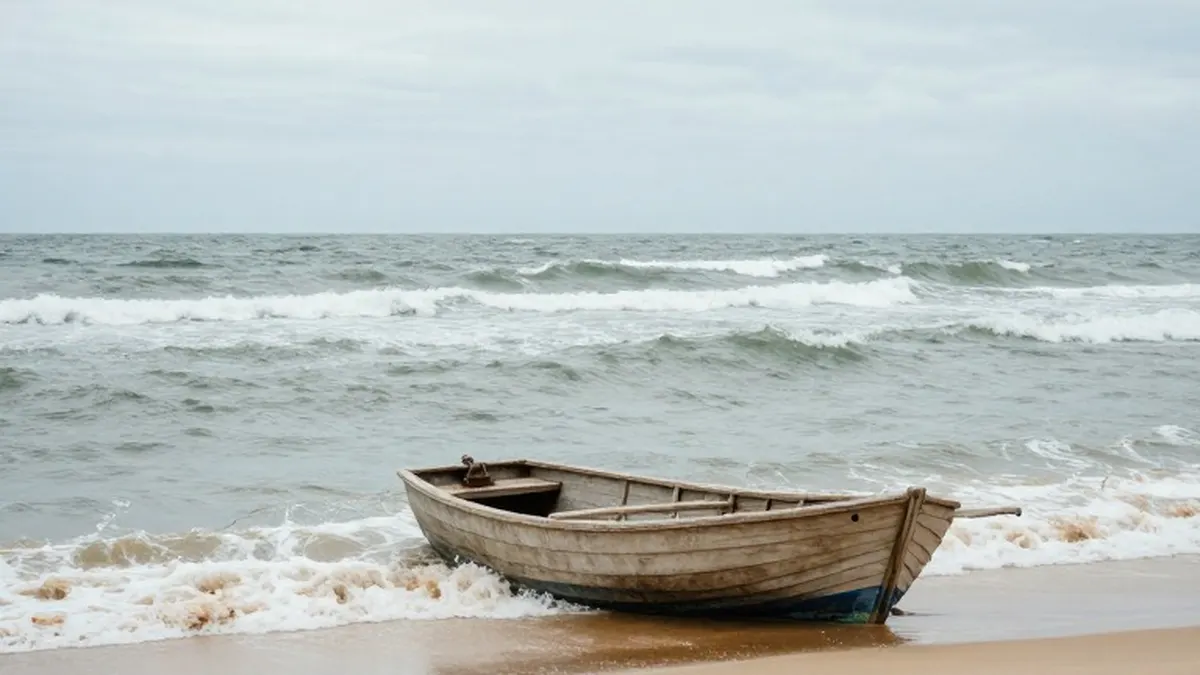
Media reports indicated that the flat-bottomed boat, known as a pirogue, capsized on Saturday near the Loumpoul dunes in the Kebemer department. This area lies between Dakar and the northern city of Saint-Louis. However, Saliou Diouf, the founder of the migrant aid association Boza Fii, told the AFP news agency that the sinking actually took place on Friday. Diouf noted that the nationalities of all victims have not yet been confirmed, but he added that the bodies recovered on Saturday were Senegalese.
Senegalese President Bassirou Diomaye Faye addressed the incident on social media on Sunday. He stated that all state authorities and resources have been mobilized to locate the missing, care for survivors, and support the families of the victims. The president pledged to intensify the fight against those who organize these risky crossings. He remarked that no one should set out with the sea as their only horizon and vowed to continue working to give young people reasons to hope within the country.
In a separate but related development, Senegalese authorities reported intercepting 142 migrants on Friday. These individuals were traveling on a similar small boat with the intention of reaching Spain. Police said the group included 23 women, two babies, and two other children. The migrants were from Senegal, Gambia, Guinea-Bissau, Guinea, and Nigeria.
The interior ministry emphasized its determination to combat people smuggling networks through strengthened cooperation with neighboring countries. It was also announced that the country's interior minister would visit the region where the accident occurred to meet with the families of the victims and express the state's condolences.
The region has seen a recent surge in maritime activity. Spanish authorities on the Canary Island of El Hierro declared an emergency on Saturday following a significant increase in migrant boat arrivals. Officials on El Hierro reported that more than 3,300 people had arrived on approximately 30 boats since the start of November.
To manage the flow of migrants, Senegal, Mauritania, and Morocco have increased maritime patrols around common departure points. These measures have forced boats to head further south toward the coasts of Gambia, Guinea-Bissau, and Guinea. Consequently, the duration of the already hazardous crossing has been prolonged for many travelers.
This disaster highlights the persistent dangers of the Atlantic route, where thousands of people from West Africa attempt to reach Europe annually. The combination of increased patrols and the perilous conditions continues to challenge those undertaking the journey.