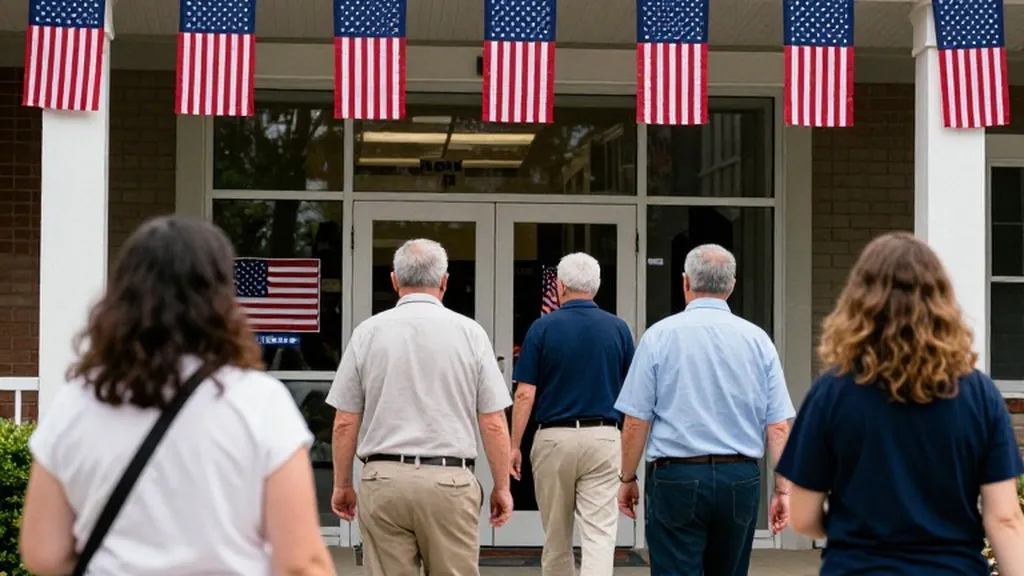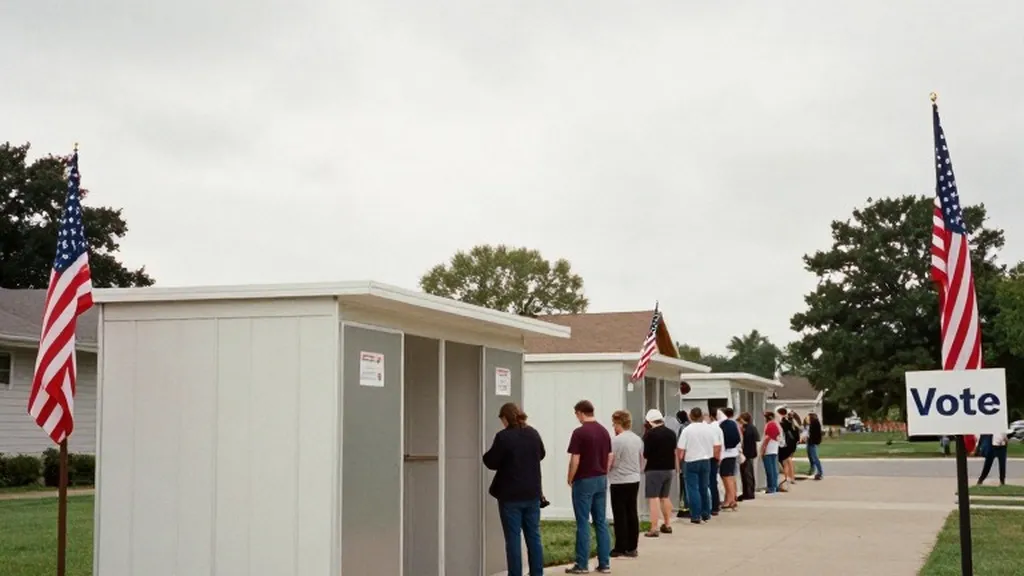
Voters across the United States are casting ballots on Tuesday to determine the balance of power in Congress for the final two years of President Donald Trump's second term. The election is widely viewed as a referendum on the administration's performance, particularly regarding the economy and the ongoing war with Iran. According to the Associated Press, a significant portion of the country believes the nation is heading in the wrong direction, with high prices cited as a primary concern by many citizens.
A central factor in this election is the use of new congressional maps in seven states: California, Florida, Missouri, North Carolina, Tennessee, Texas, and Ohio. These districts were drawn during the mid-decade redistricting process, a move that Republican leaders hoped would help them beat the historical pattern of a president's party losing seats in midterm elections. However, political analysts and observers note that these new lines may not guarantee the expected partisan results, as voter behavior in these redrawn areas is not always predictable based on previous elections.
In the U.S. House, all 435 seats are up for election. Republicans currently hold 218 seats, while Democrats hold 214, with one independent and some vacancies. To take control of the chamber, Democrats need to win a net gain of three districts. Republicans can afford to lose no more than two seats. Ballotpedia identifies 46 battleground districts in this race. Among these, 21 districts held by Democrats voted for President Trump in 2024, while nine districts held by Republicans voted for Vice President Kamala Harris. This overlap suggests that the new maps in states like Florida and North Carolina may not translate directly into Republican gains, despite the strategic intent behind the redistricting.
The Senate race involves 35 seats, including 33 regular elections and two special elections. Republicans hold 53 seats, and Democrats hold 45, along with two independents who caucus with the Democrats. Democrats need a net gain of four seats to secure a majority, a threshold that makes the race highly competitive. Eleven senators are not running again, creating open seats in states such as Iowa, Michigan, Montana, New Hampshire, and North Carolina. The AP notes that one or two seats could tip the balance of the chamber, making every vote in these new and existing districts crucial.
The mood in the country is marked by economic anxiety. AP-NORC polling indicates that 35 percent of U.S. adults approve of President Trump's job performance, while only 25 percent approve of his handling of the economy. About seven in ten adults say the country is heading in the wrong direction. James Moore, a 57-year-old librarian in Raleigh, North Carolina, expressed this sentiment, stating that he is paying more for taxes, healthcare, and everyday goods. In contrast, Mark Barker of Palm Beach Gardens, Florida, remains supportive, saying he has been following Trump the whole time and believes he is doing an awesome job.
Republican National Committee Chairman Joe Gruters emphasized the importance of turnout, stating that if Republicans turn out their voters, they will win. This strategy relies heavily on the assumption that the new maps in states like Texas and Ohio will favor Republican candidates. However, the AP reports that many Republican candidates have kept a careful distance from the president, who held dozens of rallies in the weeks leading up to the election. Trump concluded his campaign tour in Salina, Kansas, urging voters to pretend he was on the ballot. His administration has also filed lawsuits in states like Alaska and California regarding the certification of results, adding a layer of legal complexity to the electoral process.
Democratic Congressional Campaign Committee Chair Suzan DelBene countered the Republican focus on turnout by saying the American people are angry and want change. Democrats are described as cautiously optimistic, hoping to capitalize on voter dissatisfaction with the cost of living. If Democrats win even one chamber, investigations and possible impeachment proceedings become likely. House Democratic Leader Hakeem Jeffries, who would be the first Black speaker if Democrats take the House, has outlined a 100-day agenda focused on the cost of living and oversight of the executive branch.
The financial aspect of the election is also unprecedented. The 2026 elections are likely to be the most expensive in history, with Republican committees out-raising and out-spending their Democratic counterparts at the committee level. This spending was helped by Trump-affiliated groups and Elon Musk. However, at the candidate level, Democrats out-raised their opponents. An analysis by the AP of AdImpact data shows that 88.1 percent of Republican general election TV ad spending went to states and districts that Trump won in 2024, with more than $850 million spent in areas where he won by 10 points or more. This heavy spending reflects the party's belief in the strength of the new maps, even as some districts show mixed voting histories.
In the governor's race, 36 offices are up for election. Republicans hold 26 governorships and Democrats 24. Democrats would need a net gain of two governorships to achieve a nationwide majority, a feat they have not accomplished since 2010. The AP identifies Alaska, Arizona, Georgia, Iowa, Kansas, Michigan, Nevada, Ohio, and Wisconsin as key battlegrounds for the governor's office. In Ohio, Republican Vivek Ramaswamy faces Democrat Amy Acton, a race that has drawn attention due to campaign ads featuring Acton's estranged mother. In Georgia, Republican Rick Jackson is running against Democratic former Atlanta Mayor Keisha Lance Bottoms.
Election administration has been a point of contention, with federal judges temporarily barring the Trump administration from implementing plans to prevent noncitizen voting. Critics argue these measures risk disenfranchising eligible voters and infringe on states' authority over elections. The U.S. Postal Service has added hours and staff to ensure mail ballots are counted on time. As polls open in states like California, Florida, and Ohio, the outcome of the new congressional maps will be tested. The final results will determine whether the redistricting strategy holds up against the actual voting patterns of the electorate.