Pope Leo XIV has reaffirmed the spiritual bond between the Catholic Church and the people of Israel during an interfaith gathering in Buenos Aires, Argentina. Speaking on Monday, the Pope emphasized the Church's sincere respect for the holy and true elements found in various religious traditions. This statement drew particular attention from Jewish leaders, many of whom viewed it as a significant gesture at a time when antisemitism is resurfacing in Europe and other parts of the world.
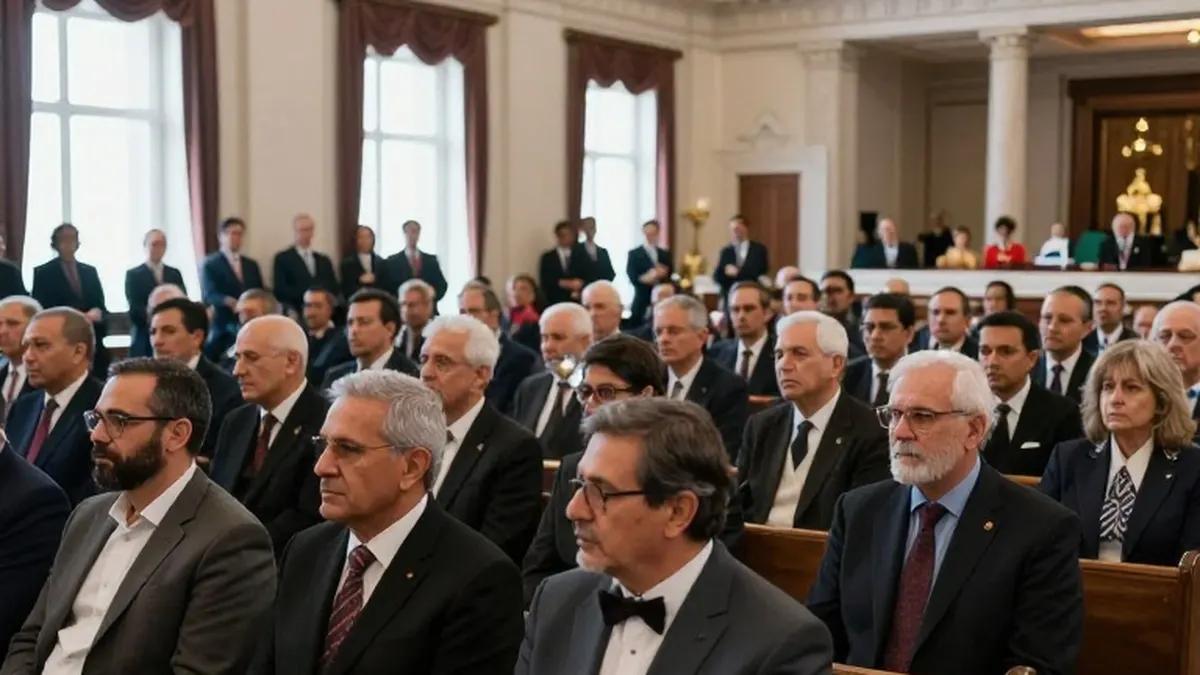
The remarks were made during a meeting with representatives of diverse religious communities held at San Martin Palace, the headquarters of Argentina's foreign ministry. The Pope referenced the teachings of the Second Vatican Council, which took place between 1962 and 1965 and fundamentally shaped the Church's approach to the modern era. He addressed an audience of approximately 100 religious leaders, highlighting Argentina's unique history as a meeting point for different peoples, cultures, and traditions.
Isaac Sacca, the chief rabbi of the Sephardic Community of Buenos Aires and president of the Jewish youth organization Menora, described the statement as a pleasant surprise. He noted that the Pope's words were especially meaningful to the local Jewish population given the current global climate. Sacca added that the meeting was moving on multiple levels, as it demonstrated the harmonious coexistence of various religious communities in Argentina before the Pontiff.
Rabbi Marcelo Polakoff, the commissioner for interreligious dialogue of the World Jewish Congress in Latin America, said that hearing the Pope's words in person was deeply comforting. He observed that the specific terminology used to honor the People of Israel is not commonly found in Church documents, lending a sense of closeness to the Pope's approach. Polakoff suggested that Leo XIV is continuing the strong legacy of interreligious dialogue established by his predecessors, including Pope Francis, Benedict XVI, and John Paul II.
During his address, the Pope praised Argentina's tradition of welcoming immigrants from around the world. He described the nation's identity as a melting pot formed by Indigenous peoples and centuries of immigration, where diverse groups learned to work together and build communities. He noted that while early arrivals were primarily Catholic, Protestant, and Jewish, later waves of immigrants contributed to an admirable blending of traditions with local customs.
Rabbi Ariel Stofenmacher, rector of the Latin American Rabbinical Seminary, drew a connection between the Pope's speech and Nostra Aetate, the historic 1965 document that recalibrated the Church's relations with other religions. Stofenmacher stated that the Pope revisited the core ideas of that document, particularly regarding the relationship between the Church and Judaism, while expressing gratitude for the spirit of brotherhood. He viewed the Pope as a global leader who addresses difficult issues and prioritizes social and family concerns.
The gathering included prominent representatives from Argentina's Jewish community, such as AMIA, the main Jewish community center in Buenos Aires, and DAIA, the political umbrella organization for the community. AMIA chief rabbi Eliahu Hamra noted that the Pope emphasized the role of religions as guardians of human integrity and dignity. The event opened with a live orchestra performing a tango by Astor Piazzolla, a choice intended to reflect Argentine culture without favoring any specific religious tradition.
Rabbi Sacca appreciated the tango performance, noting that the absence of specific religious elements in the ceremony was a mark of respect for all faiths present. Rabbi Polakoff added that the World Jewish Congress had presented a document titled Kishreinu in November 2022, which serves as a Jewish response to Nostra Aetate. He expressed hope that the Pope would be an exceptional partner in continuing this work. The meeting concluded with a minute of silence for world peace and the victims of violence.
This interfaith meeting was part of the Pope's four-day visit to Argentina, which began on November 8 following his stop in Uruguay. Prior to the gathering, the Pope visited a residential care facility for people with disabilities and celebrated Mass at Palermo Park, where an estimated crowd of more than 2 million people gathered. The visit continued on Tuesday in Cordoba province with another Mass before the Pope returned to Buenos Aires. He is scheduled to visit Lujan for a final Mass on Wednesday before departing for Lima, Peru, the last stop on his South American tour.