Arsenal's 1-0 Premier League win over Hull City on Nov. 7 produced one of the most confusing video review moments of the season, and according to former Select Group referee Andy Davies, the law was applied incorrectly when the Gunners were denied a first-half penalty.
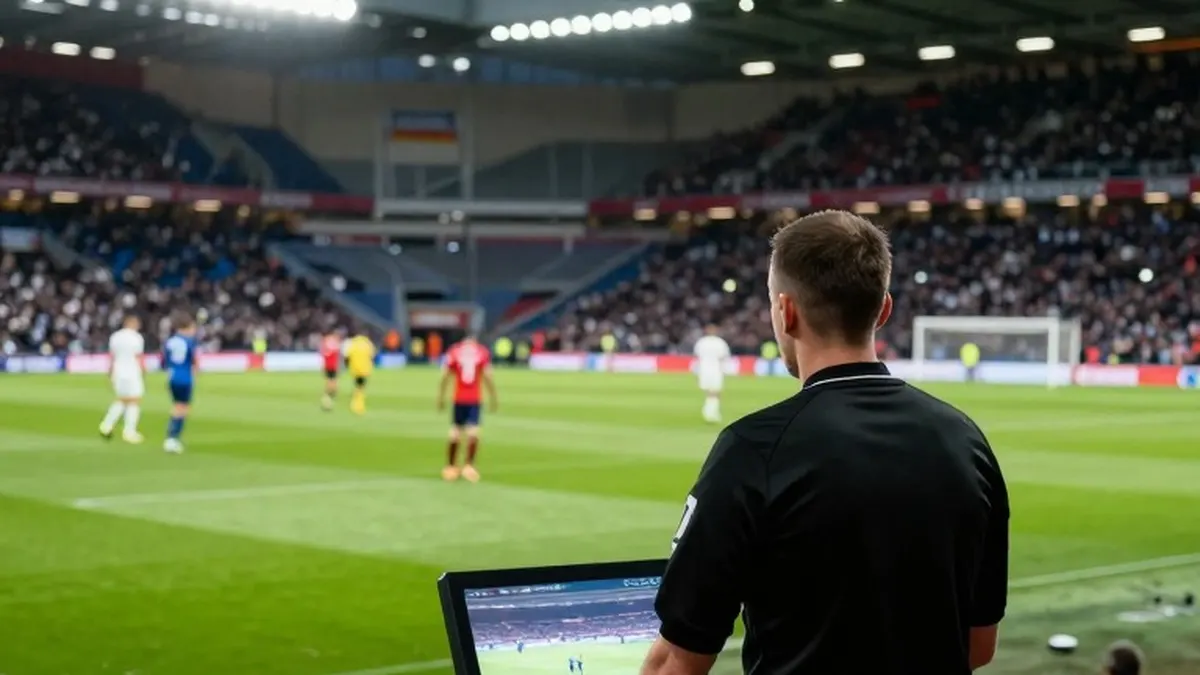
The incident came in the 42nd minute, when Hull's Nobel Mendy appeared to grab the shirt of Kai Havertz as the Arsenal attacker tried to get on the end of a ball into the box. Referee Farai Hallam allowed play to continue, but VAR Michael Oliver recommended an on-field review for a possible penalty to Arsenal.
At the pitchside monitor, Hallam agreed that Mendy had committed a foul on Havertz. However, he also determined that Havertz had been in an offside position when the ball was played, and he explained to the stadium that the outcome was no penalty, with play restarting via an indirect free kick to Hull.
Davies, who spent more than 12 seasons on the elite refereeing list and has operated within the Premier League's VAR space, said the law was incorrectly applied in this incident. The laws of the game state: "If a player in an offside position is fouled before or without committing an offside offense, the foul is to be penalized." Because Mendy's foul came before any offside offense by Havertz, Davies argued, a penalty should have been the outcome. He noted that Arsenal going on to win the game will dampen any fallout for Hallam and referees' body ProRef.
"I have some sympathy for Hallam," Davies wrote, explaining that judging when a player should be deemed to be impacting an opponent can be open to interpretation, and that Havertz's positioning caused a misread of the situation. Still, he said the correct outcome should have been reached between the referee, the VAR and the assistant VAR, adding that this was another incident where the "live comms" he has long advocated could have provided much-needed clarity in real time.
Arsenal were also involved in the round's other major flashpoint. In the 34th minute of Liverpool's meeting with the Gunners, Alexander Isak nearly headed a cross toward goal but appeared to have his shirt pulled by Jurriën Timber. Referee Andy Madley was unmoved, and VAR Stuart Attwell checked and cleared the on-field decision, judging that the contact fell short of a clear error. Davies said Liverpool can feel aggrieved, arguing that Timber's action was deliberate, that he made no attempt to play the ball and acted solely to stop Isak heading toward goal, which he succeeded in doing. In Davies' view, Attwell fell short of his responsibilities by not recommending a review, an error in a key match given this season's encouragement for VAR to maintain a high bar for intervention.
The previous weekend brought a correct intervention in Chelsea's 2-0 win over Manchester United on Oct. 31. VAR James Bell sent referee Peter Bankes to the screen in the 61st minute after Lisandro Martínez led with his arm in an aerial challenge and made contact with the head of Wesley Fofana. Bankes awarded a penalty and showed Martínez a second yellow card. Davies called it the right outcome and credited the VAR for acting despite the pressure and emphasis on minimal interventions this season, though he felt Bankes would be disappointed not to have spotted the reckless contact in real time.
Other recent checks drew mixed assessments. Matheus Cunha's disallowed Manchester United goal, after the semi-automated offside system showed his left leg strayed beyond the last defender when Harry Maguire headed a corner back across goal, was called correctly, with no on-field review needed for a factual decision. Ayden Heaven's yellow card for a two-footed tackle on Bournemouth's Evanilson in United's 3-0 defeat on Oct. 25 was also deemed the right outcome because there was no contact or real danger to the opponent. Brentford's Yehor Yarmoliuk was correctly sent off for violent conduct after headbutting Liverpool's Jérémy Jacquet on Oct. 17, though Davies called the four-minute wait for a review frustrating. And Ryan Gravenberch's second yellow card against Manchester City on Oct. 11 was, in Davies' view, a correct if "soft" call, a category VAR can only review when factually incorrect under a rule newly introduced this season.