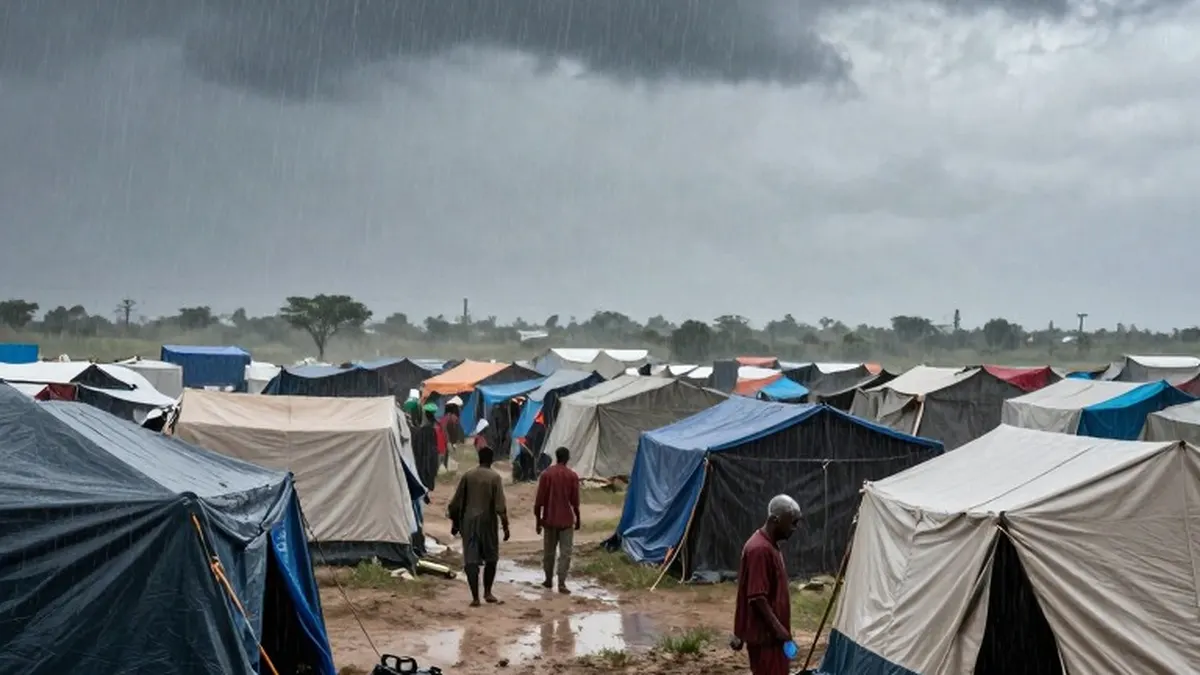
Displaced Palestinians across the Gaza Strip are facing a critical humanitarian crisis as heavy overnight rains have flooded thousands of tents, leaving families exposed to the elements. This weather event marks the fourth consecutive winter for the war-torn enclave, a period characterized by a severe shortage of aid and a lack of fuel for heating. With minimal resources available, residents are relying on makeshift shelters that are increasingly vulnerable to the seasonal storms.
Amani Al Naouq, a spokesperson for the Red Cross, described the immediate impact of the rainfall to Al Jazeera. She reported seeing footage of entire camps and families inundated with water, forcing them to scramble to drain their tents and protect their remaining belongings and lives. The scenes highlight the precarious living conditions endured by those who have been displaced multiple times during the conflict.
The situation has been compounded by the tight restrictions imposed by Israeli authorities on the entry of aid into the territory. Shelter items, which are considered vital for winter survival, have been almost completely barred from entering. These items include tent poles, construction materials, and mobile homes. Israeli officials classify many of these goods as dual-use items, a designation that has complicated their clearance for humanitarian access.
According to the International Organization for Migration, or IOM, the supply pipeline for humanitarian shelter partners is currently covering barely 17 percent of the identified winter needs. In October, Amy Pope, the Director General of the IOM, warned that nearly the entire population of Gaza requires shelter assistance. Her warning underscored the gap between the scale of the crisis and the limited resources available to address it.
Pope emphasized that families who have already suffered repeated displacement and significant loss need to be able to face the winter with safety and dignity. She stated that shelter materials must enter the territory quickly, predictably, and at a scale that matches the urgent requirements on the ground. This call for immediate action reflects the growing pressure on humanitarian agencies to secure better access for aid workers and supplies.
Currently, approximately 8,600 emergency shelter kits from the IOM are waiting outside Gaza. Despite their readiness for distribution, these kits continue to be turned away at crossing points by Israeli authorities. This bottleneck prevents essential equipment from reaching the people who need it most, further straining the limited resources held by local relief efforts.
Humanitarian workers have been forced to adapt to the lack of official supplies by repurposing salvaged materials to construct temporary shelters. This improvisation is taking place as storms, turbocharged by the strengthening El Niño phenomenon, batter the territory. The combination of extreme weather and logistical barriers creates a challenging environment for both aid providers and the displaced population they serve.
The IOM has reiterated that the solutions to the shelter crisis are well known and that the necessary supplies are ready for delivery. Pope noted that humanitarian teams are prepared to act if given the opportunity. She stressed that immediate and sustained access is essential to protect lives, reinforce damaged shelters, and help families move beyond temporary fixes toward more stable living arrangements.
Her statement concluded with a call for all parties to facilitate principled humanitarian action. Pope argued that the response to the crisis must be equal in severity to the situation faced by the people of Gaza. The ongoing restriction of shelter materials remains a central point of tension as the region prepares for the harshest part of the year.
The flooding of displacement camps serves as a stark reminder of the ongoing challenges in Gaza. As the winter deepens, the need for coordinated international effort and consistent border access becomes increasingly urgent to prevent a further deterioration in the humanitarian situation.