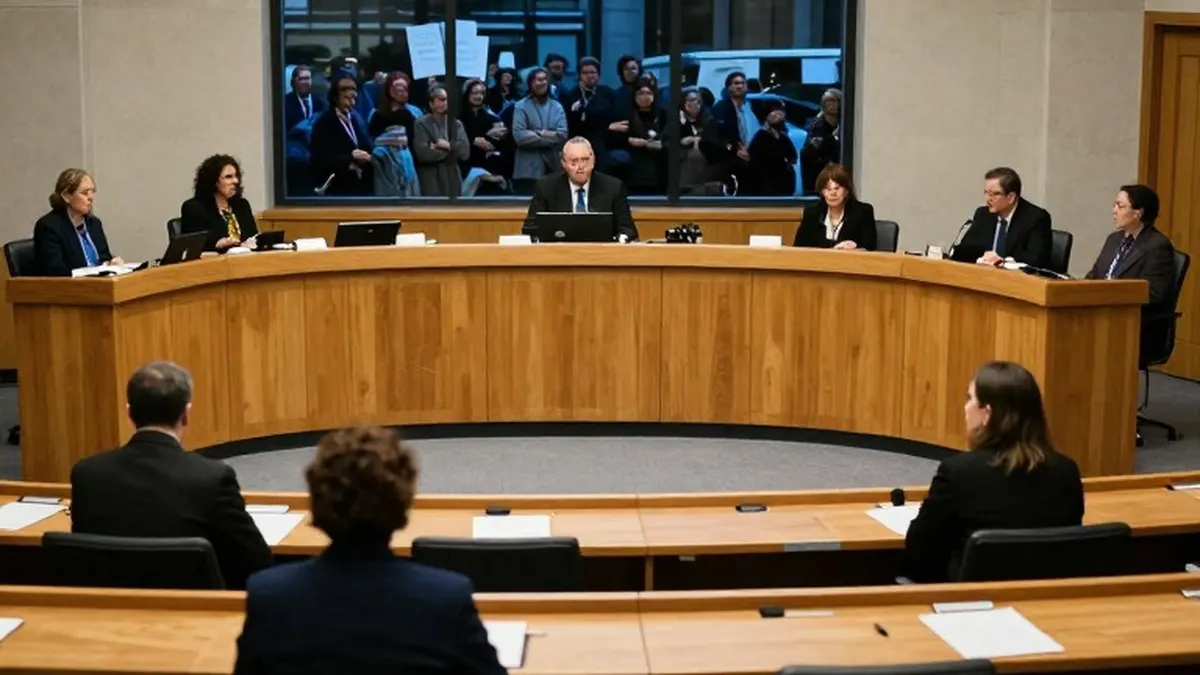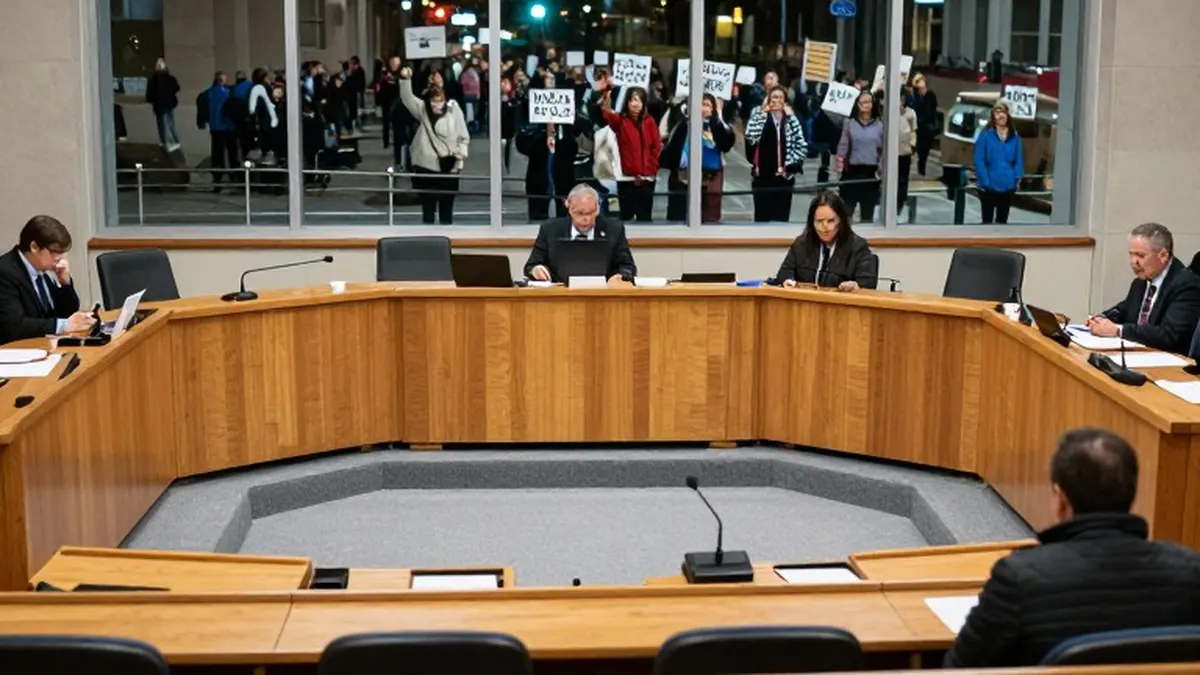
The City Council in Somerville, a municipality north of Boston, voted 10-1 on Thursday night to adopt an ordinance barring the city from contracting with companies involved in humanitarian violations. The measure specifically targets firms operating in Israel and Palestine. Councilor Kristen Strezo cast the sole dissenting vote on the 11-member board.
The ordinance was introduced in June by Councilors Ben Ewen-Campen and Ben Wheeler. This legislative step followed a November 2025 vote in which 55.7% of local voters approved Question 3, a ballot measure calling for the divestment of businesses that sustain what was described as Israel’s apartheid, genocide, and illegal occupation of Palestine. During his 2025 mayoral campaign, Mayor Jake Wilson had not endorsed the ballot question.
Opponents of the measure argued that it functions as a de facto boycott, potentially creating a less welcoming environment for the city’s Jewish and Israeli residents. However, the ordinance applies only to companies doing business with the municipality and does not affect private enterprises or sole proprietors operating within Somerville.
In a statement, Mayor Wilson’s office indicated that the measure is now final because it passed with a veto-proof majority. This outcome is notable because Wilson had previously suggested he would veto any measure that named a specific country.
During the debate, Ewen-Campen emphasized the importance of municipal action in the face of federal crackdowns on pro-Palestinian student protesters. He noted that while Somerville may not have a massive global impact, collective silence does. Strezo, invoking the history of Kristallnacht, argued that the ordinance makes Jewish residents feel targeted and unsafe, comparing the measure to early Nazi efforts to deter public shopping at Jewish businesses.
Councilor Emily Hardt supported the vote but noted it was not her ideal solution. She stated that supporting Palestinian human rights and opposing antisemitism are compatible positions and expressed a preference for an ordinance focused on U.S. government actions rather than specific countries.
The vote followed a contentious period of negotiations in the Legislative Matters Committee. The final language requires that companies be directly, knowingly, and consistently facilitating violations of humanitarian law to be excluded. Vendors must certify their compliance with these criteria when submitting bids.
City officials expressed practical concerns about the ordinance’s implementation. Chief Procurement Officer Angela Allen noted that the city lacks the legal authority to formally debar bidders and worried the process could cause delays. She suggested the ordinance might not withstand a legal challenge, a sentiment shared by City Solicitor Cindy Amara.
Reactions outside City Hall were divided. Members of Somerville for Palestine celebrated the passage of the measure, chanting slogans and playing music. In contrast, members of Shalom Somerville, a group that opposed both the ballot question and the ordinance, stood silently. Sam Gechter, president of Shalom Somerville, criticized the council for abdicating its responsibility despite the mayor’s campaign promises.
The final text of the ordinance allows the director of finance to exclude a company from the prohibition if its services are deemed essential to the city’s operation. If a vendor’s certification is contested, the city will consult databases from the United Nations Office of the High Commissioner for Human Rights and the American Friends Service Committee’s Investigate Project.