President Volodymyr Zelenskyy has asserted that speed restrictions implemented by Starlink’s military-grade internet service, known as Starshield, contributed to the success of recent deadly Russian attacks across Ukraine. The president pointed to specific operational limitations that he believes have hampered military coordination and defense efforts during the latest wave of strikes.
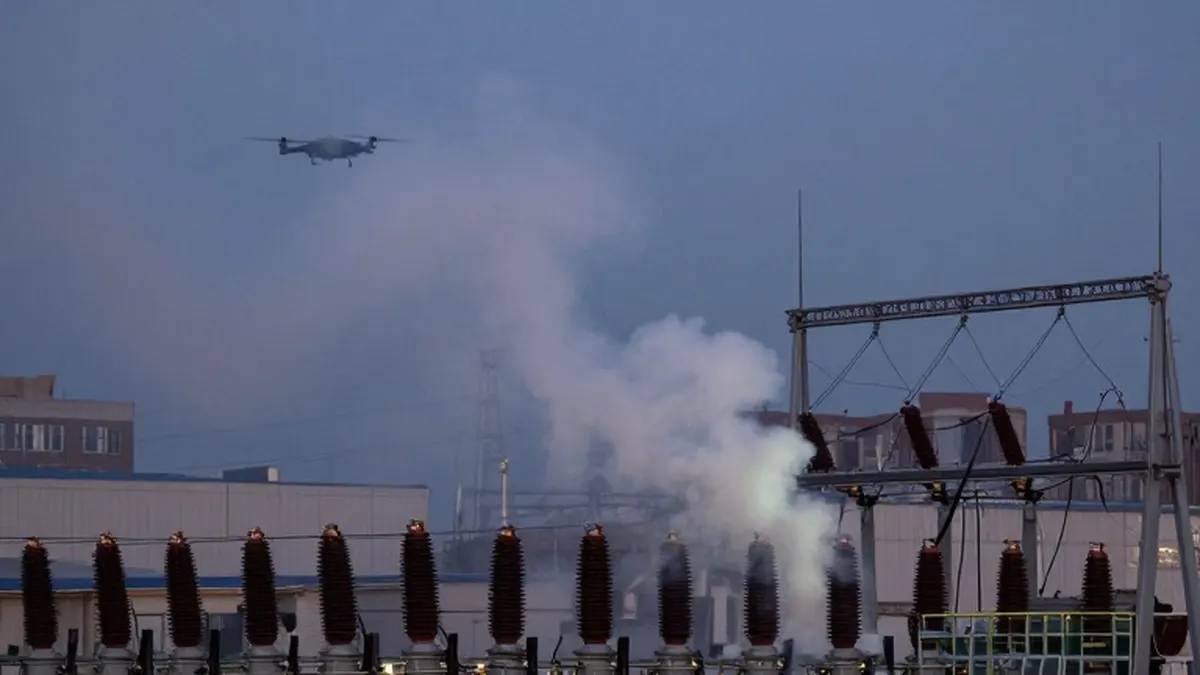
The criticism follows significant damage to Ukrainian infrastructure. On Saturday, two people were killed in a Russian drone attack targeting critical infrastructure in the northern Koriukivka region. Additionally, an energy facility in Odesa was struck overnight on Sunday, resulting in a power outage for 41,000 households, according to a statement from Ukraine’s DTEK energy provider.
Ukrainian military officials reported that they successfully shot down 106 of the 132 Russian drones launched during the overnight assault. Zelenskyy noted on social media that Russia has been targeting energy substations using Shahed drones, a type of aerial weapon frequently exchanged between the two sides in recent months.
In a post on X, Zelenskyy stated that many of these strikes succeeded because restrictions on the operating speed of Starshield terminals along the front line and in temporarily occupied territories remained in effect. He reiterated accusations that the service was throttling internet speeds, which in turn impeded military operations. The president clarified that these restrictions had been in place for five days as of Saturday.
Zelenskyy mentioned that Starlink had reported technical problems as the reason for the slowdown. However, the Ukrainian leadership expressed skepticism, stating that they do not believe the technical explanation is the primary cause. This marks the second such outage in recent weeks for the satellite internet service, which is owned by SpaceX, the company of US billionaire Elon Musk. SpaceX has previously denied restricting internet speeds, while Musk noted last month that the United States government controls Starshield.
Russia’s Defense Ministry announced on Sunday that its forces had launched attacks targeting Ukrainian military airfields, munitions depots, and other strategic military facilities. The strikes appear to be part of a broader strategy to degrade Ukraine’s military capabilities and energy stability.
In a reciprocal move, Ukrainian drones attacked the Taganrog region in Russia on Sunday. Authorities reported that an electrical engineer was killed and four others were injured in the incident. Meanwhile, six people were injured in a separate drone attack in Nizhnekamsk. Local officials in the wider Trans-Kama region of Tatarstan reported heavy attacks on industrial facilities and a residential building earlier on the same day.
Diplomatic efforts continue despite the escalating tensions. US negotiators recently concluded visits to both Russia and Ukraine in an attempt to secure a ceasefire. These discussions occur amid friction between Washington and Kyiv regarding Ukrainian attacks on Russian oil refineries. During these talks, the US reportedly proposed that Ukraine withdraw its remaining forces from the eastern Donbas region in exchange for NATO membership.
Russian President Vladimir Putin is scheduled to meet with US President Donald Trump and Chinese President Xi Jinping in Shenzhen this week. Ukraine is not included in the agenda for this summit. Analysts have drawn comparisons between this gathering and the 1945 Yalta conference, where major powers divided Germany and established the United Nations.
Ukrainian Foreign Minister Andrii Sybiha dismissed Russia’s long-standing proposal to revise Europe’s security architecture in a statement on Sunday. He criticized Putin for attempting to reshape the European security order without having won a world war, a sentiment he expressed by referencing the historical context of Yalta.