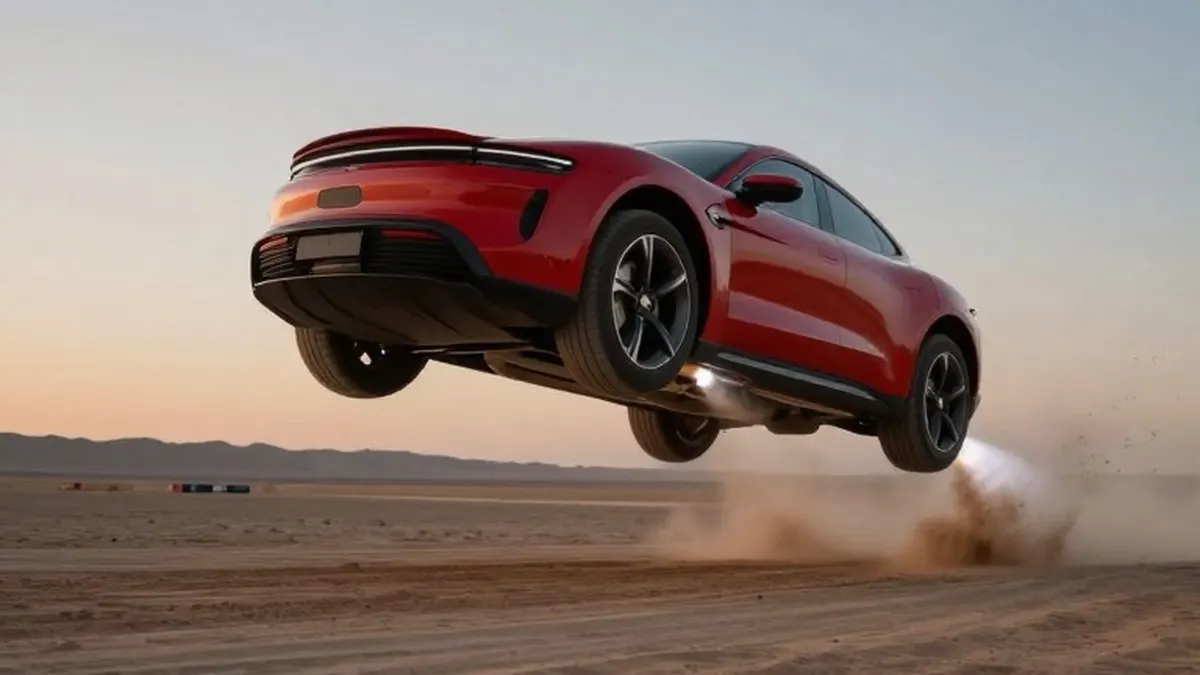
Earlier this month, Elon Musk's "flying" Roadster leapt and flipped through the air in a stunt that spread widely online. The performance relied on compressed-gas thrusters developed by SpaceX, Musk's rocket company. Yet the larger wager Musk is making concerns how Tesla earns its money, and competitors across the auto industry are racing to keep up.
Five days after the stunt, Musk disclosed that Tesla and SpaceX were exploring a merger. The move could speed up his drive into autonomous driving, according to the source report.
The stakes extend beyond technology. Carmakers, already contending with rising competition from China, want to move past a business built mainly on selling vehicles. They are looking toward recurring revenue from software and AI-powered services.
"Automakers are starting to look in the mirror and the software piece is what they are all looking at as the golden goose, because the margins are so high," said Dan Ives, a tech analyst and partner at merchant bank Yorkville Ives.
Despite the strategic shift Tesla has made in recent years, its car business remains a vital source of cash. It accounts for 75 percent of the group's total revenue and will be central to funding the heavy AI spending Tesla needs to take on its Big Tech rivals.
The competitive picture is also very different from 2008, when Tesla launched its first battery-powered Roadster. Chinese manufacturers are now ahead in the electric vehicle race, and they are investing heavily in software and AI to challenge Tesla in autonomous driving as well.
Musk's sales ambitions have reflected that tougher climate. His earlier target of selling 20 million vehicles a year by 2030 has been scaled back to 5 million. Even that goal looks demanding, given that Tesla delivered 1.6 million vehicles last year.
Analysts said the key to lifting sales toward 5 million in the near term would be Tesla's "Full Self-Driving" software. Despite its name, the system still requires a human to sit in the driver's seat and pay full attention.