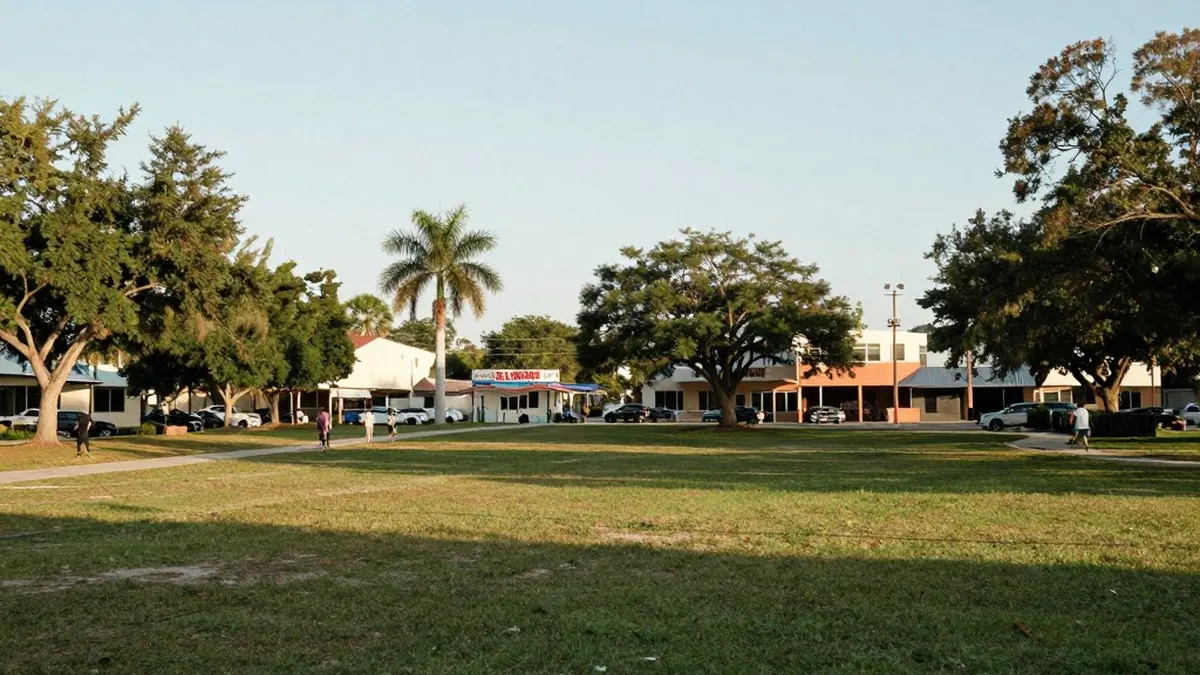
Manatee County’s expanding population is bringing affordability challenges for workers and retirees, along with pressure on roads and local planning. An analysis of U.S. Census Bureau data by the Pioneer Institute found that nearly 60,000 people moved to the county since 2020, roughly 32 people a day over five years. The county now has nearly half a million residents.
For Shanna Hendricks, 38, finding an affordable apartment has allowed her to remain near her job. The single mother recently moved into a two-bedroom unit at the Nest Apartments in Bradenton with her son and dog. Developed by One Stop Housing, the 182-unit workforce housing complex receives no government subsidy. It is about 10 minutes from downtown Bradenton, where Hendricks works as a behavioral technician for the nonprofit hospital Centerstone. She said the development is the reason she can afford to live in the community where she works.
The population gains have also changed the county’s demographic makeup. People ages 75 and older accounted for about a third of population growth, compared with 23% for those ages 20 to 34, according to the Pioneer Institute analysis. More newcomers arrived from elsewhere in Florida than from other states. Sarasota County supplied the largest net gain, while Hillsborough County accounted for the largest net loss.
Household income figures show another shift. Every income group grew except households earning between $25,000 and $50,000, whose numbers fell by more than 1,700. In 2024, residents earning between $100,000 and $150,000 represented the largest share of growth by income level, at 19%. Hendricks said she knows many people who have left the county and never returned, a trend she associates with its rapid expansion.
The region’s appeal has deep historical roots. Krystin Miner, deputy director of historical resources for the Manatee County Clerk of the Circuit Court, said waterways once provided the easiest transportation. In the 1840s, before the county’s incorporation, the Braden brothers built a sugar mill plantation and river dock. Sugar, salt, citrus and fishing businesses helped generate demand for steamboat and rail shipping, which also supported early tourism.
The county’s population rose from about 34,000 in 1950 to 211,000 in 1990. Mobile home parks and RV resorts appeared along U.S. 41, planned communities replaced eastern cattle land, and barrier islands became destinations for retirees and seasonal residents. Bordy Brilling followed that draw, moving in 2025 after visiting Bradenton and Anna Maria Island for eight or nine years. Although she moved to retire, she expects rising costs will eventually push her out of her Bradenton apartment.
County Commissioner George Kruse said managing growth means serving both newcomers and existing residents. He said the Live Local Act and reductions in home rule have made that harder by encouraging housing development while limiting county planning authority. As homes appear, officials must respond to infrastructure needs, sometimes disrupting earlier road priorities.
Kruse said keeping public infrastructure abreast of development is essential, but road improvements alone cannot ensure that teachers, police officers and hospital workers can continue living in Manatee County.