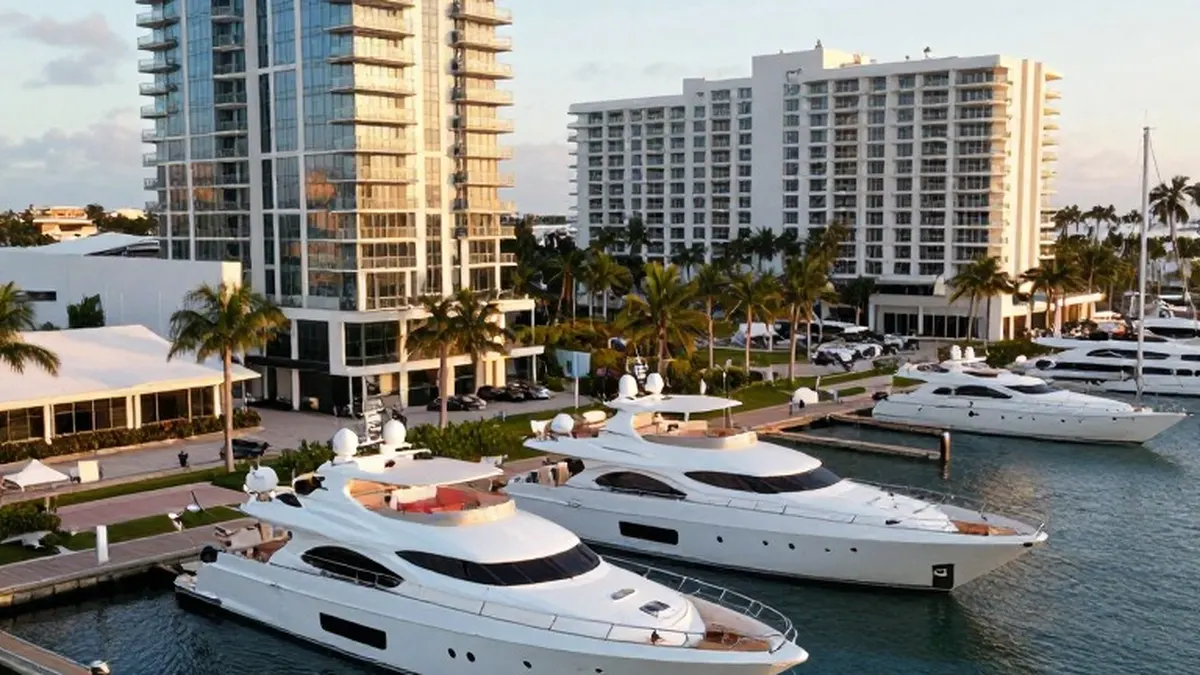
Marinas are emerging as the next major attraction in luxury real estate, as developers respond to a world in which wealthy buyers need places to keep yachts that keep getting bigger.
The global fleet has expanded sharply since the Covid-19 pandemic. There are now more than 6,000 superyachts measuring over 30 meters (98 feet) worldwide, with roughly another 200 delivered each year, according to SuperYacht Times. That growth in both the size and number of vessels has produced a shortage of slips, and investors are moving quickly to close the gap.
Deal-making reflects the rush. Last year, Blackstone paid $5.6 billion for Safe Harbor Marinas, which in August paid $1.5 billion for 65 marinas and storage sites acquired from MarineMax. European private equity firms have also been buying marinas to address the shortage in the Mediterranean.
Developers increasingly view marinas as a magnet for ultra wealthy buyers, particularly in South Florida. Billionaire Ken Griffin is building a megayacht marina in Miami with eight megayacht slips, one of them reserved for his 308-foot yacht.
The largest and most ambitious project is Related Group's $2 billion marina development in Fort Lauderdale, scheduled to break ground next year and open in 2030. The 40-acre complex will feature a St. Regis hotel with 122 rooms, a condo tower with 78 residences, 106 resort residences and a deepwater marina with capacity for 250 boats, including slips for yachts up to 350 feet. Plans also call for a sports and wellness club with padel and tennis courts, a yoga lawn, a fitness center and pools, plus a private beach club.
"Here in South Florida is there's been a scarcity of yachting destinations and marinas and slips," said Related Group's Nick Pérez. "So when you're able to combine irreplaceable real estate and a marina, you just have a winning formula."
Fort Lauderdale has long been considered the yachting capital of the United States, supported by an extensive network of repair and renovation companies, crew, brokers, charter specialists and shipbuilder offices. An estimated 2,000 superyachts pass through the city each year, according to tourism officials, and many owners want real estate that can house not just themselves but their crew.
Pérez said the St. Regis project should appeal beyond the yachting world to international buyers seeking a lower cost alternative to Palm Beach and Miami. Buyers from Mexico and Brazil have already purchased units, and he said as much as 30% of the project's buyers could come from abroad. "Fort Lauderdale is no longer T-shirt shops and flip-flops, it's now a luxury destination, with national retailers like Rolex, Patek, Cartier," he said. "When you look at Miami and Palm Beach and the growth, now it's Fort Lauderdale's time to shine."
Slips are not the only draw. Pérez said many Fort Lauderdale buyers are arriving from Southern California and the Northeast, drawn by Florida's lower taxes. "With the taxation situation in California, we're seeing a lot of interest from Newport and the Laguna area and San Diego," he said.