President Trump this week declared the war in Iran effectively over from a military standpoint and said the United States had won, even as American taxpayers continue to shoulder billions of dollars in operational costs to keep US forces ready overseas.
The conflict no longer dominates headlines, and exchanges of fire between Washington and Tehran are not happening daily. Still, the United States maintains a large footprint in the region and remains effectively in a war posture, despite the president's remarks, which came after his party suffered heavy midterm losses driven in part by voter frustration over the war.
Speaking Wednesday during a Veterans Day ceremony at Arlington National Cemetery, Trump said: "We won. Now the question is when we want to end. We must have a total victory. Not a 93 percent victory. It's going to be total." Days earlier, in a surprise appearance in the White House briefing room, he said: "Iran militarily is effectively over. We're just keeping it the status quo."
The price of the fight tells a different story. The Congressional Budget Office estimates the total cost at $47.1 billion as of Oct. 16, with $38 billion accrued from the war's start on Feb. 28 through the beginning of August. That means roughly $9 billion more was added over about three months, a relatively quiet stretch in which the US military reportedly carried out only a handful of defensive strikes after Iran all but depleted its stockpiles of advanced munitions.
That works out to $2 billion to $3 billion per month in continuing costs, putting the war on track for a $50 billion price tag, according to Mona Yacoubian, director of the Middle East Program at the Center for Strategic and International Studies. "The war is not over," she told The Hill. "If there is a spike in conflict, war costs will also spike."
Trump indicated this week he is unlikely to order fresh attacks on Iran as long as negotiations to end the war go well. "It depends on whether or not they sign a very strong agreement," he told CNN in a phone interview Sunday. "The answer is, highly unlikely it's going to be necessary." The talks are underway but look fragile: Iranian President Masoud Pezeshkian on Wednesday accused the United States of threatening his country with America's "mother of all bombs," its largest non-nuclear weapon, even as Washington pursues a peace deal.
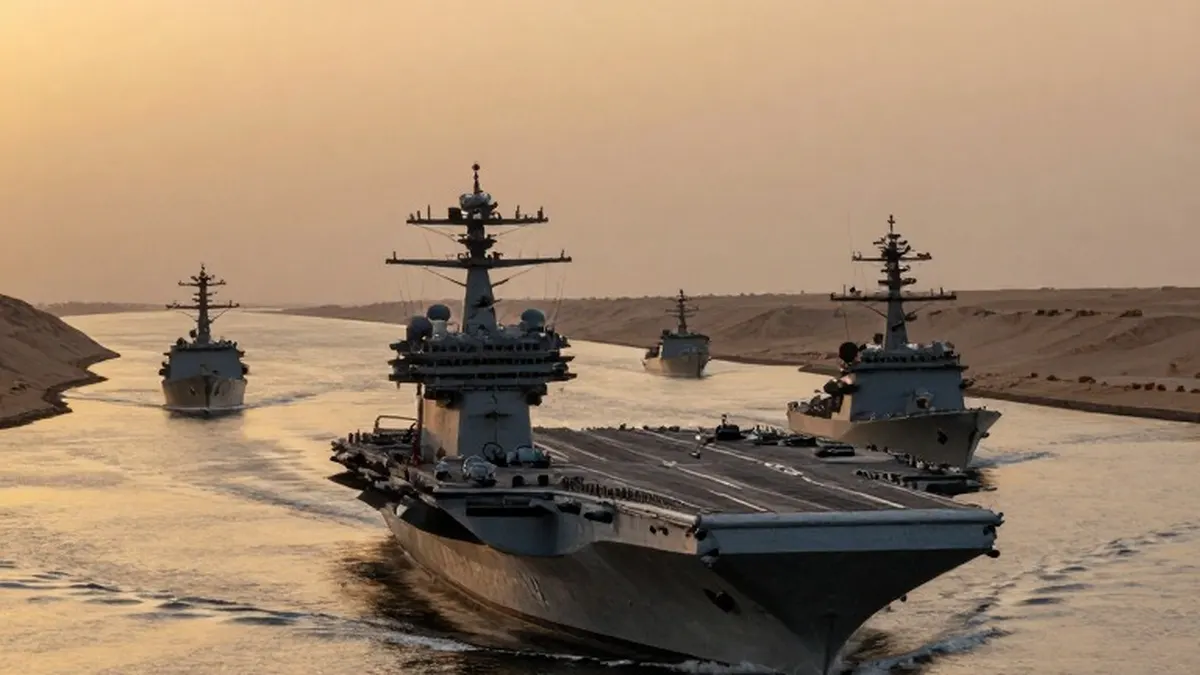
The biggest expense stems from the US naval blockade of Iran in the Strait of Hormuz, now in place for more than 100 days. Yacoubian called it "a 24-7 operation that entails all sorts of costs related to diverting some ships, intercepting others, protecting friendly ones, not to mention U.S. force protection," adding that those costs make the blockade difficult to sustain over an extended period. In the first week of November, the US military kept two aircraft carriers, 11 destroyers and a cruiser in the Arabian Sea, two destroyers in the Red Sea and three more destroyers with the US Sixth Fleet in the Mediterranean, according to the Institute for National Security Studies.
Alongside the blockade, which burns through fuel, food and supplies for tens of thousands of service members, the United States has launched limited defensive strikes when Tehran fires on American aircraft or vessels. The most recent came on Nov. 2, when US warplanes hit an anti-aircraft site on Qeshm Island and another island in the strait after Iran fired a missile at an American aircraft. Separately, the Pentagon faces more than $65 billion in estimated costs to repair or replace facilities damaged or destroyed by Iranian attacks, a figure not included in the CBO estimate, Yacoubian said.
The Trump administration is requesting up to $70 billion in emergency military spending to cover war costs and pay for new weapons and personnel. The president has lately insisted that US allies in the Middle East will foot the bill, telling CBS News in an interview that aired Sunday: "Those countries that we've protected are going to pay us back any and all costs that we've had for the war."
Beyond the government's ledger, the continued chokehold on the Strait of Hormuz has kept fuel and other prices elevated for American consumers, an issue Republican lawmakers acknowledge damaged their bid to hold the House and Senate in the midterms. Households are expected to face higher heating costs this winter, projected to average $1,002 across all fuels, up 7.1 percent from last winter, according to the National Energy Assistance Directors Association. The more than 4 million households that rely mainly on heating oil are expected to pay about $2,977, up roughly 70 percent from a year ago.