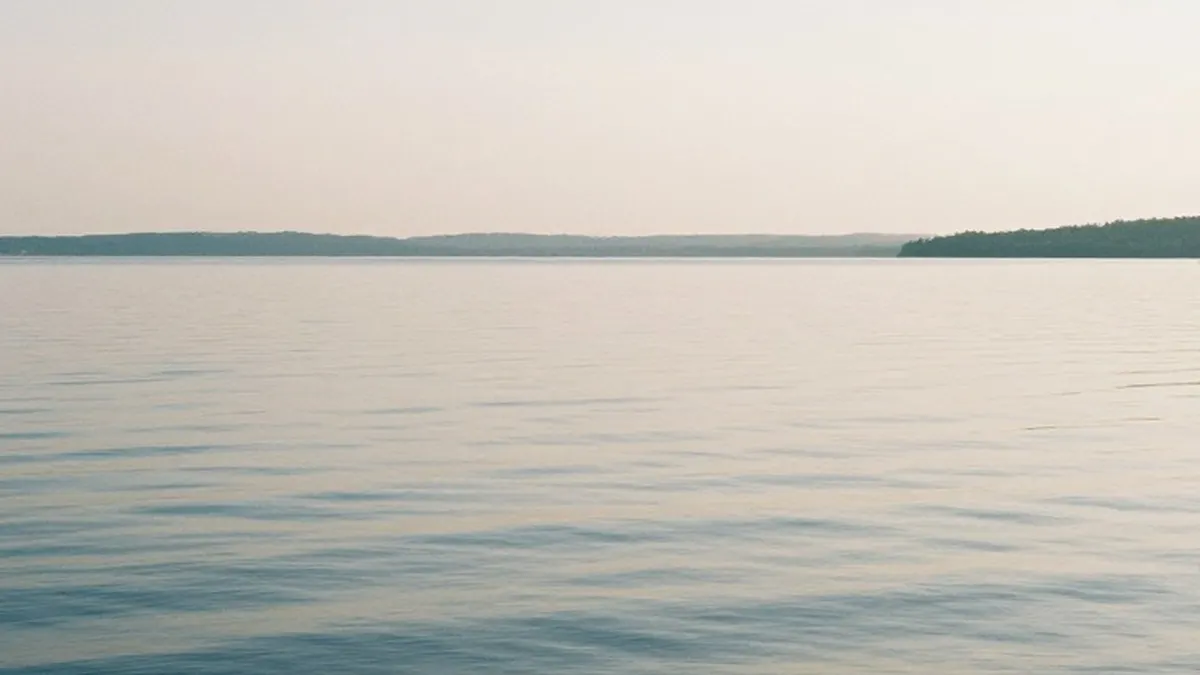
The National Congress of American Indians has formally requested that U.S. President Donald Trump reverse his August executive order, which renamed Lake Ontario as Lake America. The organization, which serves as a representative body for American Indian and Alaska Native tribal governments across the United States, contends that the directive shows a lack of respect for Indigenous geographic names. It further argues that the change disregards the deep cultural, spiritual, and historical connections Indigenous peoples hold with the land and water.
A resolution rejecting the name change was approved during the organization’s assembly in October. This proposal was introduced by the Seneca Nation of Indians, a community located in western New York. The resolution states that unilateral attempts to rename geographical features risk erasing Indigenous history. Consequently, it calls on the U.S. federal government to suspend its official use of the term Lake America.
In August, President Trump instructed all branches of the federal government to begin referring to the body of water as Lake America. This decision caused concern among Haudenosaunee communities on both sides of the border, as their languages are the origin of the name Ontario. The word Ontario has specific meanings in Indigenous languages. In Seneca, the term is sga:nyodai:yoh, which translates to beautiful lake. In Wendat, it is ontari:io, meaning the lake is beautiful and the lake is big.
The resolution emphasizes that the National Congress of American Indians opposes the removal or replacement of Indigenous names for lakes, rivers, mountains, and other geographic features. It urges federal, state, and local governments, along with geographic naming authorities and private entities, to preserve and respect these names. The organization states that this process should occur in consultation with the affected Tribal Nations.
The document highlights Lake Ontario as a prime example of the enduring relationship between Indigenous peoples and geographic features. It notes that the lake has been known to and used by the Seneca and other Haudenosaunee peoples since time immemorial. These groups have relied on the water for travel, trade, diplomacy, subsistence, and cultural practices. The resolution also points out that the commonly used name is derived from Indigenous linguistic roots.
Wendat Nation Grand Chief Pierre Picard told The Canadian Press that his nation was shocked to learn of the renaming. He described the move as an attempt to eradicate their history in the region. The Wendat historically occupied parts of the St. Lawrence Valley extending up to the Great Lakes. This area was rich with trade routes both before and after contact with European settlers.
The name Lake Ontario predates the founding of both Canada and the United States. Despite this historical significance, the renaming has drawn criticism from various political figures. Wisconsin Governor Tony Evers, a Democrat, ridiculed the move by posting a video of himself at a McDonald's restaurant. In the clip, he signed a fast food napkin to decree that Lake Michigan would be renamed Lake Wisconsin. He wrote on the social media platform X, See, I can sign napkins that say things, too.
Canadian Prime Minister Mark Carney has also weighed in on the matter. He stated that the lake remains Lake Ontario then, now and always. This comment underscores the ongoing diplomatic and cultural discussions surrounding the shared geography and its naming conventions between the two nations.
The debate over the lake's name has highlighted broader issues regarding how geographic features are designated and recognized in North America. The involvement of national leaders from both countries suggests that the change has implications beyond simple nomenclature. It touches on identity, history, and the recognition of Indigenous contributions to the region's heritage.
As the resolution gains attention, pressure may mount on the U.S. federal government to reconsider its stance. The National Congress of American Indians continues to advocate for the preservation of Indigenous names, seeking to ensure that the history and culture of the original inhabitants are honored in official records and public discourse.