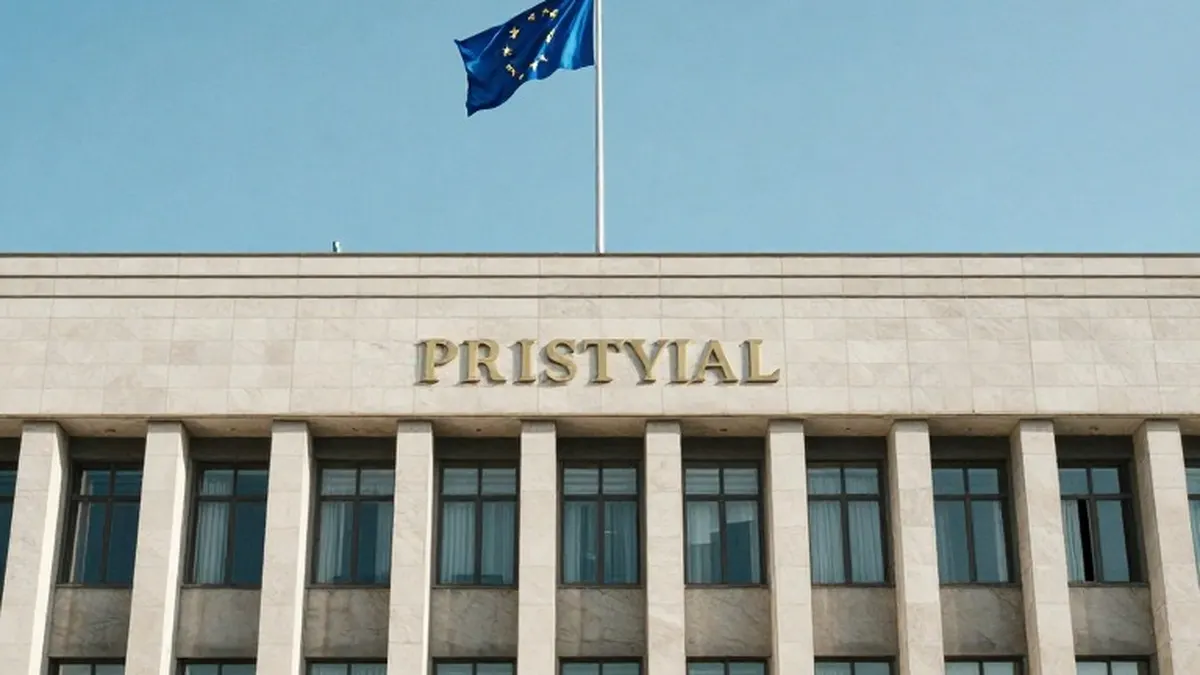
Albin Kurti, the prime minister of Kosovo, has stated that his country has completed the necessary preparatory work to receive European Union candidate status. In an interview with France 24, Kurti emphasized that Kosovo is the only country in continental Europe currently without this status, a situation he attributes to the European Council not yet requesting an opinion from the European Commission.
The prime minister expressed regret over this delay, noting that Kosovo declared its independence from Serbia in 2008 and views itself as part of the European family. Despite applying to join the EU four years ago, the country has yet to advance in the accession process. Kurti claimed that Kosovo has performed well in democratic indices, including rule of law, anti-corruption efforts, transparency, press freedom, and electoral democracy.
Kurti clarified that Kosovo seeks a merit-based process rather than any shortcuts or fast tracks. The government is prepared to answer thousands of questions in the official accession questionnaire, which has not yet been sent to Pristina. He expressed hope that candidate status will be granted within the coming weeks or months.
The prime minister identified internal dynamics within the EU Council as the primary reason for the lack of progress. Specifically, he pointed to the five EU member states that do not recognize Kosovo's independence: Spain, Cyprus, Romania, Greece, and Slovakia. While acknowledging these differences, Kurti noted that the EU has adopted a formula of diversity in recognition but unity in engagement, which facilitated the Stabilisation and Association Agreement and visa liberalization.
Kurti reported incremental progress in relations with the non-recognizing states. He cited examples such as Spain recognizing the Kosovo passport and the elevation of the status of the Kosovo office in Athens. These developments are viewed as positive signs, even though full recognition has not yet been achieved. He argued that the five non-recognizers should not be considered an obstacle to sending the accession questionnaire.
Addressing the European Commission's reservations regarding domestic reforms, particularly judicial independence, Kurti accepted the critique and confirmed that reform efforts are underway. He mentioned the upcoming establishment of a bureau dedicated to verifying and confiscating wealth obtained in inexplicable ways. This measure aims to address disparities between public officials' salaries and their assets.
The prime minister suggested that the EU integration process, specifically the opening and closing of negotiation chapters, would significantly aid in reforming not only the judiciary but also the public administration. He believes that the structured approach of the accession process provides the necessary framework for these improvements.
Regarding relations with Serbia, Kurti noted that it is too early to determine if a new chapter has opened following the recent elections in which former president Aleksandar Vucic lost his parliamentary majority. However, he asserted that Kosovo seeks full normalization of relations based on mutual recognition. He emphasized that Kosovo is an independent democratic republic and that the sooner Belgrade acknowledges this, the better it will be for both countries' paths toward the EU.