A week after most US states learned their midterm results, with Democrats winning back both chambers of Congress from Republicans, Alaska is still waiting to find out who won its Senate race. The answer may not come until 18 November, when officials expect to finish counting all eligible ballots.
The contest pits incumbent Republican Dan Sullivan against his Democratic challenger, former congresswoman Mary Peltola, and the delay has little to do with the closeness of the race alone. It is mainly the product of geography. Alaska is more than six times the size of the UK and is connected primarily by water and air rather than roads, so getting ballots to a central counting location is a complicated undertaking.
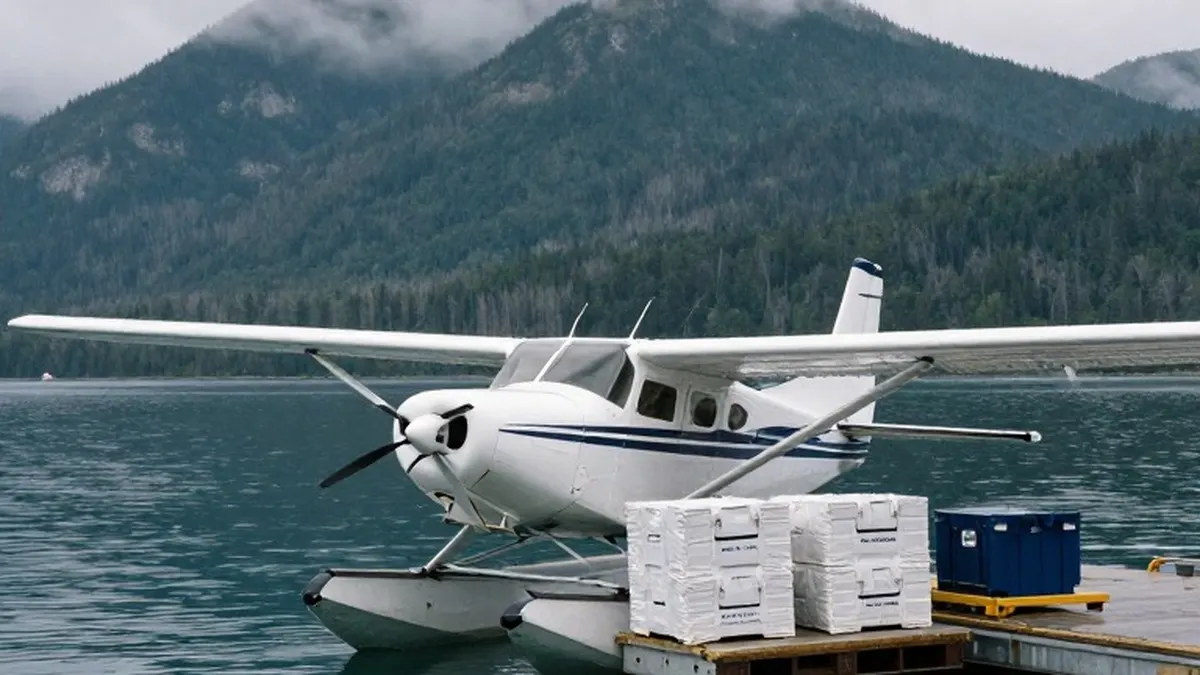
For the past few weeks, the regional airline Alaska Seaplanes has carried an unusual cargo alongside its usual payload of passengers, medicine and supplies: midterm election ballots. "We do feel a sense of pride of making sure we do the job right - the really complicated job of getting all these ballots across thousands of miles in Alaska," Andy Kline, the airline's marketing director, told the BBC. The company serves the south-eastern part of the state.
Some precincts can transmit initial results to centralised election offices on election night, which allows preliminary tallies to be reported. But the full picture emerges slowly. Charles Stewart, an election expert at the Massachusetts Institute of Technology, notes that officials must also wait for mail ballots, which can arrive up to 10 days after the election, or 15 days for overseas voters, provided they were postmarked by election day. He said officials had "chosen to err on the side of getting it right rather than a rush to report the second and third tranches of ballots that get counted".
Whether cast in person or by mail, every ballot eventually ends up in Juneau, the state capital, which is reachable only by plane or boat, for scanning and counting. More urban districts can get their materials onto a plane late on election night, but smaller and more remote communities take longer. Scott Kendall, an election lawyer who worked on two campaigns for Alaska's other Republican senator, Lisa Murkowski, said that in some places "you get someone who's basically running the election for their family and their neighbours because it's such a small village".
In those smaller areas, ballots are sealed in special envelopes or containers and sent through the mail, which is where carriers such as Alaska Seaplanes come in. Ballots are flown to Juneau, dropped at the post office and delivered to election officials. "It's part of our daily routine, just another couple of boxes," Kline said.
Once all in-person and absentee ballots reach Juneau, officials will complete their review. If no candidate wins more than 50% of the vote in the first round, the state will use ranked-choice voting to reallocate votes from the lowest-scoring candidates to their voters' second choices. Alaska will then declare winners in the Senate race as well as contests for governor and the US House of Representatives.
The suspense has been heightened by questions over whether a second Republican candidate also named Dan Sullivan, who was allegedly recruited by Democratic operatives, could affect the outcome, though results released so far suggest that is unlikely. This week, President Donald Trump alleged the Senate election had been "rigged" because of the second Dan's involvement. His administration is appealing a lawsuit seeking to halt certification of the election, which a lower court dismissed.
Separately, a judge has denied an attempt by Peltola's campaign to obtain information about how many absentee ballots officials rejected, along with details about those voters. The state argued it had no obligation to share the data and that doing so would violate voter privacy.
For Kline, the process matters as much as the result. "We're all citizens," he said of himself and his colleagues. "We all feel like we have skin in the game to make sure that our elections are accurate and timely."